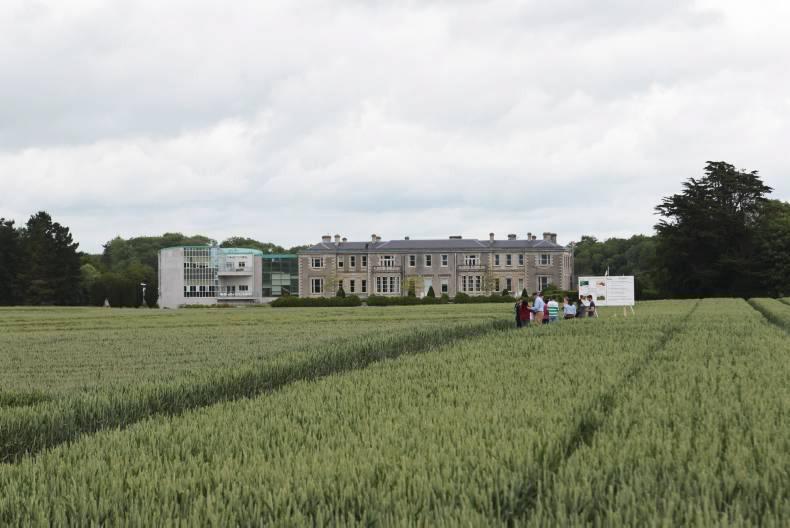
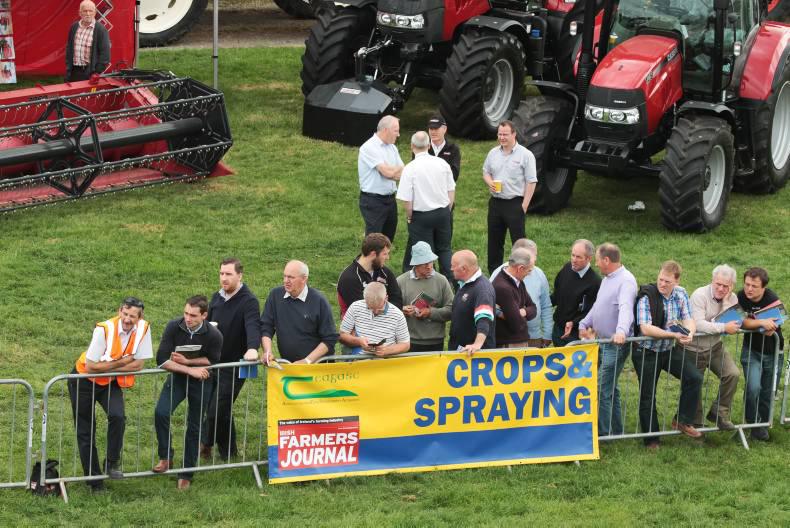
Last week, tillage farmers thronged to the Crops and Spraying event in Oak Park, Co Carlow. The event was organised by Teagasc in conjunction with the Irish Farmers Journal and it encompassed the biennial crops open day, along with an educational arena and commercial exhibits. An estimated 3,000-plus people attended – the biggest single gathering of tillage folk for many years.
All aspects of the day were highly commended and, already, there are many calls for the exercise to be repeated. While many may see the mix of crops and machinery as being key to the event, a lot of those present still see the crop research and advice as being key to the success of such an event.
Because I was tied up in the educational arena, I was not able to visit the various stands on the day, but I did get around to see many of the stations earlier in the week. However, for the benefit of those who were or were not present, I asked those manning the stands to provide a short summary of the main points delivered and those that came up in discussion with growers.
Optimising spring
barley growth
Teagasc produced the useful Barley Growth Guide earlier this year, which described how yield was generated in spring barley and combined old and new research to show how best to manage crops to maximise yield potential. The guide describes how the barley plant functions and describes the management practices needed to capitalise on this potential.
The guide shows the importance of good early-season management to ensure that the crop produces the target number of grains/m2 to optimise yield and to keep the crop free from disease. It also highlights the importance of good soil fertility to ensure that plants are able to build the necessary biomass and fill the grains. Husbandry messages deal specifically with fertilisation, seed rate, establishment, leaf emergence and tillering, weed control, canopy formation, biomass production, nitrogen uptake, pest and disease control, ear formation and grain fill.
The key messages were:
Barley yield is strongly related to grain number per unit area.Grain number is mainly influenced by ear number.Getting the crop off to a good start to produce biomass is critical.It is critical to maximise crop growth during tillering and stem extension.Late-season inputs are less important for barley.– Ciaran Hickey
Oilseed rape
establishment
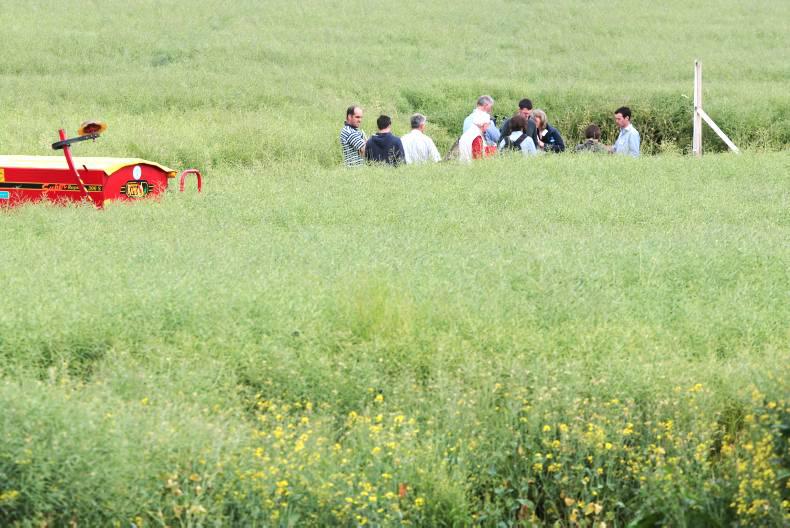
Many may have not noticed the stand on oilseed rape production, which was located in front of Oak Park house. This crop looks very good this year and, with prices rising, there may be added interest again next year. Early establishment is key and some of the current research is examining different establishment systems and options.
Among the key messages were:
Oilseed rape can be established with wide row spacings (60cm), with similar yield to narrow spacings (results from one year’s research data).There is no need to adjust seeding rates when using subsoiling or deep leg type establishment systems (wide spacings) as plant establishment rates will tend to be lower in such systems. Light leaf spot control is difficult and a variety with high resistance should be planted. At least two fungicides are needed to ensure control. Disease control research is being carried out at Oak Park, but this needs to be done for a few years before any adjustment to the current advice can be recommended.There was quite a bit of conservation around the subsoiling effects when using deep-leg establishment systems. Growers felt that this system was alleviating some of the soil compaction difficulties that they were encountering and that this was further helped by the rooting system of the oilseed crop itself. However, it was also apparent that many growers were unsure of how deep these legs were actually working.
The He-Va system has the advantage of not being machinery hungry during this busy harvesting and drilling season. But soil conditions still need to be right and growers reported problems where conditions were difficult, such as in autumn 2012. It may be useful to leave the stubble intact with wide row spacings as it provides a level of deterrent against pigeon grazing, where the plant rows will not be meeting fully by winter.
Caution is urged when using the deep-leg wide-row systems when soil conditions are either very dry or very wet. In such situations, an alternative establishment method, such as ploughing and drilling, is more likely to provide good establishment figures. However, where conditions are good for establishment, there appears to be no difference between ploughing, min-till or wide-row spacing establishment systems, thus providing the option for potential savings on establishment cost.
Sowing date was a frequent point of discussion but there is a general acceptance that August is generally far more satisfactory than September drilling. However, early drilling can leave more challenges for weed control and produces different challenges for disease control.
The use of oilseed rape for general grass weed control was also discussed (especially sterile brome) as it provides an option for the use of graminicides.
– Michael Hennessy
Disease control
in winter barley
With winter barley acreage increasing, research on disease control is increasingly important. Fungicide timings were evaluated in Carlow and Cork between 2010 and 2013 to determine the most robust strategy for growers to follow and the results were presented. Saffron was the variety used and the fungicide treatment was a mix of Proline and Venture, each applied at 50% label rates.
Five timings were assessed: early tillering (GS21 – autumn), late tillering (GS25/29 – spring), stem extension (GS31/32), flag leaf/awns emerging (GS39/45) and heading (GS59). All combinations of these treatments were examined to allow the response from individual and multiple timings to be assessed.
Averaged across the four years, the overall response to fungicides was low. On average, the response benefit was 0.8t/ha, ranging from 0 to 2.0t/ha. In two-row barley, yield is more closely linked to the number of grains/m2 than foliar disease control and this may partly explain the low response. This is in contrast to wheat, where yield is closely linked to prolonging the green leaf area of the upper canopy, especially during grain fill.
On average, three fungicide timings were found to give a significant yield response – late tillering, stem extension and flag leaf/awns emerging. These now form the basis of Teagasc disease control advice for winter barley disease protection.
Another experiment, which is only just beginning, is looking at where SDHI chemistry is best placed within these three key timings, as well as the rates required. Niamh Kelly, a PhD student, is examining how Rhynchosporium control is optimised by differing ratios of triazoles, SDHI and strobilurin chemistry. The work will also monitor sensitivity changes to these important fungicides.
– Tim O’Donovan, Martin Bourke, Niamh Kelly
Grass weeds in cereals
2015 has given us an explosion in grass weeds in cereals. Sterile brome appears to be more prevalent, which may be partly due to the increase in winter barley and this crop has very limited control options. In 2014, Teagasc confirmed the presence of black grass on a number of farms and in areas where this weed was previously unknown.
Grass weeds can be successfully managed and controlled in tillage farms but the onus is on the grower to take action. This may mean a change in cropping or stubble cultivation or another appropriate intervention.
Growers were also very concerned about canary grass and how best to control it. The use of stale seed beds, spring cropping and cultivation practices were discussed on this stand.
The majority of weed problems begin with one or two weeds. Vigilance on clean land is what keeps new problems away. The following basic advice should be followed:
Walk fields in June/July and look out for unusual grass weeds.Get help to identify any unusual weeds present.Make a plan with your adviser before harvest.Don’t wait for a chemical solution – take action now!–Tim O’Donovan
and Martin Bourke
Good, balanced soil fertility remains critical as the foundation for high-yield potential.
Some recent nutrition research has reinforced the advice of years ago and put reason behind the advice for combine drilling of fertilizer for spring cereals, especially spring barley. This is all the more important where soil fertility levels appear to be falling and it is critical husbandry on rented land.
The soil fertility station took place in a field of spring barley, following a number of years of grass variety evaluation. This resulted in very distinct and repeatable Index 1 and 2 areas in the field and crop appearance clearly showed the consequence of the low fertility. These plots stimulated a lot of debate and questions in relation to potassium fertilisation. The visible consequences of insufficient potash on crop growth and development emphasised the importance of timely K applications to spring cereals.
Grass management history produced these K patterns in this field. Stripes where grass was removed for evaluation were at Index 1 K, while the areas between these were just topped and returned to the soil, reducing K off-take over time.
The plot areas were only identified in the growing crop so subsequent treatments with K fertiliser of 0, 50 and 100 kgK/ha on the Index 1 and 2 K plots may have been a bit late to provide an optimum response.
However, this very visual impact of low potassium led to open discussion on all aspects of crop fertilisation.
P fertiliser placement: Recent trial work has shown major benefits from the placement of P close to the seed on P Index 1 and 2 soils for spring cereals versus having the P either incorporated or surface applied. This benefit of having P readily available from germination to tiller development is especially important during periods with poor growing conditions, ie when soils are cold and/or very wet. Placement helps root and tiller development which are critical for yield creation.
The benefits of applying autumn P fertiliser for winter wheat were less pronounced in trials. However, there was a response to placed P fertiliser on the low P index sites.
The placement of a small quantity of P helped seedling survival, tillering and the crop’s ability to forage for soil P and other nutrients. On low P sites, this ended up as increased grain yield. While no recent work was done using winter barley, it seems likely that the benefit of placement would be even greater as it would help in the development of high tiller numbers.
SOP versus MOP as a source of K: There were many questions relating to the type of K to use. There are no big benefits of using sulphate of potash (SOP ) versus muriate of potash (MOP) as they are both highly water-soluble.
SOP is a more expensive source of K but it supplies some sulphur which may be of direct benefit. MOP is the main component in the majority of K fertilizer. If you are seeing a response to SOP, it may be a response to sulphur rather than the form of K, indicating that additional S may be required.
There is some evidence internationally that the chlorine in MOP can be of benefit to crops in some soils that are deficient in this nutrient but this has not been shown in Ireland. SOP is routinely used in crops like potatoes for tuber quality reasons.
Timing of K application: Spring is generally the best time to apply K to cereals. For winter crops, apply K as a compound fertiliser in early spring. For spring cereals, apply K to seedbed at sowing time as either MOP (50% K) or in a compound fertiliser such as 10-10-20.
S for cereals: Sulphur is important for cereal crops. It is best applied with the nitrogen dressing in springtime. It is recommended to apply 20kgS/ha.
Poultry manure (layer manure) for winter or spring cereals: Layers’ manure is a valuable source of N, P and K. To maximise the N value for winter cereals, apply it as a top-dressing in early spring. For spring cereals, it should be applied to the seedbed before sowing and incorporated during sowing. This places the manure in close contact with the seed and produces a similar benefit to combine drilling with the seed.
Best time to soil sample tillage fields: Soil samples should be taken after crops have been harvested and analysed for major and micro nutrients.
Best time to apply lime: Ideally, apply the recommended rates of lime, as per the soil test report, to ploughed soils and work it into the top 5cm to 10cm of soil during sowing.
–Mark Plunkett
Last week, tillage farmers thronged to the Crops and Spraying event in Oak Park, Co Carlow. The event was organised by Teagasc in conjunction with the Irish Farmers Journal and it encompassed the biennial crops open day, along with an educational arena and commercial exhibits. An estimated 3,000-plus people attended – the biggest single gathering of tillage folk for many years.
All aspects of the day were highly commended and, already, there are many calls for the exercise to be repeated. While many may see the mix of crops and machinery as being key to the event, a lot of those present still see the crop research and advice as being key to the success of such an event.
Because I was tied up in the educational arena, I was not able to visit the various stands on the day, but I did get around to see many of the stations earlier in the week. However, for the benefit of those who were or were not present, I asked those manning the stands to provide a short summary of the main points delivered and those that came up in discussion with growers.
Optimising spring
barley growth
Teagasc produced the useful Barley Growth Guide earlier this year, which described how yield was generated in spring barley and combined old and new research to show how best to manage crops to maximise yield potential. The guide describes how the barley plant functions and describes the management practices needed to capitalise on this potential.
The guide shows the importance of good early-season management to ensure that the crop produces the target number of grains/m2 to optimise yield and to keep the crop free from disease. It also highlights the importance of good soil fertility to ensure that plants are able to build the necessary biomass and fill the grains. Husbandry messages deal specifically with fertilisation, seed rate, establishment, leaf emergence and tillering, weed control, canopy formation, biomass production, nitrogen uptake, pest and disease control, ear formation and grain fill.
The key messages were:
Barley yield is strongly related to grain number per unit area.Grain number is mainly influenced by ear number.Getting the crop off to a good start to produce biomass is critical.It is critical to maximise crop growth during tillering and stem extension.Late-season inputs are less important for barley.– Ciaran Hickey
Oilseed rape
establishment
Many may have not noticed the stand on oilseed rape production, which was located in front of Oak Park house. This crop looks very good this year and, with prices rising, there may be added interest again next year. Early establishment is key and some of the current research is examining different establishment systems and options.
Among the key messages were:
Oilseed rape can be established with wide row spacings (60cm), with similar yield to narrow spacings (results from one year’s research data).There is no need to adjust seeding rates when using subsoiling or deep leg type establishment systems (wide spacings) as plant establishment rates will tend to be lower in such systems. Light leaf spot control is difficult and a variety with high resistance should be planted. At least two fungicides are needed to ensure control. Disease control research is being carried out at Oak Park, but this needs to be done for a few years before any adjustment to the current advice can be recommended.There was quite a bit of conservation around the subsoiling effects when using deep-leg establishment systems. Growers felt that this system was alleviating some of the soil compaction difficulties that they were encountering and that this was further helped by the rooting system of the oilseed crop itself. However, it was also apparent that many growers were unsure of how deep these legs were actually working.
The He-Va system has the advantage of not being machinery hungry during this busy harvesting and drilling season. But soil conditions still need to be right and growers reported problems where conditions were difficult, such as in autumn 2012. It may be useful to leave the stubble intact with wide row spacings as it provides a level of deterrent against pigeon grazing, where the plant rows will not be meeting fully by winter.
Caution is urged when using the deep-leg wide-row systems when soil conditions are either very dry or very wet. In such situations, an alternative establishment method, such as ploughing and drilling, is more likely to provide good establishment figures. However, where conditions are good for establishment, there appears to be no difference between ploughing, min-till or wide-row spacing establishment systems, thus providing the option for potential savings on establishment cost.
Sowing date was a frequent point of discussion but there is a general acceptance that August is generally far more satisfactory than September drilling. However, early drilling can leave more challenges for weed control and produces different challenges for disease control.
The use of oilseed rape for general grass weed control was also discussed (especially sterile brome) as it provides an option for the use of graminicides.
– Michael Hennessy
Disease control
in winter barley
With winter barley acreage increasing, research on disease control is increasingly important. Fungicide timings were evaluated in Carlow and Cork between 2010 and 2013 to determine the most robust strategy for growers to follow and the results were presented. Saffron was the variety used and the fungicide treatment was a mix of Proline and Venture, each applied at 50% label rates.
Five timings were assessed: early tillering (GS21 – autumn), late tillering (GS25/29 – spring), stem extension (GS31/32), flag leaf/awns emerging (GS39/45) and heading (GS59). All combinations of these treatments were examined to allow the response from individual and multiple timings to be assessed.
Averaged across the four years, the overall response to fungicides was low. On average, the response benefit was 0.8t/ha, ranging from 0 to 2.0t/ha. In two-row barley, yield is more closely linked to the number of grains/m2 than foliar disease control and this may partly explain the low response. This is in contrast to wheat, where yield is closely linked to prolonging the green leaf area of the upper canopy, especially during grain fill.
On average, three fungicide timings were found to give a significant yield response – late tillering, stem extension and flag leaf/awns emerging. These now form the basis of Teagasc disease control advice for winter barley disease protection.
Another experiment, which is only just beginning, is looking at where SDHI chemistry is best placed within these three key timings, as well as the rates required. Niamh Kelly, a PhD student, is examining how Rhynchosporium control is optimised by differing ratios of triazoles, SDHI and strobilurin chemistry. The work will also monitor sensitivity changes to these important fungicides.
– Tim O’Donovan, Martin Bourke, Niamh Kelly
Grass weeds in cereals
2015 has given us an explosion in grass weeds in cereals. Sterile brome appears to be more prevalent, which may be partly due to the increase in winter barley and this crop has very limited control options. In 2014, Teagasc confirmed the presence of black grass on a number of farms and in areas where this weed was previously unknown.
Grass weeds can be successfully managed and controlled in tillage farms but the onus is on the grower to take action. This may mean a change in cropping or stubble cultivation or another appropriate intervention.
Growers were also very concerned about canary grass and how best to control it. The use of stale seed beds, spring cropping and cultivation practices were discussed on this stand.
The majority of weed problems begin with one or two weeds. Vigilance on clean land is what keeps new problems away. The following basic advice should be followed:
Walk fields in June/July and look out for unusual grass weeds.Get help to identify any unusual weeds present.Make a plan with your adviser before harvest.Don’t wait for a chemical solution – take action now!–Tim O’Donovan
and Martin Bourke
Good, balanced soil fertility remains critical as the foundation for high-yield potential.
Some recent nutrition research has reinforced the advice of years ago and put reason behind the advice for combine drilling of fertilizer for spring cereals, especially spring barley. This is all the more important where soil fertility levels appear to be falling and it is critical husbandry on rented land.
The soil fertility station took place in a field of spring barley, following a number of years of grass variety evaluation. This resulted in very distinct and repeatable Index 1 and 2 areas in the field and crop appearance clearly showed the consequence of the low fertility. These plots stimulated a lot of debate and questions in relation to potassium fertilisation. The visible consequences of insufficient potash on crop growth and development emphasised the importance of timely K applications to spring cereals.
Grass management history produced these K patterns in this field. Stripes where grass was removed for evaluation were at Index 1 K, while the areas between these were just topped and returned to the soil, reducing K off-take over time.
The plot areas were only identified in the growing crop so subsequent treatments with K fertiliser of 0, 50 and 100 kgK/ha on the Index 1 and 2 K plots may have been a bit late to provide an optimum response.
However, this very visual impact of low potassium led to open discussion on all aspects of crop fertilisation.
P fertiliser placement: Recent trial work has shown major benefits from the placement of P close to the seed on P Index 1 and 2 soils for spring cereals versus having the P either incorporated or surface applied. This benefit of having P readily available from germination to tiller development is especially important during periods with poor growing conditions, ie when soils are cold and/or very wet. Placement helps root and tiller development which are critical for yield creation.
The benefits of applying autumn P fertiliser for winter wheat were less pronounced in trials. However, there was a response to placed P fertiliser on the low P index sites.
The placement of a small quantity of P helped seedling survival, tillering and the crop’s ability to forage for soil P and other nutrients. On low P sites, this ended up as increased grain yield. While no recent work was done using winter barley, it seems likely that the benefit of placement would be even greater as it would help in the development of high tiller numbers.
SOP versus MOP as a source of K: There were many questions relating to the type of K to use. There are no big benefits of using sulphate of potash (SOP ) versus muriate of potash (MOP) as they are both highly water-soluble.
SOP is a more expensive source of K but it supplies some sulphur which may be of direct benefit. MOP is the main component in the majority of K fertilizer. If you are seeing a response to SOP, it may be a response to sulphur rather than the form of K, indicating that additional S may be required.
There is some evidence internationally that the chlorine in MOP can be of benefit to crops in some soils that are deficient in this nutrient but this has not been shown in Ireland. SOP is routinely used in crops like potatoes for tuber quality reasons.
Timing of K application: Spring is generally the best time to apply K to cereals. For winter crops, apply K as a compound fertiliser in early spring. For spring cereals, apply K to seedbed at sowing time as either MOP (50% K) or in a compound fertiliser such as 10-10-20.
S for cereals: Sulphur is important for cereal crops. It is best applied with the nitrogen dressing in springtime. It is recommended to apply 20kgS/ha.
Poultry manure (layer manure) for winter or spring cereals: Layers’ manure is a valuable source of N, P and K. To maximise the N value for winter cereals, apply it as a top-dressing in early spring. For spring cereals, it should be applied to the seedbed before sowing and incorporated during sowing. This places the manure in close contact with the seed and produces a similar benefit to combine drilling with the seed.
Best time to soil sample tillage fields: Soil samples should be taken after crops have been harvested and analysed for major and micro nutrients.
Best time to apply lime: Ideally, apply the recommended rates of lime, as per the soil test report, to ploughed soils and work it into the top 5cm to 10cm of soil during sowing.
–Mark Plunkett









SHARING OPTIONS