



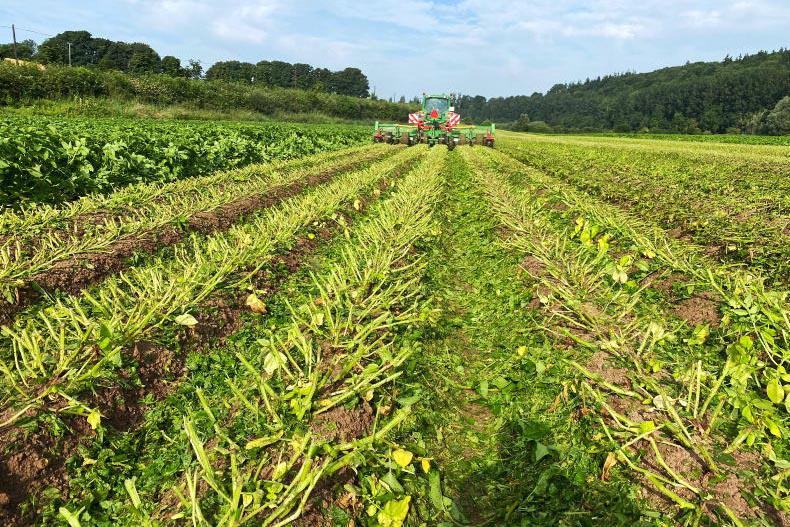
O’Shea Farms, Piltown, Co Kilkenny
The winter barley and oats have been harvested at O’Shea Farms, and attention will soon turn to winter wheat and spring barley. Tom says that these crops are about two weeks away, and will likely be ripe at the same time.
Tom was worried that the heavy rain on Sunday night would cause some of the spring barley to lodge, but he was happy to see that this was not the case, with only a few small portions of the crop a bit tossed.
Tom says it could do with some sunshine now to bring the crop in.
The winter barley yielded an average of 4t/ac at a moisture content of 15%. The crop had looked very well all year, and Tom says that he thought the yield may have been even higher. There was a good crop of straw on the crop, and the grain bushelled quite well too.
The winter oats yielded between 3.8 and 3.9t/ac at a KPH of 55 to 56. As the fields are cleared, Tom is planting cover crops.
He tries to keep the mixes simple to ensure that there are no issues with pests and diseases in the rotation.
This year, he will trial some forage rye, which he plans to mow and bale in April before planting maize. These bales will then be fed to the dairy cows on the farm.
The potatoes and carrots were irrigated during the hot weather a couple of weeks ago but this has paused now with the recent rain.
A field of Jazzy salad potatoes for seed was topped last week, while the remainder of the Jazzy crops should be ready for topping early next week. Tom began to harvest the plastic-covered carrots last week too.
The maize on the farm is excellent, with some crops reaching 6ft tall already while looking quite bulky too. Tom adds that “we couldn’t have got a better season for maize so far”.
UCD Lyons Farm, Celbridge, Co Kildare
The harvest began at UCD Lyons Farm a couple of weeks ago. Some winter barley trials have been harvested, while a couple of late-planted trials are planned to be harvested when the weather allows.
The long-term cultivation trial plots have been harvested, with moisture contents of 14 to 16%.
They produced huge yields of between 10 and 12.7t/ha when moisture content is adjusted to 20%.
These results will be further analysed in the coming weeks to see what differences occurred between the cultivation systems, but initial observations indicate that the no-till plots have performed quite well, and may be on par with the min-till and ploughed plots.
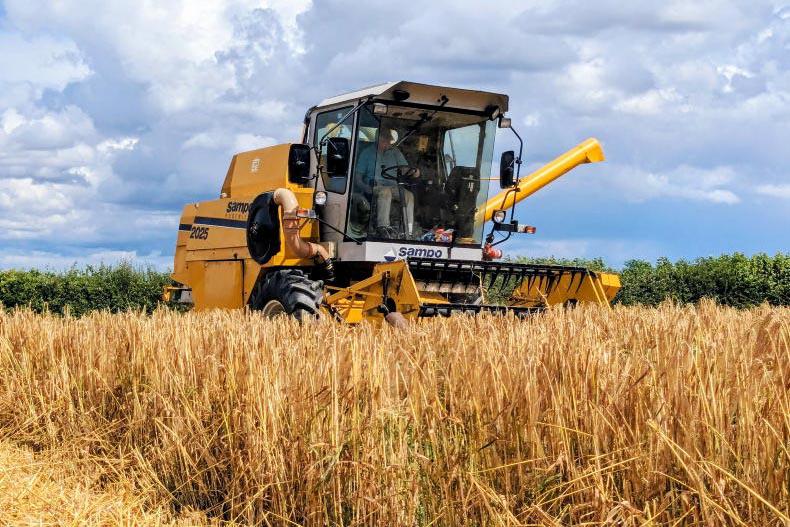
The winter oats in Gary’s demonstration plots are just about ripe and have kept standing despite being quite tall (>1.65m) and receiving no plant growth regulator.
The winter rye is still standing too and will be ripe in a couple of weeks, as will the winter wheat.
The June-planted demo plots have emerged well and are growing strongly in the warm weather.
The April-planted plots are also doing very well.
The buckwheat is still flowering and is attracting a huge number of bees, with over 50 bees observed in a plot on multiple occasions.
The camelina and linseed have finished flowering and have begun pod fill.
They were both flattened during recent heavy rain, and while half of the camelina plots are lodged, the linseed plots bounced back and you would never know that the crop had gone down at all.
The lentils are flowering too.
They are a very short crop at a height of 25cm, and while the canopy is very dense, weeds are still managing to come through.
The lupins are in pod fill and one of the varieties has pods very close to the ground, so it will be interesting to see if any difficulties arise at harvest.
The other lupin varieties have their pods much higher on the stem, so there should be no issues.
Strabane, Co Tyrone
Very high temperatures have given way to heavy rain in Tyrone. With no winter crops on the farm this year, Victor’s harvest is still a good while away, but the spring crops are doing well in the change of weather.
The KWS Fixum spring wheat has received its final fungicide spray at mid-flowering. This consisted of Proline at 0.75l/ha, Tebucur at 0.8l/ha, liquid potash at 2.5l/ha, and EPSO Combitop at 2.5kg/ha. Victor says the crop looks decent.
There was yellow rust on the top leaves of the crop, and while this has been controlled, it will cause a slight yield penalty.
The bottom leaves remained very green and are quite clean as Victor got in quickly to stop the rust spreading.
The spring barley received its final fungicide application at the awns emerging stage. Victor applied Siltra Xpro at 0.57l/ha, folpet, liquid potash at 2.5l/ha, and EPSO Combitop at 2.5kg/ha.
The crop is quite clean, and while there are a few yellow patches of BYDV, and slugs attacked one or two small areas, Victor is hopeful that the crop will do well.
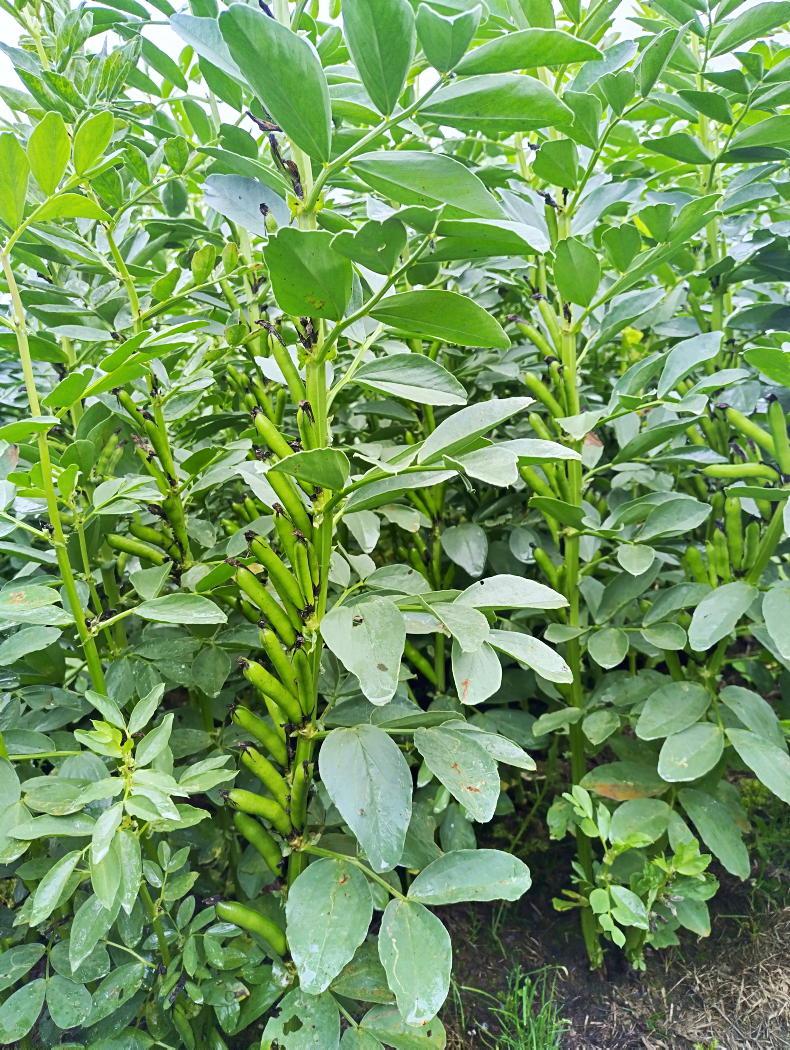
Victor’s spring beans have recovered a lot in the past month after they had nearly died off during flowering.
They are podding nicely, with very large beans in the lower pods. The beans are quite tall, reaching up to Victor’s shoulder.
Chocolate spot has moved into the crop with the recent warm, wet weather, and with lots of pod-filling still required for many of the pods on the plants, Victor applied a fungicide earlier this week. This consisted of Elatus Era at 0.64l/ha and EPSO Microtop at 3.7kg/ha.
Victor also took the opportunity to reseed his wettest field recently. He says the recent weather provided a rare opportunity to get work done in the field. The field was first disced before the seed was sown by a grass harrow.


SHARING OPTIONS