Shaun Diver,Tullamore Farm, Co Offaly
The weather in Tullamore has been mixed recently. The hot weather a couple of weeks ago brought the crops in a lot, especially the spring barley, but the heavy rain that followed caused quite a bit of the crop to lodge. Shaun hopes that it won’t affect the crop too much as grain fill was nearly finished at the time anyway. The lodged areas are not fully flat on the ground yet but good drying weather will be needed at harvest time to make sure these lodged bits are easy to harvest and are not at too high of a grain moisture content.
The challenge now is to keep the crows out of the lodged patches until the grain ripens in. Shaun says the crop is two to three weeks away from harvest. The combi-crop has not lodged, with the barley and oats helping to keep the peas standing up. It looks like quite a good crop. He says there is a great bulk in the crop, with the peas and grains filling well.
He thinks the crop will be ready to harvest in about 10 days’ time. The plan is to mow the crop with a Krone Big M directly into 30ft swarths before baling. This will help to reduce the risk of peas or grains from being knocked out of the crop.
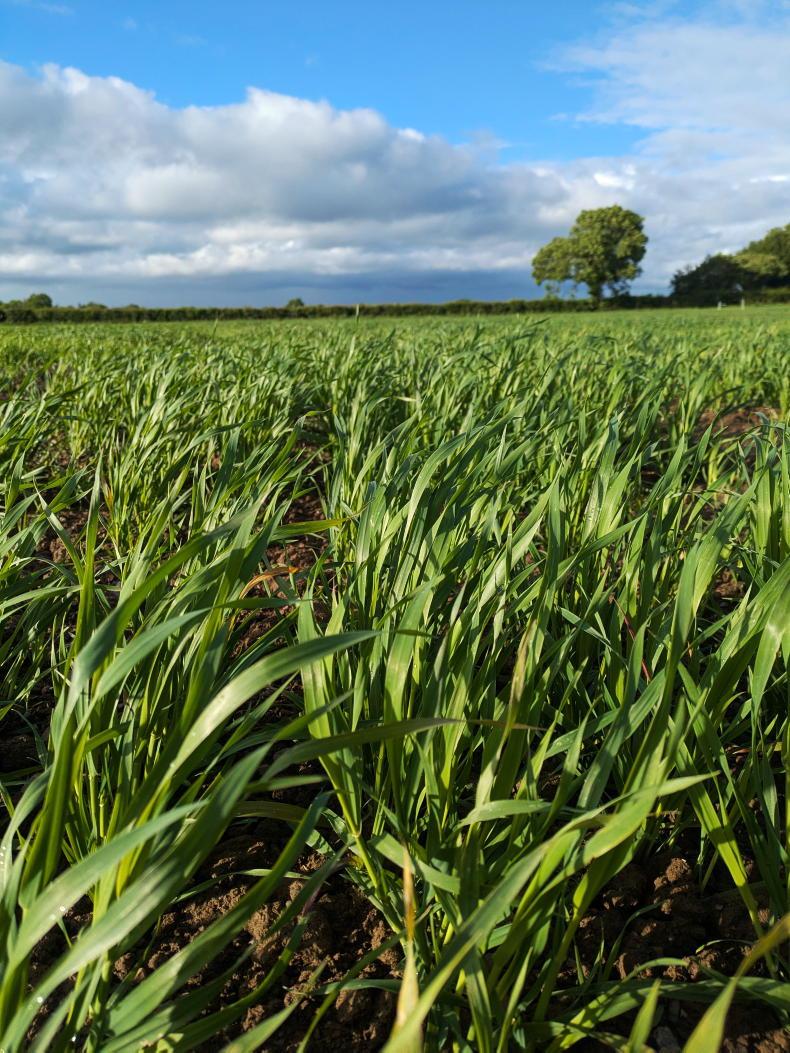
Forage rape will be planted as soon as possible after the crop is harvested. Shaun may decide to direct drill this if the soil conditions are suitable, or if not, he will give the field a run of a disc harrow first.
The second-cut of silage on Tullamore Farm performed very well. He says there was a serious bulk in it, as good if not better than the first-cut. This sets the farm up nicely for the winter with a good amount of forage saved.
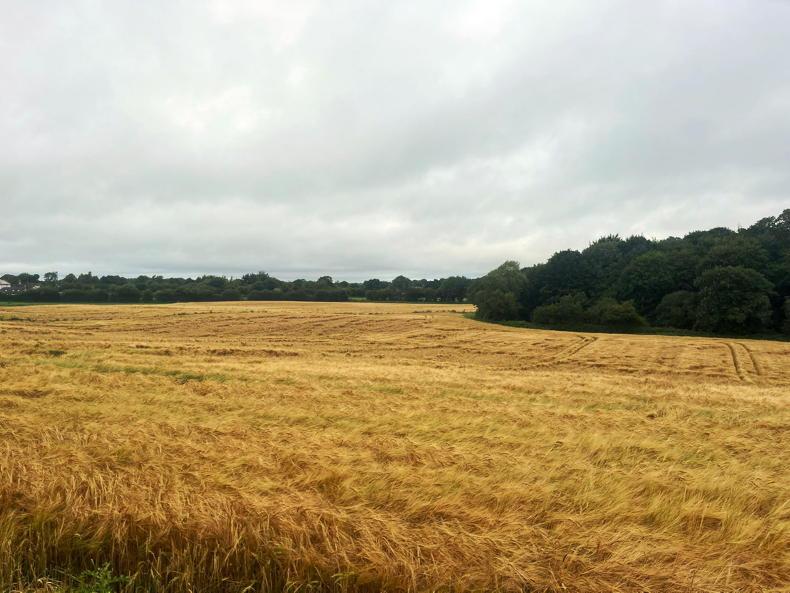
Some of the spring barley on Tullamore Farm lodged in heavy rain last week.
Barty O’Connor, Clohamon, Co Wexford
The spring barley harvest got underway in Wexford at the end of last week, but Barty held out until this week to make sure that the crop was fully ripe.
He says that crops that were cut locally were coming in at between 18.5 and 20.5% moisture content, with low protein levels of between 8.9 and 9.9%. Barty says there is some secondary growth in spring barley crops, but he hopes that an extra few days will help to reduce their impact.
His Orcade winter barley was cut shortly after talking to him four weeks ago. The crop ripened in quickly as the land is on a sandbank and has been in continuous winter barley for the past 10 years. Despite this, the crop yielded 3.85t/ac at 14% moisture content, which Barty is quite happy with.
There was a decent crop of straw on the winter barley too. This has all been baled and the fields have been cleared.
He says the price of straw this year is the same as last year, and he has seen increased demand from Northern Ireland. This is likely due to a shortage of straw in England, and therefore there is very little that can be imported into Northern Ireland.
The straw will be the only profit on crops this year according to Barty. He adds that he has never seen a price so poor compared to the cost of growing grain. He says something will have to be done for tillage farmers or there will be none left.
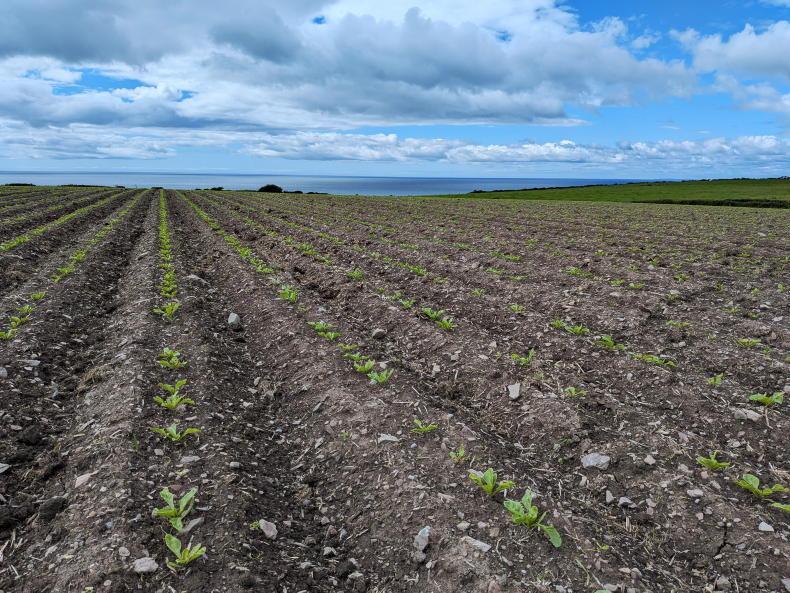
He planted a cover crop of leafy turnip and forage rape at 9kg/ha for the Farming for Water EIP. This will remain in place until October, when winter barley will once again be planted.
The spring oats are still 10 days or more away from harvest. They remained green for quite a while longer than the barley, and it will give Barty a chance to get the spring barley wrapped up before looking at the oats.
Pa Shine, Ardfinnan, Co Tipperary
The harvest has progressed quite well in Tipperary and Pa was about half way through his acreage earlier this week.
The winter barley performed very well for Pa, with yields ranging from 3.6 to 4.7t/ac, averaging 4.2t/ac. The best yield was from KWS Tardis on very good ground, with Belfry not far behind at 4.4t/ac. All of the straw has been baled. The six-row varieties yielded 14 round bales/ac while the two-row produced 10 bales/ac.
Leafy turnip and forage rape cover crops have been planted after the winter barley for ACRES.
He says the winter oats were exceptional this year, the best oats he has had in a very long time. WPB Enya yielded 3.8t/ac, which was much higher than Pa expected from the crop, while Husky yielded 4.3t/ac. The farm average for the oats was 4.06t/ac. Most of the oaten straw was chopped, with only a small proportion baled.
The winter wheat was not fully ripe earlier this week, so he made the decision to start on his spring malting barley on Monday instead. It was too early to know how the yield would turn out, but Pa says that it won’t break any records. There are reports locally that most crops are passing for malting, with one or two having a protein level that was too low.
The early-sown spring oats are also ripe. These are gluten-free oats, so he will not be harvesting them himself to prevent cross-contamination. He says they will be harvested next week.
Pa remarks that the weather has been quite good so far for the harvest. This has been very important this year as everything has come ripe at the same time, something he has never seen before. If the next week stays fine, it should allow him to make a good dent in what is remaining to be cut.

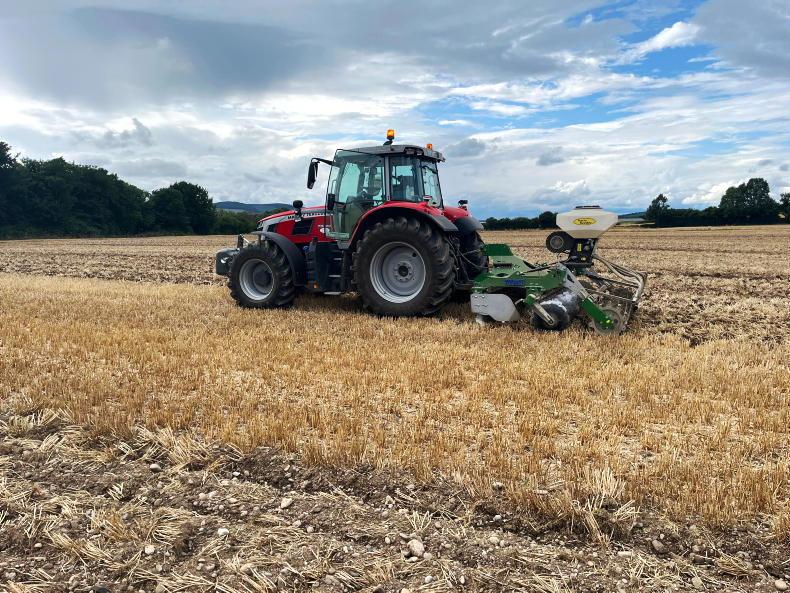
Pa started cutting his spring malting barley on Monday.
Shaun Diver,Tullamore Farm, Co Offaly
The weather in Tullamore has been mixed recently. The hot weather a couple of weeks ago brought the crops in a lot, especially the spring barley, but the heavy rain that followed caused quite a bit of the crop to lodge. Shaun hopes that it won’t affect the crop too much as grain fill was nearly finished at the time anyway. The lodged areas are not fully flat on the ground yet but good drying weather will be needed at harvest time to make sure these lodged bits are easy to harvest and are not at too high of a grain moisture content.
The challenge now is to keep the crows out of the lodged patches until the grain ripens in. Shaun says the crop is two to three weeks away from harvest. The combi-crop has not lodged, with the barley and oats helping to keep the peas standing up. It looks like quite a good crop. He says there is a great bulk in the crop, with the peas and grains filling well.
He thinks the crop will be ready to harvest in about 10 days’ time. The plan is to mow the crop with a Krone Big M directly into 30ft swarths before baling. This will help to reduce the risk of peas or grains from being knocked out of the crop.
Forage rape will be planted as soon as possible after the crop is harvested. Shaun may decide to direct drill this if the soil conditions are suitable, or if not, he will give the field a run of a disc harrow first.
The second-cut of silage on Tullamore Farm performed very well. He says there was a serious bulk in it, as good if not better than the first-cut. This sets the farm up nicely for the winter with a good amount of forage saved.

Some of the spring barley on Tullamore Farm lodged in heavy rain last week.
Barty O’Connor, Clohamon, Co Wexford
The spring barley harvest got underway in Wexford at the end of last week, but Barty held out until this week to make sure that the crop was fully ripe.
He says that crops that were cut locally were coming in at between 18.5 and 20.5% moisture content, with low protein levels of between 8.9 and 9.9%. Barty says there is some secondary growth in spring barley crops, but he hopes that an extra few days will help to reduce their impact.
His Orcade winter barley was cut shortly after talking to him four weeks ago. The crop ripened in quickly as the land is on a sandbank and has been in continuous winter barley for the past 10 years. Despite this, the crop yielded 3.85t/ac at 14% moisture content, which Barty is quite happy with.
There was a decent crop of straw on the winter barley too. This has all been baled and the fields have been cleared.
He says the price of straw this year is the same as last year, and he has seen increased demand from Northern Ireland. This is likely due to a shortage of straw in England, and therefore there is very little that can be imported into Northern Ireland.
The straw will be the only profit on crops this year according to Barty. He adds that he has never seen a price so poor compared to the cost of growing grain. He says something will have to be done for tillage farmers or there will be none left.
He planted a cover crop of leafy turnip and forage rape at 9kg/ha for the Farming for Water EIP. This will remain in place until October, when winter barley will once again be planted.
The spring oats are still 10 days or more away from harvest. They remained green for quite a while longer than the barley, and it will give Barty a chance to get the spring barley wrapped up before looking at the oats.
Pa Shine, Ardfinnan, Co Tipperary
The harvest has progressed quite well in Tipperary and Pa was about half way through his acreage earlier this week.
The winter barley performed very well for Pa, with yields ranging from 3.6 to 4.7t/ac, averaging 4.2t/ac. The best yield was from KWS Tardis on very good ground, with Belfry not far behind at 4.4t/ac. All of the straw has been baled. The six-row varieties yielded 14 round bales/ac while the two-row produced 10 bales/ac.
Leafy turnip and forage rape cover crops have been planted after the winter barley for ACRES.
He says the winter oats were exceptional this year, the best oats he has had in a very long time. WPB Enya yielded 3.8t/ac, which was much higher than Pa expected from the crop, while Husky yielded 4.3t/ac. The farm average for the oats was 4.06t/ac. Most of the oaten straw was chopped, with only a small proportion baled.
The winter wheat was not fully ripe earlier this week, so he made the decision to start on his spring malting barley on Monday instead. It was too early to know how the yield would turn out, but Pa says that it won’t break any records. There are reports locally that most crops are passing for malting, with one or two having a protein level that was too low.
The early-sown spring oats are also ripe. These are gluten-free oats, so he will not be harvesting them himself to prevent cross-contamination. He says they will be harvested next week.
Pa remarks that the weather has been quite good so far for the harvest. This has been very important this year as everything has come ripe at the same time, something he has never seen before. If the next week stays fine, it should allow him to make a good dent in what is remaining to be cut.
Pa started cutting his spring malting barley on Monday.
SHARING OPTIONS