


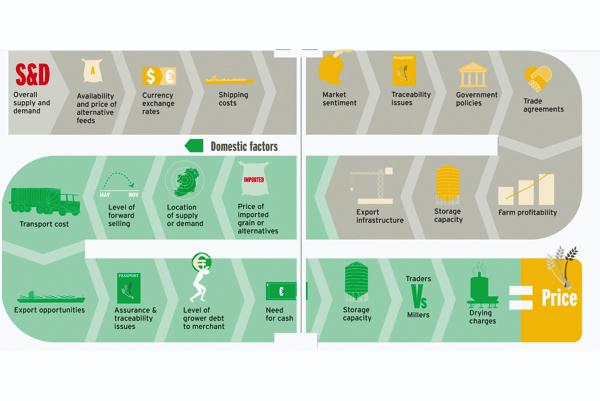
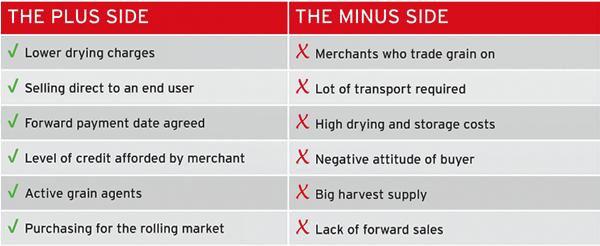
The real answer to this question is ‘the market’. The market is a mix of a huge range of factors, many of which are nothing to do with grain at all. Things like the cost of transport, currency exchange rates, industrial relations, government policies, trade agreements, attitudes of financial institutions, etc, can all have an impact on the price of grain and these are well outside of the control of either producers or end users.
Supply versus demand sets up the classic market arrangement but this is impacted upon by the types of factors stated previously. Supply is governed by the area planted, climatic interaction, yield levels, storage capacity and the need for cash. Demand is impacted by livestock numbers, biofuel policies, grass growth levels, competitive alternatives, farm profitability, etc.
Sentiment
Understanding these factors helps one to understand the market and to read it. But reading the market is a far from accurate science. There was no economic justification for the high price levels of 2007 nor was there justification for them being on the floor in 2009. And if you remember these years, €280/t did not entice some growers to wheat sell in autumn 2007 and imported barley could be bought for €115/t (dry) in the winter of 2009/2010. This level of volatility eventually encouraged Irish growers to begin forward selling in 2011, with a big uptake in 2012 when both yield and quality disappointed.
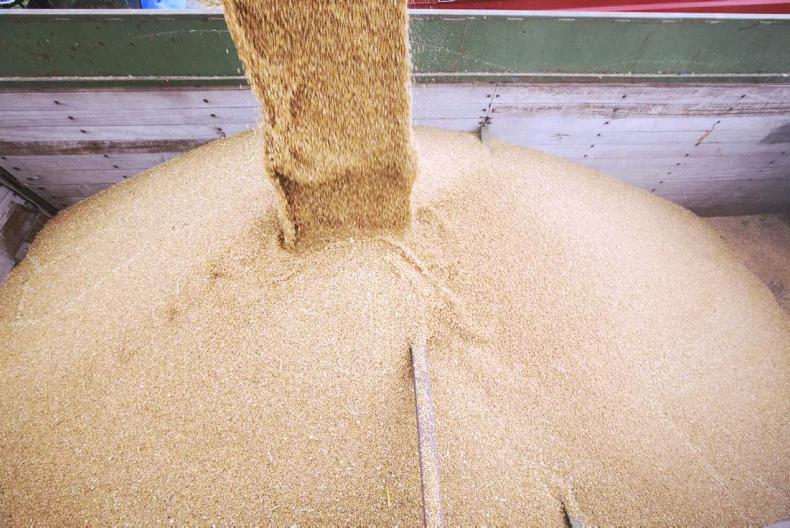
There has been very little forward selling in 2013. There is also a lot more barley in the ground in 2013 so there will again be a huge amount of barley delivered for sale at harvest. This will put considerable pressure on the market in the absence of forward sales. The more product is put on the market, the more supply pressure there is to push prices down to encourage purchase.
||PIC2||
Harvest selling leaves buyers in an awkward place as to where the price will be two, five or eight months later. Buyers set their prices against this background. Having a proportion of the crops already sold relieves some harvest pressure, as well as providing some level of risk management for the grower.
In answer to the original question, ‘who sets the grain price?’ – the easiest answer is the cheapest seller on the day. If someone can buy for this price why should they pay more? Things like traceability, assurance, carbon footprint or even quality can be dismissed when ‘the price is right’.
Alternatives
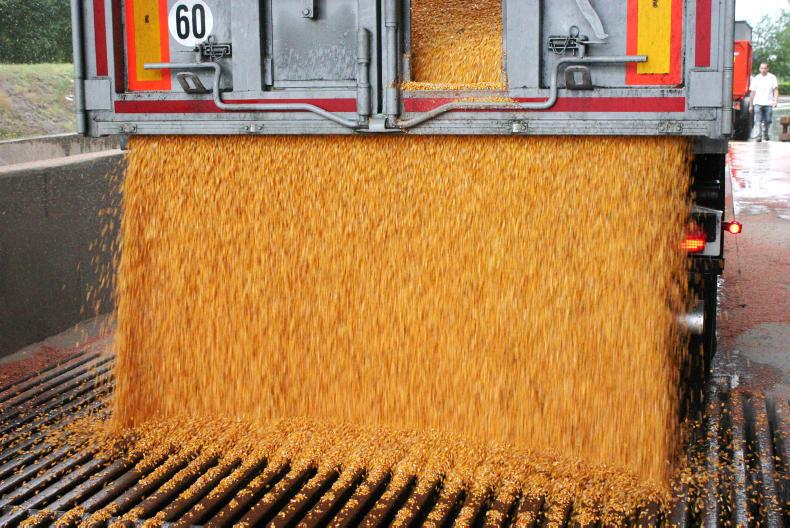
Grain is more akin to the meat than the dairy market in that individual products compete with each other within the market as relative prices change. In the grain market, feed wheat competes with feed barley and both compete with maize and cereal substitutes. But these products are not technically equal in terms of feeding value and so price differentials apply.
||PIC3||
These are not fixed either because they can be influenced by things like the cost of enzymes that can be used to complement certain grains, or a specific diet, or the different value of a product in different rations.
Other grains are very market specific. Only milling wheat can be used to produce baking flour and only malting barley varieties are used to make malt.
There are also many cereal substitutes that can be used in the feed market and these can be more or less attractive at different times. When protein is expensive, substitutes may be more attractive if their protein level is higher. The cost of shipping and transport can be a big factor here too as virtually all these feedstuffs are imported.
The grains
While alternatives are important, it is still the overall supply of grains that drives the market. If corn is scarce, the price is likely to be high. This may then decrease the availability of byproducts from processing industries like bioethanol and this will, in turn, decrease the supply of corn distillers.
Over the years wheat was probably the most influential driver of prices. That may be because nearly 80% of the world’s wheat is consumed by humans and they tend to be more directly responsive. It may also be because wheat is a much smaller crop than the combined feeds and there is no alternative for milling. However, feed grains have been more influential in the market in recent decades as overall global demand increased.
If you only have barley to sell, then the market can seem very simple. But it is not. Your merchant/buyer may have to sell your grain to a mill which has access to a broad range of ingredients, many of which can replace barley in some or all rations. So it must be competitive with other feeds.
Maize or corn is the main feed alternative today because it is expected to be available in large quantities and it is very competitively priced. The result is that maize is offering many feed producers better value than small grains and so this is what users are buying forward.
Market influences
Supply and demand play a part in pricing, as least that is what the laws of economics state. This is certainly having an impact this year with supplies currently perceived to be very high. But in recent years supply and demand levels have not been the driver of the extreme price volatility when speculators sometimes had a disproportionate influence.
The financial markets have played a big part in pricing over the past decade or so. Funds and speculators can take very significant positions with regard to investment in grains so that prices rise when they buy and fall when they sell. These guys could have a massive tonnage purchased at any point in time and a lot of this could be unloaded within a day or two if sentiment changed. So they are hugely influential in the modern market.
But it is not just grains. Higher or lower interest in grains may be a direct consequence of market prospects in other commodities like gold, sugar or oil. If there are poor prospects in other commodity markets these guys are more likely to be interested in grains and vice versa. But they are now a real factor in the market and cause prices to react much faster than they might traditionally, if supply and demand were the only drivers.
Feed ingredient alternatives have been in the market for a long time. At its simplest, this is the competition between the grains themselves, e.g. wheat, barley, oats, maize, sorghum, etc, and the alternatives such as distillers, maize gluten, citrus pulp, beet pulp, soya hulls, etc. Anything that puts any of these in surplus or deficit can impact on the overall market. But with individual feeds being so versatile, real shortages of feed are seldom an issue as high prices can help transport products from the other side of the globe should the need arise. But surpluses can impact heavily.
Futures markets
The futures markets have a mixed relationship with real physical prices. They provide a guide to future value and a hedge within the market. The futures markets provide a snap-shop of future prices from a single point in time. This price can quickly change as circumstances change, e.g. increasing drought pressure, increased planted area, etc. But the futures market is not the market and it can vary significantly from the actual physical price for that position when that time comes. ‘Futures don’t eat grain’.
The futures market is a trading house for opinions on where price levels will be down the road. But it has real influence as it provides a hedge for sellers and buyers to minimise the risk associated with price change and, therefore, stock value change into the future.
The use of the futures market provides buyers with a mechanism to buy forward but it is complex and you need to know what you are doing. For example, the French MATIF milling wheat price is used as a basis for physical malting barley prices here. That same MATIF futures price has long served as a guide to feed wheat price in this country.
Mechanics of price
So who sets the grain price? The apparent answer is Glanbia or Dairygold or your local merchant. But it is not really them; they make a judgement on what they can re-sell your grain for, with a margin, if they pay you price ‘X’. In making this judgement they will have to compete against imported grains, alternatives, etc. into the future.
Negative impacts
This year, cheap imported maize is expected to set the base price for feed grains. New crop corn is keenly priced to buy demand so corn price is the one to watch. But one could see corn price impact on feed grains while wheat price, driven by milling wheat, could rise depending on how much milling wheat is lost from the milling market due to inadequate milling quality.
Many feed mills have come to prefer maize to barley or wheat and some say they will only buy barley if it is available at a significant price discount to maize. In recent weeks this was stated to be €20/t but more recently it appears to be €15/t.
So if we take maize as being available at €188/t ex-port for November, this would put dry barley at €173/t for November (€188 minus €15). But then location kicks in because there could be barley on the doorstep while the maize might have to be hauled a long distance from port.
So the relative location of the buyer and the seller also has a significant impact. Last week barley was priced at €182/t, meaning that players in the market realise that barley will access a proportion of the market that will not be filled by maize.
If one was to take €37/t as the drying and carrying cost to November, this equates to a green harvest price of €145/t. Some merchants take €40/t to dry and carry to November and this would mean €142/t green.
KEY POINTS
Grain is a global commodity and price is impacted upon by a huge range of factors.
Supply versus demand provides the primary market/price driver but sentiment forces quicker and more ferocious market responses.
The majority of price factors are outside the grower’s control and also the merchant’s control.
The downward price pressure for harvest 2013 could still change direction if global output is reduced by weather events.
Many in the trade are hopeful that the green barley price will be close to €150/t.


SHARING OPTIONS