



Having started as a maker of grain cleaning equipment, Amazone subsequently concentrated on crop production machinery, from cultivation and drilling through to spreaders and sprayers.
And in relatively recent years, the company has made a big investment in electronic innovation and control systems and has received many awards for its sophisticated control systems on spreaders and sprayers.
Last month, the company held an event which showed the many innovations that it will launch at AgriTechnica. This was held at its BBG production facility at Leipzig, a factory which has been in the soil cultivation equipment business for 150 years.
It was established in 1863 by a man called Rudolph Sack and he became famous for two things. He made the first steel plough in Germany and in making this, he also initiated the industrialised manufacture of agricultural machinery.
When the BBG factory in Leipzig, which is in former East Germany, moved to public control under the Soviets, it continued to be involved in plough and tillage equipment manufacture.
But it went through a period of great uncertainty after the fall of the wall before it was purchased by the Amazone group 15 years ago.
Given the history of the plant and the fact that the company felt it needed to be producing ploughs to complete its soil preparation options, it is hardly surprising that the decision was made in 2011 to develop a new plough and produce it in Leipzig.
Cayron plough
This itself is an interesting story. A design team was put in place to look at existing plough design and the task was set to produce a new design that would enable the production of a lighter plough with reduced draught that was very robust.
||PIC2||
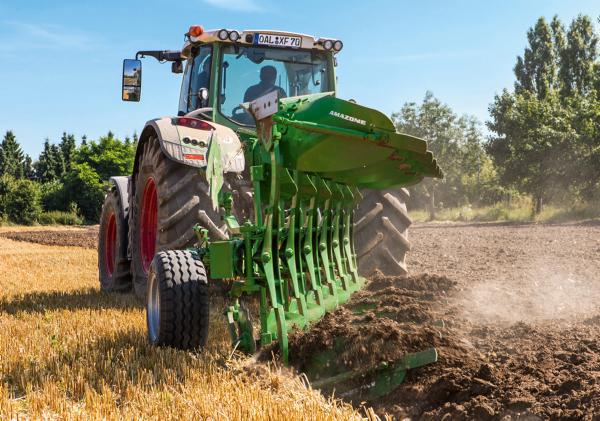
The end product, so far, was presented at the Leipzig event as the Cayron 200 mounted five to six-furrow reversible plough.
This is a technically advanced plough with 100cm body to body clearance combined with a frame height of 83cm to help cope with high trash volumes. It has a stepless hydraulically operated furrow width adjustment from 30 to 55cm with a unique folding system for rotation. Front furrow width is also hydraulically controlled.
The turnover mechanism is designed on a 130mm diameter hollow shaft which neatly houses the hydraulic hoses during turning. The plough furrows do not have to close up while turning.
The headstock is fitted with a one-piece adjustable sprung cross shaft. This can be adjusted for height and is mounted on two pivoting bearings to help reduce lifting strain.
||PIC3||
This Cayron plough will be on show at AgriTechnica and will be distributed as a pre-production series in 2014. Series production is planned for 2015.
Cenius 6003 & 7003-2TX
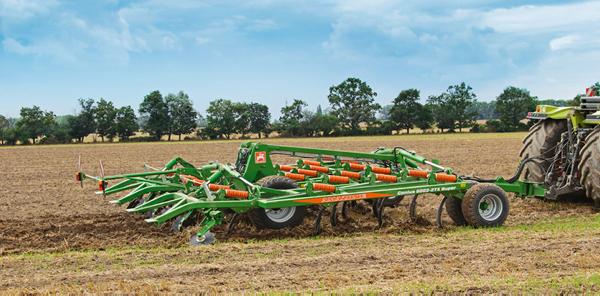
The new Cenius comes in six and seven-metre working widths for farmers that need big cultivation capacity.
These are trailed machines to broaden the range of its smaller mounted models. The new machines have a lot of interesting features and can come with either shear bolt or spring release tines.
It has a row spacing of 28cm and an under-frame clearance of 80cm. It can be fitted with a range of coulter configurations depending on one’s needs. The standard fitting appears to be the C-mix tines. It can be operated with or without the depth control roller fitted at the rear.
||PIC4||
Interestingly, it is cleared for 40km/ha road speed for transport. Air brakes are fitted as standard. It also uses a weight transfer system to the drawbar to help with traction when needed. This machine is not suited to shallow cultivation.
Alterations
to Cirrus drills
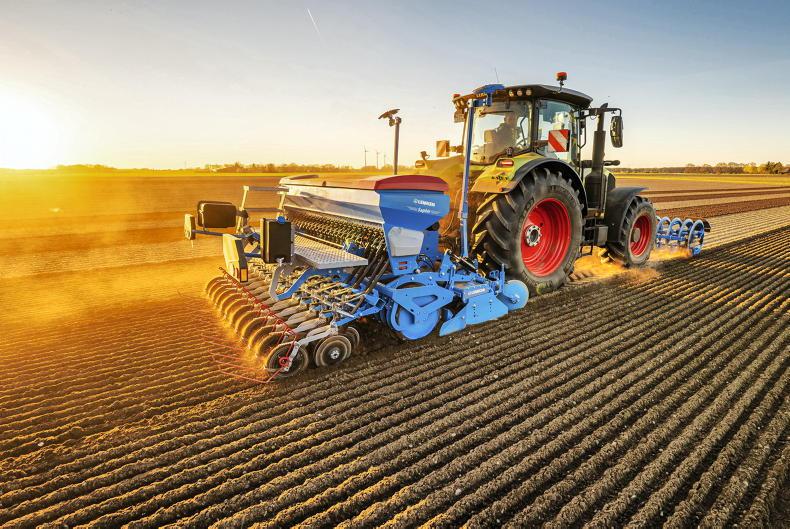
The Cirrus drill has received a face-lift also with the introduction of the 03 Series. For growers with distant land, the new 03 machines are fitted with new Matrix tyres which, combined with brakes as standard, enable a fully loaded drill to be pulled at up to 40kph.
This new tyre is a radial and is good to self-clean. It is also said to be ‘low compression’ and so is easier to pull. The design of the new tyre compresses bands of soil into which the seeds will be sown. This helps germination and soil root contact while allowing easy percolation in the other bands.
||PIC5||
Standard lugged tyres can also be fitted, but these are confined to 25 kph in road use. The counter spacing has been widened slightly to 16.6cm (versus 12.5cm). This cultivation drill encompasses levelling, mulching, reconsolidation, sowing harrowing and pressing.
The new slimline hopper can carry different configurations of seed and fertilizer to meet grower requirements.
All machines use electric seed distribution drives and a flow monitor can be fitted to every or every second coulter pipe. A shorter compact version of the drill is also available.
The 03 Series also comes with Amazone’s new Amatron 3 electronic control units which can also be used to operate some other Amazone machines.
Sprayers
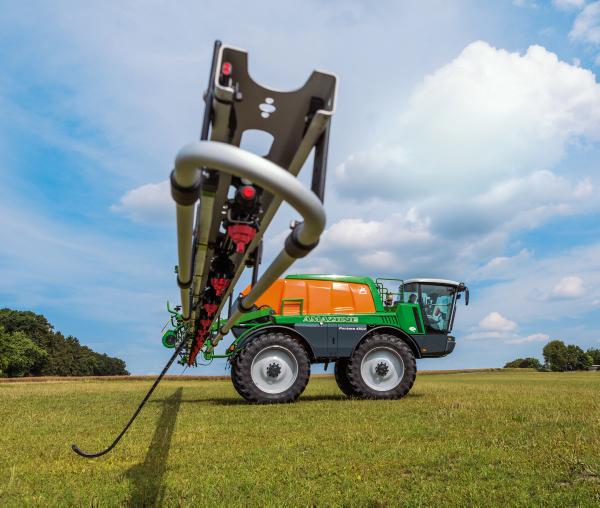
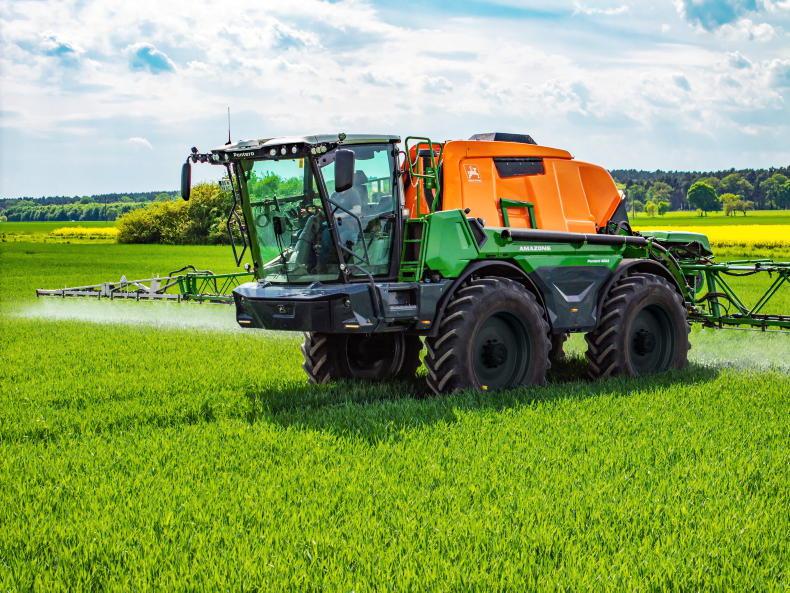
The company showed two large sprayers also. Its new Pantera 4502 self propelled comes with 4,800-litre tank capacity and a 160 kW Deutz engine to meet the new emissions standards.
Despite the size, it is rated for 50 kph on the road with the help of new disc brakes being fitted all round. It has variable track width up to three metres for use in controlled traffic situations and variable ground clearance.
This sprayer is fitted with many modern control devices, including Amaselect, an electric four-nozzle body which can control a range of features from total output to drift reduction, and all done electronically. This can also accommodate GPS controlled individual nozzle cut-off.
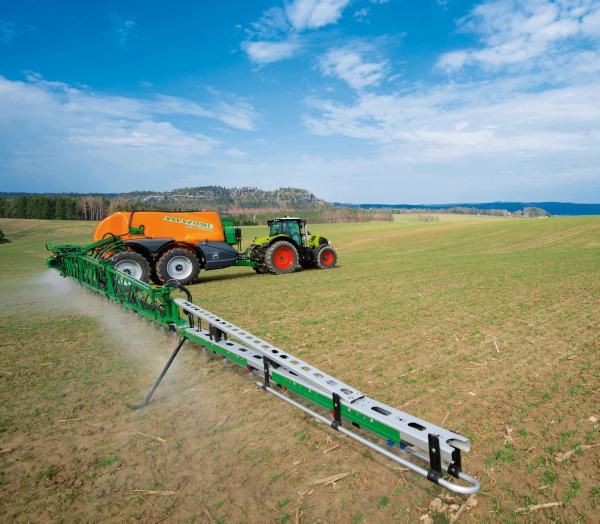
The company also showed its UX 11200 tandem trailed sprayer. As well as its enormous tank size, this machine is fitted with aids such as weight transfer to the tractor, LED lights on individual nozzles and automatic slope compensation for use on hills.
Spreaders
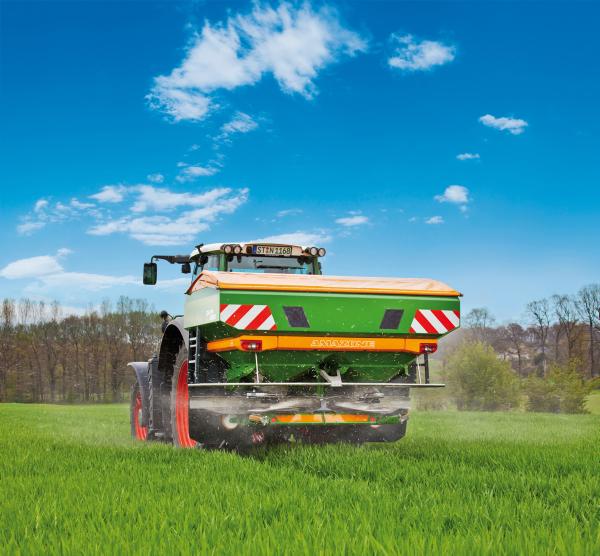
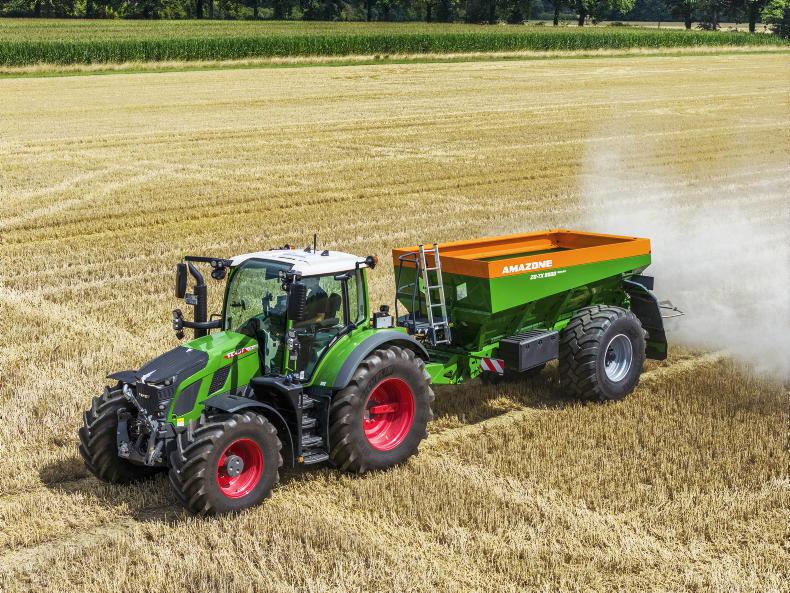
Amazone has sold one million spreaders since it began spreader manufacture in 1917 and it has introduced its new ZA TS for 2013.
This machine claims to have the capacity to spread from 18 to 54 meters width.
To meet this requirement means that it has the capacity to spread 10.8kg of fertilizer per second.
This huge capacity means that it needs to be fitted with faster electronic controls, including weigh cell devices to help control rate and delivery, even at fast forward speeds .


SHARING OPTIONS