



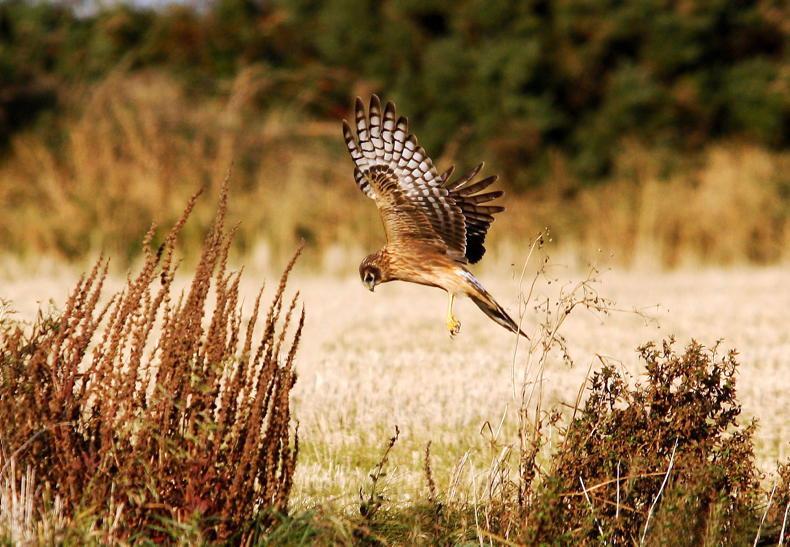
BirdWatch has said it is pleased that the requirement to cultivate stubbles over winter looks set to be removed.
The organisation said the rule was introduced despite its “vociferous opposition” due to the risk it posed to food supplies for red- and amber-listed birds of conservation concern.
However, BirdWatch Ireland expressed disappointment that the requirements were not removed sooner and cautioned that work needed to be done to provide habitats for wintering and breeding farmland birds.
“The stubble fields left after crops have been harvested often harbour spilled seeds which seed-eating birds like yellowhammer and rodents will eat during the cold winter. These small birds and rodents are prey species for other birds including the hen harrier, a highly protected and increasingly rare bird of prey that is experiencing ongoing declines. In our submission to government at that time, we highlighted that 30 red- or amber-listed birds of conservation in Ireland relied on winter stubbles for food,” the statement from BirdWatch Ireland outlined.
Regulations
The statement said that while the regulations were brought in to reduce nitrate loss to waters, another important habitat, it added: “The shallow cultivation rule was introduced to address nitrate leaching from arable land but without assessment of the impacts to threatened bird species known to forage on stubbles.
“Furthermore, the Natura impact statement of the Nitrates Action Programme in 2022 did not assess the impacts of the shallow cultivation of stubbles rule on Annex 1 hen harrier and golden plover or any other protected species as is required under the habitats directive. We raised our concerns about this with government.”
Research
Research started by Teagasc after the stubble cultivation requirements were brought in is not yet complete.
However, BirdWatch Ireland outlines a study undertaken in 2023 on 30 farms in an area of south Cork. It looked at the habitat associations of farmland birds including on arable land.
“The study found that the most important field type for farmland birds over winter, in terms of numbers (48%) and scale, was winter stubble. It was on this basis that the decision was made by Government to scrap the winter stubble rule,” the statement added.
Head of policy and advocacy at BirdWatch Ireland, Oonagh Duggan said: “We welcome this decision to scrap the shallow cultivation of winter stubble rule in the Nitrates Action Programme. The rule was introduced in a knee jerk reaction to address nitrate pollution where it was stated that ‘all sectors had to play their part’ but there was really inadequate consideration, ecological assessment or mitigation of the impacts to at least 30 bird species, many threatened, that forage on winter stubbles.
“The research on the risk of effects on farmland birds should have been commissioned first before any changes were proposed for winter stubbles and not after the fact. Nitrate pollution has to be addressed but when trying to address one environmental problem, it makes no sense to create another one.
“The scrapping of the rule won’t help farmland birds this winter though as farmers will have already cultivated their fields. It was an irresponsible decision to mandate farmers to shallow cultivate without adequate consideration of the effects on declining bird species. We are in a biodiversity crisis and farmland birds are the fastest declining bird group in Ireland. Uncultivated and unsprayed stubble fields are really important for birds like hen harrier, skylark [and] yellowhammer especially in the absence of diverse habitats on farmland. The shallow cultivation rule is one more threat to them.
“BirdWatch Ireland used every opportunity possible to advocate for the scrapping of this rule with officials and politicians at national and at EU level. BirdWatch Ireland calls on Government to incentivise farmers appropriately to restore habitats on farmland, including assistance for stubble fields in Ireland’s next CAP Strategic Plan and National Restoration Plan in order to halt and reverse the declines of farmland birds.”




SHARING OPTIONS