The first half of the year is the optimal window to reseed, according to Teagasc Grass 10 manager John Maher. Speaking at the Mountbellew College reseeding demonstration he said this allows for the paddock to be back in the grazing rotation faster.
Another big plus for reseeding in the first half of the year is weed control. Maher said that once you spray weeds at the right stage, you will wipe them out; if you leave it longer, then the plants will be more established and harder to kill.
The Mountbellew College Dairy Unit is run by farm manager John Tully and is home to 96 milking cows on a milking platform of 33ha.
Those in attendance at a reseeding demo on Friday heard the key messages from experts on soil fertility, liming, seed selection, spraying and reseeding methods.
Soil management
Galway based Teagasc advisor Michael Donoghue said that grass growth starts below the surface, if the soil fertility is not managed correctly you won’t see a difference in reseeded pasture than in the pasture you already have.
Farmers must have adequate levels of nutrients in the soil prior to reseeding; if soil fertility is not addressed then you will not see an increase in production from reseeded ground.
Donoghue said the five steps to manage soil fertility are:
Test soil.Manage soil pH.Bring all soils to an index of 3.Spread slurry and farmyard manure. Balance any soils low in nutrients with chemical fertiliser. Every extra tonne of grass grown is worth €180 to the farmer
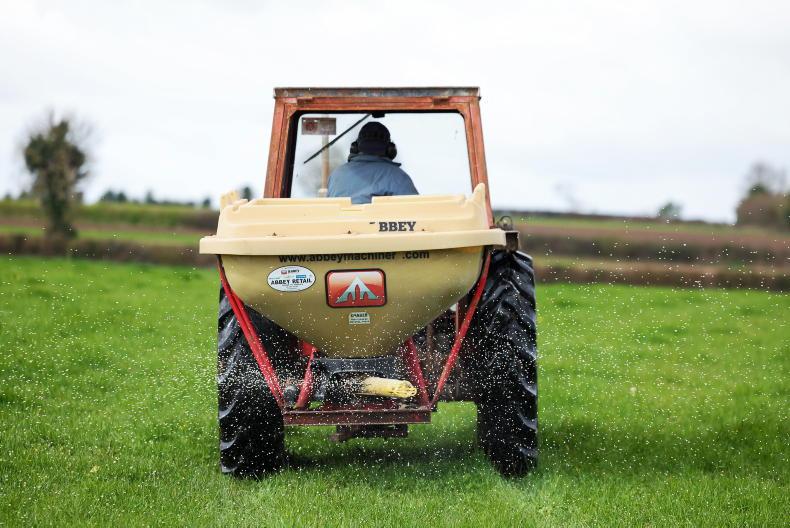
He also stated that three bags of 10-10-20 should be applied when reseeding, new reseeds require high levels off P and K to give them the ‘kick-start’ they need to out-compete weeds.
Seed selection

Speakers talking about the input and return costs of reseeding at Mountbellew reseeding demonstration
Nicky Byrne of Germinal said that grass variety selection is crucial when reseeding.
“Farmers need to choose whether the grass is going to be primarily used for grazing or silage, then they should look at the variety quality and heading out dates before selecting the grass seed,” he said.
Mixtures of three or four varieties prove best from researched trials said Nicky. He also said that “every day after a grass seed heads out their will be a 0.5 DMD reduction in the silage quality, so cutting silage at least four days prior to the heading out date is necessary for making high quality silage”.
A major talking point was that John Tully had not included any clover in his grass mixtures. Instead he opted to choose Abergain and Aberchoice varieties, both being very highly digestibility swards. Byrne said for animals to get a response of clover in the sward, the clover must be 25% of the herbage available.
In an intensively managed system such as Tully's this is not possible, the use of no clover also allows him to use more sprays to manage weed control.
Pre and post emergence spraying
Those at the demo heard that it is important to get rid of old grasses so there is no competition with new grasses. Use a glyphosate spray to burn off the old sward before reseeding.
It is even more important to use a post-emergence spray. When you reseed, you have a new seed bed for grass seeds, but also for weeds to establish themselves. It was noted the ideal time for spraying is about six weeks after sowing grass seed.
Reseeding methods
John Maher outlined on the day that “farmers need to choose the best method of reseeding that is suited to them, whether it’s based on soil type or lack of labour to pick stones or other reasons these are the factors that dictate whether you choose min-till method or if you will plough prior to reseeding”.
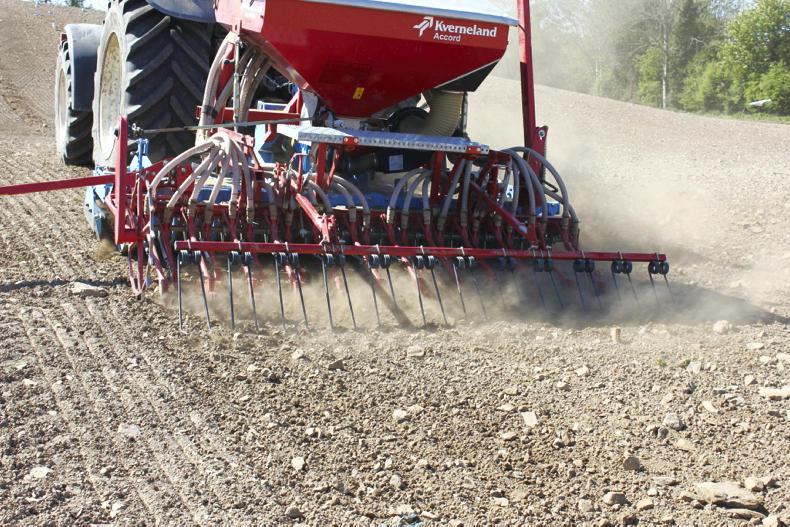
He outlined the different reseeding methods; plough and reseed, min-till, direct drilling and other combinations.
He said where you are considering ploughing, not to go too deep, ideally no deeper than 6 inches. For best results all surface trash should be cleared prior to reseeding. If there is surface trash, he said that ploughing may be the best option. If there is compaction, it may also be a good option.
If there are a lot of stones in the soil, then a min-till option may be better suited. Maher said this is a cheaper method which is becoming more and more popular with farmers. When using a min-till method he advised to use a higher rate of seed.
Read more
Dairy management notes: silage, reseeding and reviewing the system
Repair or reseed a damaged sward?
The first half of the year is the optimal window to reseed, according to Teagasc Grass 10 manager John Maher. Speaking at the Mountbellew College reseeding demonstration he said this allows for the paddock to be back in the grazing rotation faster.
Another big plus for reseeding in the first half of the year is weed control. Maher said that once you spray weeds at the right stage, you will wipe them out; if you leave it longer, then the plants will be more established and harder to kill.
The Mountbellew College Dairy Unit is run by farm manager John Tully and is home to 96 milking cows on a milking platform of 33ha.
Those in attendance at a reseeding demo on Friday heard the key messages from experts on soil fertility, liming, seed selection, spraying and reseeding methods.
Soil management
Galway based Teagasc advisor Michael Donoghue said that grass growth starts below the surface, if the soil fertility is not managed correctly you won’t see a difference in reseeded pasture than in the pasture you already have.
Farmers must have adequate levels of nutrients in the soil prior to reseeding; if soil fertility is not addressed then you will not see an increase in production from reseeded ground.
Donoghue said the five steps to manage soil fertility are:
Test soil.Manage soil pH.Bring all soils to an index of 3.Spread slurry and farmyard manure. Balance any soils low in nutrients with chemical fertiliser. Every extra tonne of grass grown is worth €180 to the farmer
He also stated that three bags of 10-10-20 should be applied when reseeding, new reseeds require high levels off P and K to give them the ‘kick-start’ they need to out-compete weeds.
Seed selection
Speakers talking about the input and return costs of reseeding at Mountbellew reseeding demonstration
Nicky Byrne of Germinal said that grass variety selection is crucial when reseeding.
“Farmers need to choose whether the grass is going to be primarily used for grazing or silage, then they should look at the variety quality and heading out dates before selecting the grass seed,” he said.
Mixtures of three or four varieties prove best from researched trials said Nicky. He also said that “every day after a grass seed heads out their will be a 0.5 DMD reduction in the silage quality, so cutting silage at least four days prior to the heading out date is necessary for making high quality silage”.
A major talking point was that John Tully had not included any clover in his grass mixtures. Instead he opted to choose Abergain and Aberchoice varieties, both being very highly digestibility swards. Byrne said for animals to get a response of clover in the sward, the clover must be 25% of the herbage available.
In an intensively managed system such as Tully's this is not possible, the use of no clover also allows him to use more sprays to manage weed control.
Pre and post emergence spraying
Those at the demo heard that it is important to get rid of old grasses so there is no competition with new grasses. Use a glyphosate spray to burn off the old sward before reseeding.
It is even more important to use a post-emergence spray. When you reseed, you have a new seed bed for grass seeds, but also for weeds to establish themselves. It was noted the ideal time for spraying is about six weeks after sowing grass seed.
Reseeding methods
John Maher outlined on the day that “farmers need to choose the best method of reseeding that is suited to them, whether it’s based on soil type or lack of labour to pick stones or other reasons these are the factors that dictate whether you choose min-till method or if you will plough prior to reseeding”.
He outlined the different reseeding methods; plough and reseed, min-till, direct drilling and other combinations.
He said where you are considering ploughing, not to go too deep, ideally no deeper than 6 inches. For best results all surface trash should be cleared prior to reseeding. If there is surface trash, he said that ploughing may be the best option. If there is compaction, it may also be a good option.
If there are a lot of stones in the soil, then a min-till option may be better suited. Maher said this is a cheaper method which is becoming more and more popular with farmers. When using a min-till method he advised to use a higher rate of seed.
Read more
Dairy management notes: silage, reseeding and reviewing the system
Repair or reseed a damaged sward?








SHARING OPTIONS