In a recent news release from the Sustainable Energy Authority of Ireland (SEAI), the reader could be forgiven for believing that wind is the only renewable energy source in Ireland. In 14 short paragraphs, wind is mentioned 16 times without a single reference to biofuel energy including wood biomass in the SEAI announcement of its report Renewable Energy in Ireland 2012.
The economic and environmental arguments in favour of renewable energy are indisputable, especially for Ireland. Apart from spending €6.5bn annually on imported fossil fuels, 16% of Ireland’s overall energy demand has to be sourced from renewables by 2020 under the EU Directive 2009/28/EC.
We are blessed in Ireland with ideal conditions for both wind and wood energy, but an increasing number of commentators are expressing serious reservations about the dominant position of wind, which is viewed by policy makers as virtually the only renewable energy source.
Renewable energy has a number of benefits: it reduces our dependency on fossil fuels and our import bill, as well as contributing to climate change mitigation. Forests and their products achieve these objectives. Burning wood is carbon neutral, unlike fossil fuels, as the carbon dioxide released during energy generation is continuously replaced by the growing of trees in forests and woodlands, providing they are sustainably managed.
Trees remove or sequester carbon dioxide from the atmosphere and also store it in construction and other products.
Trees and the wood from the trees are essential to sustainable living. They act as a counterweight to fossil fuels, which we depend on for transportation, factory production and energy generation or non-sustainable living. According to the United Nations Intergovernmental Panel on Climate Change (2000), these non-sustainable aspects of living emit six billion tonnes of carbon every year. Add in the indiscriminate felling of forests in global deforestation and close to eight billion tonnes of carbon are released annually. On the other hand, forests capture 2.3bn tonnes of carbon annually from the atmosphere
The Government’s policy foresees major growth in the use of wood for energy generation in the future, providing Ireland achieves at least an annual 15,000-hectare afforestation programme leading to 17% forest cover around 2035 compared to 40% in the EU. Ireland’s annual afforestation programme has dropped to below 7,000 hectares in recent years, so at current planting levels the 17% target won’t be achieved until the final quarter of this century.
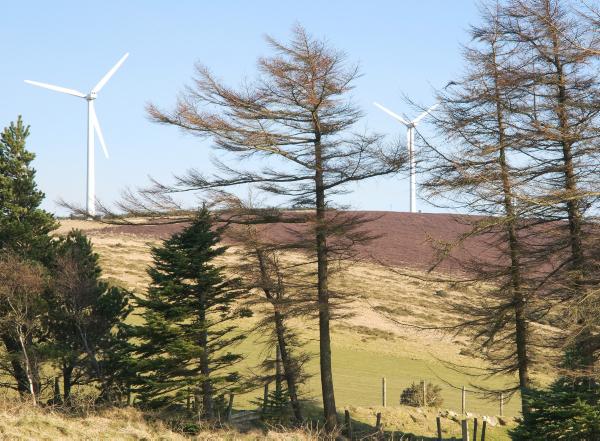
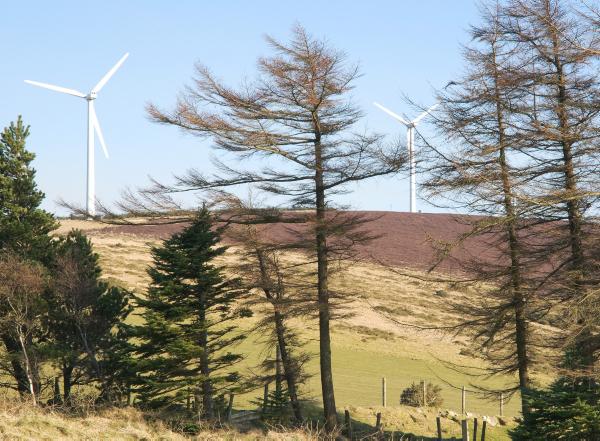
As a result, the major benefits of forests and wood energy are unlikely to be realised. Without meaningful targets for wood biomass, wind energy is likely to be the major renewable energy source in Ireland. The wisdom of promoting wind energy to such an extent has been questioned by a number of people, including members of a newly formed organisation, Wind Aware.
A Wind Aware spokesperson maintains that wind, unlike other renewables, including wood biomass, “is incapable of significantly reducing carbon dioxide and the current focus on wind as the only renewable source of power has diverted resources from finding meaningful solutions to our global warming problem”.
They not only oppose the damaging impact to the landscape and tourism resulting from wind farms, but also present a range of economic and social arguments against wind energy.
The argument by wind developers that there is no serious alternative renewable energy source has been challenged by many countries. Finland, for example, has dismissed wind as a significant energy source. Their renewable energy programme includes 60% hydropower and 38% forest industry biofuels and biomass, while wind accounts for less than 1% of renewables.
At a recent conference organised by the Irish Bioenergy Association, Dr Horst Jauschnegg, president of the Austrian Biomass Association, said that 30% of the country’s gross domestic energy consumption comprises renewable energy, compared to 7% in Ireland. Bioenergy has 57.6% of the renewable energy market, with wind energy generating only 2.1%. Wood biomass alone has a 46.5% share of the renewable energy market and 80.9% of the bioenergy market.
The key drivers for the development of bioenergy in Austria are:
Bioheat – investment subsidies for small-scale heating systems (logs, chips and pellets) and biomass district heating plants.Bioelectricity – Austria has a green electricity law with guaranteed feed-in tariffs. Between 2003 and 2012, 320MW solid biomass and 78MW biogas capacity was installed, despite the post-2007 recession.Biofuels – obliged minimum share for biofuels at 7% has been reached. Fossil diesel and petrol have a higher mineral oil tax than blended fuels.Most Austrian homes are part of a network of biomass district heating units and combined heat and power plants are dotted throughout the countryside instead of turbines.
Despite the success of wood energy, the Austrians continue to increase market share for biomass, including greater mobilisation of the sustainable available timber resources, especially from small private forest owners and expansion of infrastructure in forests including forestry roads as well as intensification of education and training.
Wood biomass has created 21,000 sustainable jobs in Austria and generates €2.8bn turnover.
“Without bioenergy, Austria would have to spend an additional €2.8bn annually on imported fossil fuels,” Horst told the conference. “We can spend our money to support projects in Dubai or we can spend money to support projects in our own regions.”
Unlike Ireland, the Austrians have opted to shop local for energy and in addition, 9.8m tonnes of CO2 emissions are saved.
Unlike many European countries, Ireland has low forest cover. However, the average yield class (YC) of Irish forests exceeds 20 (cubic metres/hectare/per annum) compared to less than YC 5 in Finland. In simple terms, this means that a one-hectare Irish forest produces at least four times more timber or biomass annually than a Finnish forest.
The advantages of achieving forest cover of 17% of the land area – the national target – without negatively impacting on agricultural output are compelling given our potential yields and suitable land available for productive forests.
This level of land area under forest would provide yields comparable with 70% forest cover in countries such as Sweden and Finland.
Wind Aware was launched last week and has an impressive list of speakers including: Fr Sean Healy, economist and director of Social Justice Ireland; Jim Power, chief economist at Friends First Group and Don Moore, chairman of the Energy Standing Committee of the Irish Academy of Engineering (IAE).
They are likely to be major contributors to the renewable energy debate. However, opposition to wind energy won’t be sufficient on its own. The success of the movement will be judged on its proposals for community led renewable energy alternatives. That will require looking at a menu of renewables including wood biomass.
In a recent news release from the Sustainable Energy Authority of Ireland (SEAI), the reader could be forgiven for believing that wind is the only renewable energy source in Ireland. In 14 short paragraphs, wind is mentioned 16 times without a single reference to biofuel energy including wood biomass in the SEAI announcement of its report Renewable Energy in Ireland 2012.
The economic and environmental arguments in favour of renewable energy are indisputable, especially for Ireland. Apart from spending €6.5bn annually on imported fossil fuels, 16% of Ireland’s overall energy demand has to be sourced from renewables by 2020 under the EU Directive 2009/28/EC.
We are blessed in Ireland with ideal conditions for both wind and wood energy, but an increasing number of commentators are expressing serious reservations about the dominant position of wind, which is viewed by policy makers as virtually the only renewable energy source.
Renewable energy has a number of benefits: it reduces our dependency on fossil fuels and our import bill, as well as contributing to climate change mitigation. Forests and their products achieve these objectives. Burning wood is carbon neutral, unlike fossil fuels, as the carbon dioxide released during energy generation is continuously replaced by the growing of trees in forests and woodlands, providing they are sustainably managed.
Trees remove or sequester carbon dioxide from the atmosphere and also store it in construction and other products.
Trees and the wood from the trees are essential to sustainable living. They act as a counterweight to fossil fuels, which we depend on for transportation, factory production and energy generation or non-sustainable living. According to the United Nations Intergovernmental Panel on Climate Change (2000), these non-sustainable aspects of living emit six billion tonnes of carbon every year. Add in the indiscriminate felling of forests in global deforestation and close to eight billion tonnes of carbon are released annually. On the other hand, forests capture 2.3bn tonnes of carbon annually from the atmosphere
The Government’s policy foresees major growth in the use of wood for energy generation in the future, providing Ireland achieves at least an annual 15,000-hectare afforestation programme leading to 17% forest cover around 2035 compared to 40% in the EU. Ireland’s annual afforestation programme has dropped to below 7,000 hectares in recent years, so at current planting levels the 17% target won’t be achieved until the final quarter of this century.
As a result, the major benefits of forests and wood energy are unlikely to be realised. Without meaningful targets for wood biomass, wind energy is likely to be the major renewable energy source in Ireland. The wisdom of promoting wind energy to such an extent has been questioned by a number of people, including members of a newly formed organisation, Wind Aware.
A Wind Aware spokesperson maintains that wind, unlike other renewables, including wood biomass, “is incapable of significantly reducing carbon dioxide and the current focus on wind as the only renewable source of power has diverted resources from finding meaningful solutions to our global warming problem”.
They not only oppose the damaging impact to the landscape and tourism resulting from wind farms, but also present a range of economic and social arguments against wind energy.
The argument by wind developers that there is no serious alternative renewable energy source has been challenged by many countries. Finland, for example, has dismissed wind as a significant energy source. Their renewable energy programme includes 60% hydropower and 38% forest industry biofuels and biomass, while wind accounts for less than 1% of renewables.
At a recent conference organised by the Irish Bioenergy Association, Dr Horst Jauschnegg, president of the Austrian Biomass Association, said that 30% of the country’s gross domestic energy consumption comprises renewable energy, compared to 7% in Ireland. Bioenergy has 57.6% of the renewable energy market, with wind energy generating only 2.1%. Wood biomass alone has a 46.5% share of the renewable energy market and 80.9% of the bioenergy market.
The key drivers for the development of bioenergy in Austria are:
Bioheat – investment subsidies for small-scale heating systems (logs, chips and pellets) and biomass district heating plants.Bioelectricity – Austria has a green electricity law with guaranteed feed-in tariffs. Between 2003 and 2012, 320MW solid biomass and 78MW biogas capacity was installed, despite the post-2007 recession.Biofuels – obliged minimum share for biofuels at 7% has been reached. Fossil diesel and petrol have a higher mineral oil tax than blended fuels.Most Austrian homes are part of a network of biomass district heating units and combined heat and power plants are dotted throughout the countryside instead of turbines.
Despite the success of wood energy, the Austrians continue to increase market share for biomass, including greater mobilisation of the sustainable available timber resources, especially from small private forest owners and expansion of infrastructure in forests including forestry roads as well as intensification of education and training.
Wood biomass has created 21,000 sustainable jobs in Austria and generates €2.8bn turnover.
“Without bioenergy, Austria would have to spend an additional €2.8bn annually on imported fossil fuels,” Horst told the conference. “We can spend our money to support projects in Dubai or we can spend money to support projects in our own regions.”
Unlike Ireland, the Austrians have opted to shop local for energy and in addition, 9.8m tonnes of CO2 emissions are saved.
Unlike many European countries, Ireland has low forest cover. However, the average yield class (YC) of Irish forests exceeds 20 (cubic metres/hectare/per annum) compared to less than YC 5 in Finland. In simple terms, this means that a one-hectare Irish forest produces at least four times more timber or biomass annually than a Finnish forest.
The advantages of achieving forest cover of 17% of the land area – the national target – without negatively impacting on agricultural output are compelling given our potential yields and suitable land available for productive forests.
This level of land area under forest would provide yields comparable with 70% forest cover in countries such as Sweden and Finland.
Wind Aware was launched last week and has an impressive list of speakers including: Fr Sean Healy, economist and director of Social Justice Ireland; Jim Power, chief economist at Friends First Group and Don Moore, chairman of the Energy Standing Committee of the Irish Academy of Engineering (IAE).
They are likely to be major contributors to the renewable energy debate. However, opposition to wind energy won’t be sufficient on its own. The success of the movement will be judged on its proposals for community led renewable energy alternatives. That will require looking at a menu of renewables including wood biomass.







SHARING OPTIONS