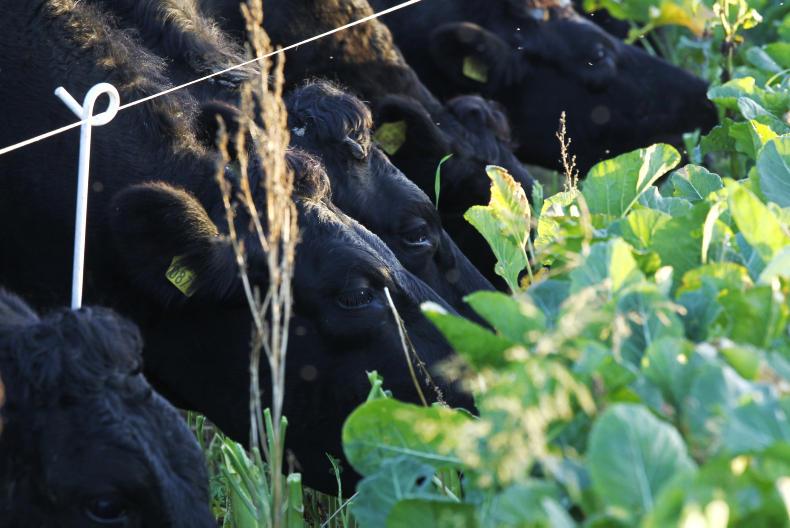
Cattle grazing Kale at Tullamore Farm. \ Ramona Farrelly
ADVERTISEMENT
Last June, the decision was taken to sow 10 acres of kale on Tullamore Farm as part of the farm's reseeding plan. With all of the farm going to be reseeded over the next two years, we thought this would be a good way of increasing dry matter production in 2017 on this particular paddock.
The variety chosen was Maris Kestrel, a high-dry-matter variety which was suitable for both mature cows and weanlings grazing. The kale crop yielded very well, with 9t/DM/ha recorded on one of the paddocks.
ADVERTISEMENT
Silage and kale
Silage bales were placed in the kale field in June at sowing time and extra silage bales have also been fed during the kale grazing period. The fence is being moved 1m on a daily basis, allocating 9kg DM of kale to cows and 4kg DM to weanlings. Silage is being allocated at the rate of 2kg/DM/cow or weanling each day.
Grazing conditions have been good, with ground conditions holding well. During periods of frost and snow, the strip wire wasn’t moved until kale had thawed, generally around midday or later. All stock have access to a lie-back area, but generally lie along the fence line where kale is being grazed.
Boluses
The 51 in-calf suckler cows were bolused with two boluses containing iodine, copper, cobalt and trace elements. Tails were clipped before they started grazing. These cows will graze the kale crop until mid-January when they will come indoors in advance of calving.
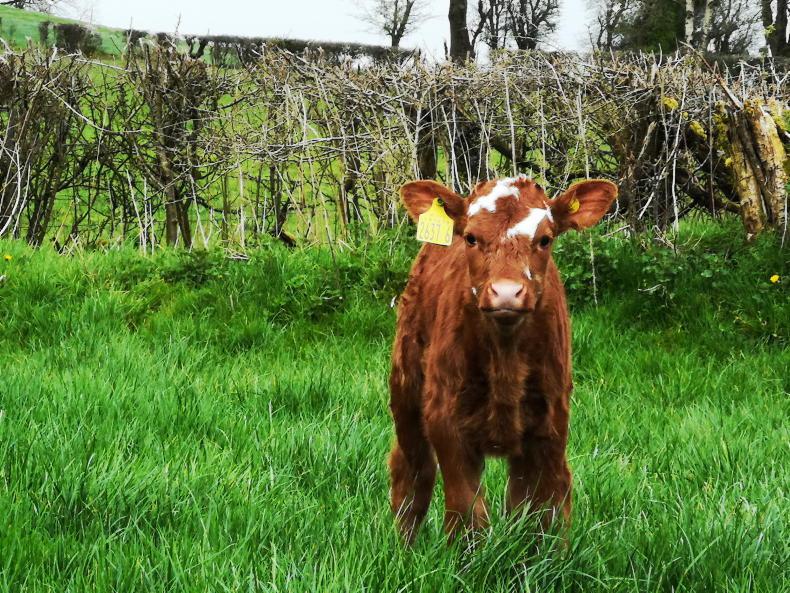
Weanlings also received boluses before starting to graze kale. These weanlings will continue to graze the kale until mid-March, when they will go straight to grass without having been housed at all during the winter months.
It is hoped that these weanlings will be fully acclimatised to outdoor conditions and should perform well on early grass.
This content is available to digital subscribers and loyalty code users only. Sign in to your account, use the code or subscribe to get unlimited access.
The reader loyalty code gives you full access to the site from when you enter it until the following Wednesday at 9pm. Find your unique code on the back page of Irish Country Living every week.
CODE ACCEPTED
You have full access to the site until next Wednesday at 9pm.
CODE NOT VALID
Please try again or contact support.
Last June, the decision was taken to sow 10 acres of kale on Tullamore Farm as part of the farm's reseeding plan. With all of the farm going to be reseeded over the next two years, we thought this would be a good way of increasing dry matter production in 2017 on this particular paddock.
The variety chosen was Maris Kestrel, a high-dry-matter variety which was suitable for both mature cows and weanlings grazing. The kale crop yielded very well, with 9t/DM/ha recorded on one of the paddocks.
Silage and kale
Silage bales were placed in the kale field in June at sowing time and extra silage bales have also been fed during the kale grazing period. The fence is being moved 1m on a daily basis, allocating 9kg DM of kale to cows and 4kg DM to weanlings. Silage is being allocated at the rate of 2kg/DM/cow or weanling each day.
Grazing conditions have been good, with ground conditions holding well. During periods of frost and snow, the strip wire wasn’t moved until kale had thawed, generally around midday or later. All stock have access to a lie-back area, but generally lie along the fence line where kale is being grazed.
Boluses
The 51 in-calf suckler cows were bolused with two boluses containing iodine, copper, cobalt and trace elements. Tails were clipped before they started grazing. These cows will graze the kale crop until mid-January when they will come indoors in advance of calving.
Weanlings also received boluses before starting to graze kale. These weanlings will continue to graze the kale until mid-March, when they will go straight to grass without having been housed at all during the winter months.
It is hoped that these weanlings will be fully acclimatised to outdoor conditions and should perform well on early grass.
If you would like to speak to a member of our team, please call us on 01-4199525.
Link sent to your email address
We have sent an email to your address. Please click on the link in this email to reset your password. If you can't find it in your inbox, please check your spam folder. If you can't find the email, please call us on 01-4199525.
ENTER YOUR LOYALTY CODE:
The reader loyalty code gives you full access to the site from when you enter it until the following Wednesday at 9pm. Find your unique code on the back page of Irish Country Living every week.







SHARING OPTIONS