



This week sees the publication of the CAP beneficiary database for 2025. There have always been arguments about the publication of the database, with some arguing that farmers’ incomes shouldn’t be available in such a public, searchable way.
For me, farmers shouldn’t be worried about the publication of the figures. CAP delivers public goods in spades, so consumers should have no quibble with the funding which farmers receive to produce affordable food in an environmentally sustainable way.
While the top CAP and BISS payments will always make the headlines, the majority of the payments will go to farmers in rural Ireland to basically pay their bills and make ends meet.
In many cases, the CAP payment isn’t even left as a margin when everybody else has been paid.
Noel Bardon’s analysis of the CAP database makes for interesting reading. Some of the critics of the Common Agricultural Policy often point to a statistic that roughly 20% of farmers get 80% of funds. As is outlined in the analysis, that isn’t true for Ireland.
The top 20% of claimants under BISS received 53% of the payments in 2025.
A BISS payment of €8,350 was enough to land a farmer in the top 20%, and the 23,723 farmers who earned above this threshold drew down a combined 53% of the scheme spend.
A BISS payment of below €1,020 would land a farmer in the bottom tenth of the scheme’s beneficiaries. The almost 12,000 farmers in this cohort drew down just over €7m in BISS funds in the 2025 financial year.
The mean BISS payment came to around €5,800, which was calculated using the total funds figure divided by the number of farmers who received a payment. The movement of supports from east to west should also be noted.
Other funds
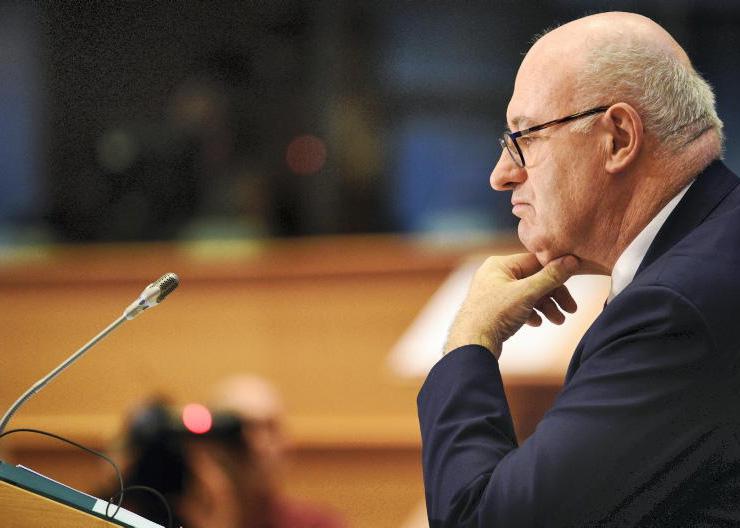
Phil Hogan’s comments to Amy Forde this week are also interesting. He points to other funds like the European Competitiveness Fund, the Security and Defence fund and the Research and Innovation fund outside of the traditional CAP funding mechanism as being an avenue for Ireland to claim additional funds from the Multiannual Financial Framework.
He also had a different view to the IFA on the need for a separate fund to deliver environmental objectives, pointing to food production and the sustainability agenda going hand-in-hand, commenting that there were benefits in keeping them together.
Speaking at this week’s Forum for the Future of Agriculture regional event at the RDS in Dublin, Ricard Ramon, who is head of unit at Policy Perspectives in DG Agri and a key architect of the next CAP kicked to touch on a number of issues around the detail of the next CAP.
He did mention on a number of occasions that key decisions will be left to national governments in the next iteration of CAP from 2028-2034, to allow for maximum flexibility to align with specific country requirements.
Ramon also referenced in his talk on Tuesday that they were currently looking at the definition of an active farmer, including the criteria used to decide what is active and what is not and adding that the next CAP should be directed at those farmers that need it most.
Fine Gael MEP Sean Kelly’s comments this week also point to a further focusing in on farmers that have a low level of activity, questioning the merits of supporting such farms with CAP funds.
The message is coming through that the definition of an active farmer will be front and centre in the next CAP. The definition continues to crop up in various forums with lots of kite flying by various organisations on the matter, but very little detail emerging on concrete proposals.
The Irish Government, along with our farm organisations, needs to decide on the definition before Europe decides it for us.


SHARING OPTIONS