


Fianna Fáil MEP Billy Kelleher says he met with European Commission president Ursula von der Leyen during which Ireland’s bid to retain to nitrates derogation was discussed at length.
“To say she was well briefed is an understatement. She was very well briefed and she was interested in what we had to say about what needs to be done and why it is so important for us to retain the derogation,” he said.
“Through her agriculture adviser Patricia O’Reilly, we had somebody that fully understands the way we farm in Ireland and the importance of the grass-based system and how we can graze cows outside for 10 months of the year.”
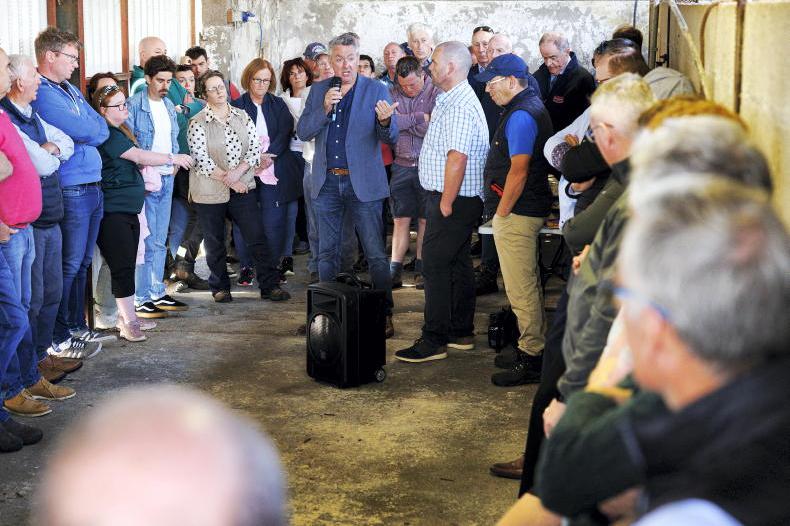
Kelleher was speaking earlier this week at a nitrates derogation meeting organised by the ANC dairy discussion group on the Kenny family farm in Ardfinnan in Co. Tipperary.
He said that recent water quality results were hugely positive, but that the outcome is still uncertain.
“Science can convince, but we also have to politically convince the Commission and those that will be making the assessment and the final determination around the derogation as to why Ireland merits it. We need to explain the effort we’ve made and the results of those efforts,” he said.
On the campaign to secure the derogation, he said that the vast majority of Ireland’s MEPs are supportive of the derogation and the united front by the Irish government is also sending an important signal to Europe.
Kelleher referenced the timeframes involved and called for a longer duration to the next derogation.
“We can’t have a situation where we’re granted a derogation in 2026 which is subject to a mid-term review in 2027 and then we’re back to where we are now again.”
IFA animal health chair TJ Maher cautioned against any complacency around another reduction in the derogation.
“I have heard retaining the derogation is critically important. That can mean many things. The derogation was retained the last time, but it went from 250kg to 220kg across the vast majority of the country.
The political observation may be that it had minimal impact.
Now, if you were to take a view, as I would be afraid some people would make, that if you were to take it to 200kg we would retain it and would probably have little impact.
“I think that’s not quite the same this time. Moving south of 220kg would have far greater economic and regional impact and that’s something we have to be concerned about,” Maher said.
Also speaking at the event was Philip Fogarty and Thomas Ryan, sustainability managers at Dairygold and Tirlán respectively. Both said that interest in the Farming for Water EIP is high, with a combined €7.5m in funding waiting to be drawn down by members of both co-ops.
Host farmer Stephen Kenny, who is farming with his parents Marie and Tony, said if the derogation was lost they would need to reduce their 155-cow herd by 30 cows. Heifers are already being contract reared.
“At the moment the farm supports two families.
“If the derogation went and we had to reduce cow numbers the whole system would need a rethink,” he said.



SHARING OPTIONS