



The vote in Brussels on Tuesday to extend Ireland’s nitrates derogation for three years, up to the end of 2028, will be a relief to farmers, but a longer-term solution is needed, Irish Farmers' Association (IFA) president Francie Gorman has said.
“This outcome is not an ‘opt out’ from the nitrates directive as some like to portray it. Higher stocking rates are provided for under Annex 3 of the EU nitrates directive and those who apply annually for permission to operate at higher stocking rates will have to implement many additional measures,” he said.
“The vote today recognises our grass-based system and comes after a concerted campaign across the sector to convince the European Commission that the relentless focus on water quality across the sector is bringing about improvements.
“This intensive work must and will continue,” he said.
This intensive work must and will continue
He said that the extension was granted on condition that appropriate assessments, under the habitats directive, will be carried out at catchment level where farmers are availing of the higher stocking limits in that catchment.
ICMSA
Irish Creamery Milk Suppliers Association (ICMSA) president Denis Drennan said the decision was a sensible and proper recognition of Ireland’s unique grass-based system, as well as the economic and social importance of the family farm model that still applies in Ireland.
However, Drennan said that big challenges lie ahead, some of which will have to be dealt with by farmers and the industry, some by Government and others by the EU.
“From a farmer perspective, the very strong focus of farmers on improving water quality needs to be maintained and accelerated.
"Farmers have made huge strides and investments in this area over the last number of years and this needs to be continued. [The] ICMSA firmly believes that farmers will continue to play their part,” Drennan said.
He said that, for the Government’s part, it must ensure that the requirements imposed by the habitats directive are fair and reasonable on farmers and that farmers are not made “fall guys” for past failures of the Government in terms of implementing the directive.
Tirlán
Tirlán Co-op described the result as a crucial step in safeguarding the country’s grass-based family farming model and rural economy.
“The vote today on a three-year extension brings welcome clarity for Irish farmers,” said Tirlán chair John Murphy.
Speaking from Brussels where he attended a series of meetings this week, Murphy said: “The extension to the derogation underpins the viability of thousands of family farms and supports Ireland’s reputation for sustainable, grass-based food production.”
The vote today on a three-year extension brings welcome clarity for Irish farmers
He thanked farmers for their ongoing efforts to protect and enhance water quality in Ireland.
This work must now continue, he said, with an unrelenting focus on delivering reductions in nutrient losses from all sources, including agriculture.
“Appropriate levels of funding and support need to continue to be provided to allow farmers to invest in the infrastructure required to meet the requirements of the derogation.
"In addition, the newly introduced requirements around the habitats directive need to be satisfied in a pragmatic and sensible manner that is not too onerous and allow farmers to continue to produce food,” he added.
MEP Billy Kelleher
“This is a good day for the Irish dairy sector,” Fianna Fáil MEP Billy Kelleher said.
“This is a positive step and one that will give certainty to farmers currently in derogation and to the wider agri-food sector, which employs thousands of people in rural Ireland.
“Of course, the conditionality attached to this extension will be difficult for some, but the alternative was an end to the derogation for everyone.
“This extension gives certainty to dairy farmers for the next three years and, ultimately, gives us the space and time to implement additional mitigation measures to reduce nitrate usage and seepage into our water courses.
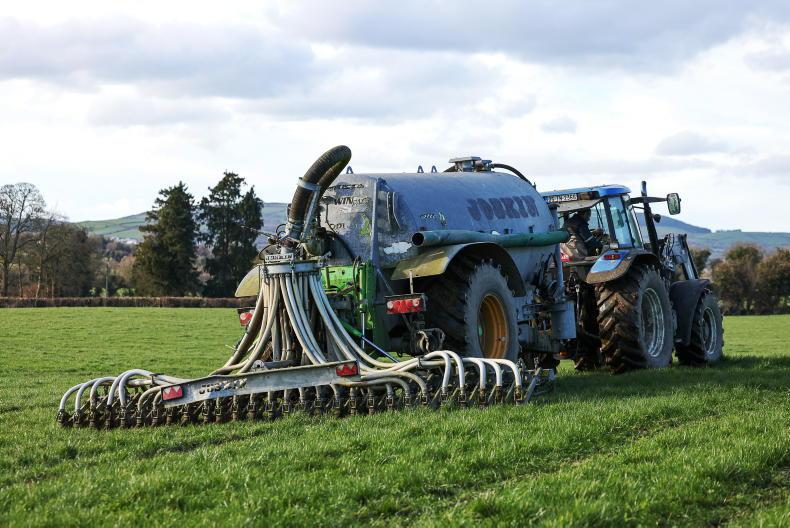
“The Government must provide funding for on-farm measures such as additional slurry storage capacity and low emissions slurry spreading equipment,” he said.
MEP Barry Cowen
Fianna Fáil MEP said the extension was far from a foregone conclusion.
“It was farmers' willingness to adopt new scientific technologies and better practices that has ultimately secured this result.
“Not unlike the EU itself, the process has proven too that we are strongest when united. In this case, farmers, Government, opposition parties, co-ops, processors, distributors – all with a stake in the future of agriculture and all committed and united on this issue.
It was farmers' willingness to adopt new scientific technologies and better practices that has ultimately secured this result
“If we maintain that unity of purpose in now delivering and resourcing the necessary conditionality over the next three years, I firmly believe we can finally deliver the long-term certainty that the agricultural industry has been craving heretofore.”
An Taisce
An Taisce has said the vote to extend the derogation is a bad day for Irish waterbodies and for everyone who relies on clean quality water in Ireland.
Head of advocacy at An Taisce Elaine McGoff questioned the scientific evidence behind the decision.
"I think it’s valid to question if this decision is even good for derogation farmers who, in three years’ time, will once again find themselves on this economic cliff edge, wholly dependent on the European Commission granting Ireland a derogation.
"This is a very risky business model, particularly given the current state of our water quality in Ireland. In their derogation decision, the European Commission seem to be very clearly indicating that this derogation is on borrowed time," she said.
McGoff called on the Irish Government "to show leadership and to take this next three years to now put in a place a plan to transition farmers away from relying on a derogation".



SHARING OPTIONS