



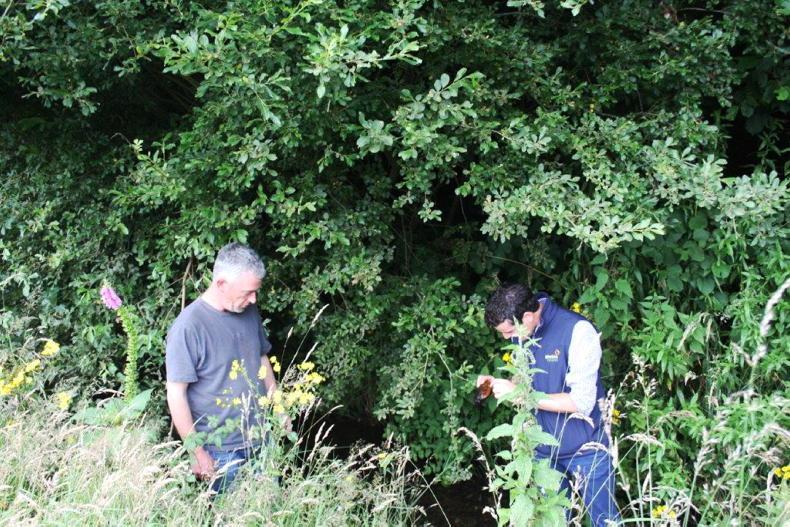
The second Agricultural Sustainability Support and Advisory Programme (ASSAP) interim report was published on Monday, with some 1,810 farms assessed for water quality issues.
The ASSAP programme is a key part of a wider effort to improve water quality in 190 selected priority areas for action (PAAs) around the country.
The PAAs selected for the ASSAP were chosen as they were deemed to be at risk of not meeting the water framework directive (WFD) objectives of good or high status.
The key objectives of the ASSAP is to establish a cohort of trained advisers who are competent on delivering solutions to improve water quality.
Interim results
Some 391 follow-up farm visits were conducted during the period of this interim report.
Water quality pressures that continue to crop up are diffuse losses of phosphorus, sediment and nitrogen to waters. These losses account for 73% of the pressures identified in PAAs investigated.
The loss of phosphorus through overland flow, nutrient management, buffers and livestock access to watercourses were identified as key issues contributing to these pressures.
Thirty-one percent of farms assessed were dairy farms, 24% were cattle breeding farms, 19% mixed farming enterprises and the remainder consisted of cattle other, sheep and tillage.
There were 10,233 issues reported between land management, nutrient management and farmyard management, with an average number of 5.7 issues per farm.
Land management
Land management practices accounted for 45% of all issues identified.
Some of the biggest land management issues included phosphorus loss through overland flow, drinking points and stream fencing, buffers and nitrogen leaching from light soils.
Nutrient management practices accounted for 34% of total issues identified.
High nutrient management issues included preparation of nutrient management practices, organic manure timing, location and method and achieving appropriate soil fertility.
Farmyard management
Farmyard management issues made up 21% of the issues identified.
Clean and grey water management, silage pits and effluent storage and loose housing and FYM storage were issues which cropped up when assessed.
Farmers can implement mitigation actions to alleviate these problems.
Information on the type of mitigation for each issue is available in The ASSAP Interim Report 2020 in Table 12.
According to the report, on average 51% of the mitigation actions recommended are ‘commenced', 'completed’ or being implemented on an ‘on-going’ basis.
The non-implementation of actions where farmers have ‘not started’ or are ‘not proceeding’ is averaged at 37%, with the remaining 12% made up of actions not assigned any implementation status.



SHARING OPTIONS