



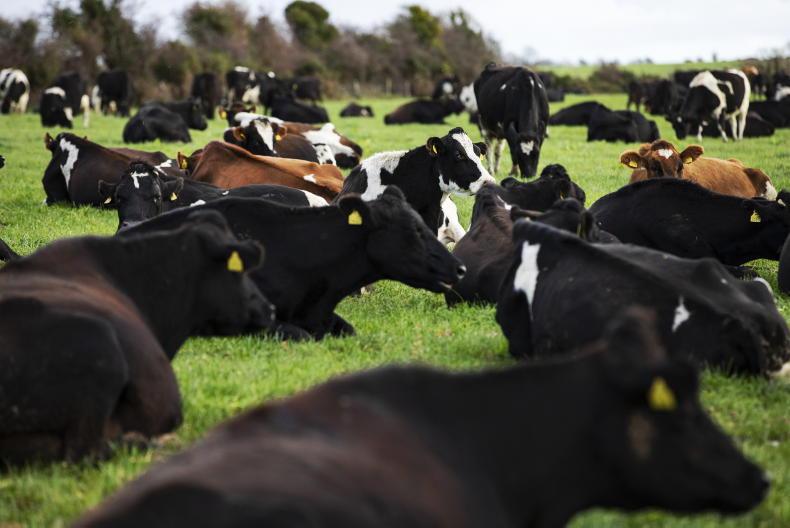
Recent cuts to milk prices in Ireland have rattled dairy farmers. Prices have dropped by over 20c/l since February and 5c/l since May.
There will be a lot less profit earned on dairy farms this year than originally expected but fears are growing over the impact on profit for next season.
Based on the current cost structure and before own labour and debt repayments, milk price is close to or at break-even point. This may be surprising given that milk prices are still historically high. The last time milk prices were low was in 2016 and, at that time, the July milk price averaged 23c/l excluding VAT.
However, according to CSO data, agricultural input prices are 40.93% higher now than they were in 2016. This means that a milk price of 35c/l today has the same buying power as a milk price of 24.8c/l in 2016.
Based on what is happening internationally, Irish dairy farmers would be prudent to plan for lower milk prices than we currently have.
Reducing costs of production, even at the expense of some output, is a good option to protect profit in a low milk price scenario. In situations where milk price is lower than the costs of production, it is better to focus on lowering the costs of production rather than producing more milk at a loss.
Farmers should focus on reducing costs in the following areas.
Meal
Meal is the biggest variable cost on most farms and an area with huge potential to cut costs. If meal is costing €350/t, that is €438/t DM or 43.8c/kg DM.
At a typical response of 0.7kg milk, the meal will produce extra milk which is worth 25c/cow if milk price is 35c/l.
So if feeding ration to produce more milk, you are spending 44c to make 25c back – it doesn’t make sense. If the system can’t be sustained at 600kg of meal per cow, then there are too many cows on the farm.
Another useful way of cutting meal costs is to only order basic rations. There can be as much as €100/t in the difference in price between a really basic ration and the top-of-the-range ration.
Grass is a complete feed, meaning cows don’t need supplement once they have enough grass to eat.
OK, they may need additional minerals but they don’t need extra protein, energy or fibre. In summer and autumn, a low-spec three-way mix or just straight rolled barley is a low-cost alternative to expensive rations.
Cull cows
Twenty five per cent of milk is produced between September and December. So if a cow produces 5,500l annually, 1,375l will be produced between September and December.
At, say, a 37c/l all-in milk price, each cow will deliver about €509 in milk revenue between now and mid-December. It is not a case of just deducting the costs of feeding cows between now and then to work out the margin, for two reasons.
Firstly, grass is a finite resource and if there are fewer cows on the farm, that means that the remaining cows will have more grass to eat per cow.
I have drafted two example feed budgets looking at total grass, meal and silage intake for a typical herd based on 20% being culled in early September and no cows being culled until mid-December.
The early culling reduces the amount of meal needed by 50% and the amount of silage needed by 42%, just by having more grass available.
Secondly, cull cow values change depending on when they are sold. In this example, it is presumed that a cull cow will make €800 today and €500 in mid-December, a differential of €300/head. It is the differential and not the actual price that is important when doing the calculations.
This analysis clearly shows that for a 100-cow herd, culling 20% of the cows in September will increase profit by over €5,000 compared to keeping culls until December.
The increase in profit comes from overall less meal and silage being fed on the farm and the higher cull cow price from early selling.
Fixed costs
Repairs and maintenance of land and buildings, energy costs such as electricity and diesel, along with consultancy and administration, are all considered to be fixed costs, which can sometimes give the false impression that they cannot be changed.
This is incorrect as really there is no such thing as a fixed cost because almost everything can be adjusted if needs be.
The reality is that all of these costs tend to increase when milk price is high, some for valid reasons such as repairs and maintenance.
The flip side of spending more when the money is there to be spent is that less needs to be spent when money is tight. Farmers will know for themselves which of the above costs are needed right away and which can be deferred.
Capital expenditure
There is very little value in farm buildings at the moment. Builders are busy, labour is scarce and the cost of raw materials is high. If a project can be deferred, then consider it.
Of course, items like extra slurry storage or extra calf housing may have to be done. Think again about financing any capital expenditure out of expected future cashflows. If the project makes sense, but the cash isn’t on hand to pay for it then consider getting a loan for it rather than risk a cash deficit next year.
Shop around
It makes sound business sense to shop around for all inputs. It is well known that some co-ops and merchants charge different customers different prices for essentially the same products.
Buy smaller items in bulk as much as possible
Loyalty is not always rewarded but neither is being too slow to pay.
For large items like meal and fertiliser, work out how much is needed in the next couple of months and get three prices off different suppliers based on agreed payment terms.
Buy smaller items in bulk as much as possible.
Good discounts can be secured for dairy supplies, disposable gloves, cubicle bedding and doses by buying what you need for the next six months in advance.
Regularly going into the local co-op or merchant to buy these items as and when you need them means you are getting no discount and will probably go home with items you didn’t plan on buying and don’t really need.
I’ve yet to meet a contractor who likes collecting money. It’s bad business to be haggling over prices in November or December, six months after the silage was cut.
Most contractors will reward the farmers who pay early with a more timely service and cheaper rates.
Contractor costs can also be reduced by doing less work; hedge-cutting can be postponed for a year, make less surplus bales by measuring grass and managing fertiliser.
Track machine
Every time a track machine comes on a farm, a couple of thousand is spent as work tends to snowball.
It is very hard to predict where fertiliser prices are going.
After falling sharply earlier in the year they are now stable and have even increased marginally.
Urea nitrogen is available for 96c/kg N, protected urea for €1.05/kg N and CAN for €1.27/kg N.
Spreading CAN is very expensive and bad for the environment.
High N compounds such as 24:2.5:10 or 27:2.5:5 are usually more expensive per unit of fertiliser and spreading straights can be better value.
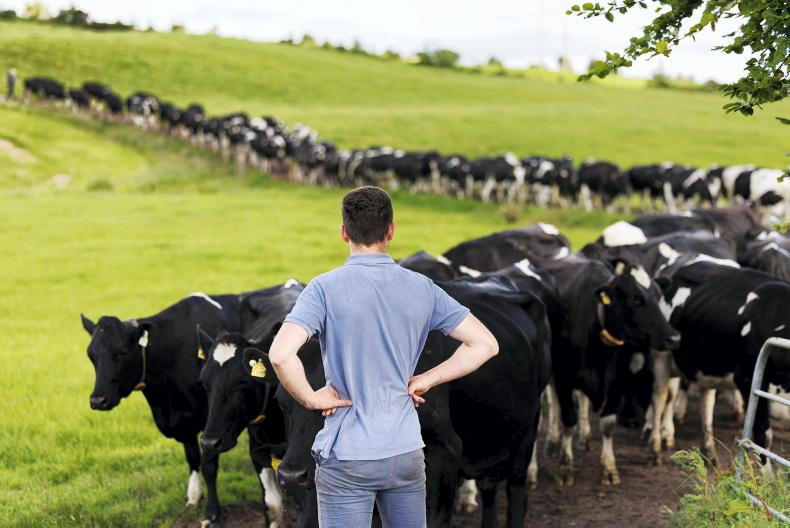
Six years of relatively high and stable milk prices has allowed some fat to creep into the cost structure of many dairy farms. Use the milk price cuts as a catalyst to cut costs and get the farm business in better shape.
Despite what some may wish, nobody is entitled to make a living from farming. Success is determined by how well someone reacts to a problem and there are always problems in farming, but there are always opportunities also, even when prices might be poor.
Your cost-cutting suggestions welcome
I welcome feedback and suggestions for cost cutting. Email dairynews@farmersjournal.ie or text 086-836 6465 and we’ll cover them over the next few weeks.




SHARING OPTIONS