



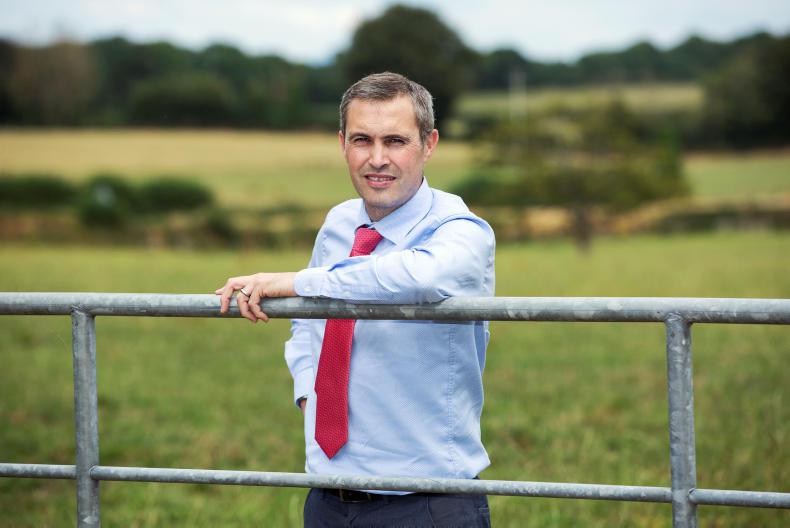
How would you describe the mood among farmers in 2018?
To date, 2018 has been a very challenging year for Irish farmers. What differentiates 2018 from other years is that the weather difficulties have affected almost all farms; livestock or arable; dry or heavy land. The difficult weather has led to a reduction in farm output and an increase in costs, which has impacted cashflow on farms. Fortunately, we entered this year on the back of a relatively good year in 2017 for the dairy and drystock sectors, which gave many farmers a cushion to absorb some of the cashflow impact.
Are farmers borrowing more as a result?
In the last month, farmers have made contact with us seeking cashflow support. To date, the numbers seeking cashflow support have been moderate, but we do expect the numbers to increase significantly over the next few weeks. It is important to keep in mind that these issues, while difficult in the short term, can be resolved with appropriate cashflow support and, in the vast majority of cases, will not have any substantial long-term financial implications for the farm business.
Is there pressure on overdraft facilities?
Fortunately, Irish farmers came into 2018 in pretty good shape, so, for the most part, we have not encountered any substantial pressure on overdraft facilities. However, we do expect an increase in demand for additional working capital in the second half of 2018, as bills relating to additional feed and fodder purchase fall due.
How much credit is advanced to farmers every year?
In 2017, Irish farmers were advanced around €790m in bank borrowings nationally based on Central Bank data, with new lending by AIB above the industry trend. Average Irish farm borrowings remain at quite a low level relative to our international counterparts in Denmark, the Netherlands or New Zealand. Total bank borrowings on Irish farms now stands at €3.5bn, which, relative to the asset value of the sector, is comparatively low. Despite the expansion in Irish agriculture over the past three years, overall bank borrowings to agriculture has continued to decline, down from a peak of over €5bn in 2010.
Is expansion continuing in the dairy sector?
A substantial amount of investment was undertaken by Irish dairy farmers to facilitate the expansion post-quota. Some of this was funded by bank borrowings, but a considerable part of it was funded by farmers’ own resources, particularly in expanding cow numbers from within their own herd by rearing additional replacements. We do anticipate a slowdown in the level of expansion in the dairy sector going forward, although farmers will continue to invest in their farms to improve efficiencies and reduce the requirement for hired labour where possible.



SHARING OPTIONS