


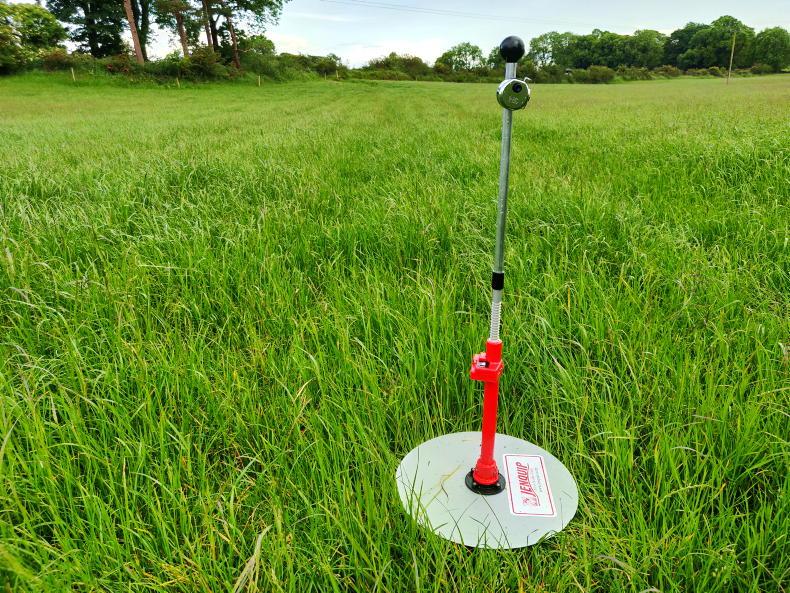
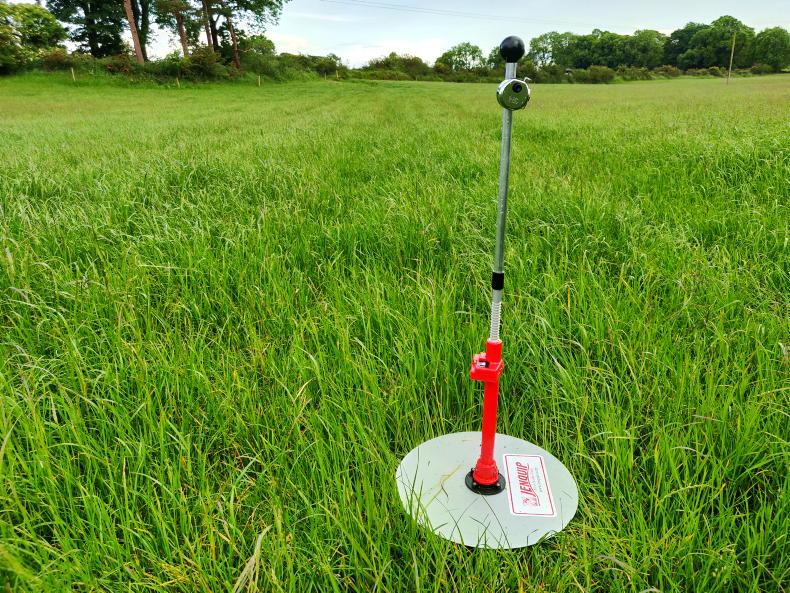
Provisional data shows total grass growth recorded in 2025 by NI farmers participating in the AgriSearch-led Grass Check programme was the highest in six years.
From 10 March through to 13 October, the Grass Check farms grew an average of 11.88t of grass dry matter per hectare (DM/ha), up from 11.09t over a similar period in 2024 and marginally ahead of the 11.77t from 2023. Back in 2019, the farms in the project grew an exceptional 12.99t DM/ha.
As shown in Table 1, Fermanagh was top for growth in 2025 and over 1t DM/ha ahead of Down, Antrim and Derry. Armagh was bottom of the list at 10.82t.
It is not unusual to see Fermanagh in the lead and in a good year, the county can grow a lot of grass. However, there are a couple of important caveats that come with the data.
Numbers
The first relates to geographical spread. Up to 50 farmers have participated in the Grass Check project each year. However, the numbers in both Fermanagh and Armagh are small (only one dairy farm across both counties), so the data is not as reliable as from elsewhere.
In addition, analysis of individual farm data by AgriSearch shows that farms in Fermanagh tend to operate at much higher average farm covers as an insurance policy against when weather turns wet.
For example, the average farm cover on the farms in Fermanagh during 2025 peaked at well over 3,000kg DM/ha, while in Antrim, the peak was around 2,600kg DM/ha.
A high average farm cover will result in lower grass quality as swards will not be as well grazed out each time. However, it will also significantly inflate grass growth figures as swards will grow faster if there is already more herbage in place to take up nutrients – it reflects the old saying: ‘It takes grass to grow grass’.
Dairy farms
The 2025 data also shows that dairy farms in the project grew 1.4t DM/ha more than beef and sheep farms. Across the four counties where there is robust data available, Antrim came out top at 13.7t DM/ha, followed by Down at 12.8t, Derry at 12.2t, while Tyrone dairy farms grew an average of 12t DM/ha.
Beef and sheep
The top performing beef and sheep farms were in Fermanagh with 13.7t DM/ha grown, which is well ahead of farms in Derry at 11.1t. Tyrone and Armagh farms are joint third at 10.9t DM/ha, followed by Down at 10.4t and Antrim at just 9.8t DM/ha.
Table 1. Grass yield per county from 10 March to 13 October 2025
County Total yield (tDM/ha)
Fermanagh 12.88
Down 11.76
Antrim 11.74
Derry 11.73
Tyrone 11.43
Armagh 10.82
Farm growth ahead of plot data
The main grass growth curve published each week during the growing season by AgriSearch, relies on data from grass plots at CAFRE Greenmount and AFBI Hillsborough.
These plots are cut every three weeks and currently receive an annual allowance of 270kg nitrogen (N) per hectare.
Despite the high N rate, it was notable this year that growth at the plots was often behind that seen on Grass Check farms. That was probably partly because both plots are in the east, with growth under pressure due to dry weather.
However, to ensure consistency in the data, the plots don’t receive any manure, which inevitably will reduce growth. Also, there is a general recognition that some of the plots are tired and in need of rejuvenation.
That is particularly evident in recent data released by AFBI which showed that the grass plot receiving 270kg of N/ha only grew 8.82t DM/ha this year, which is 3t DM/ha below the average recorded on Grass Check farms. The plot receiving no N fertiliser, grew just 3.1t/ha.
Clover
All the various grass-only plots at AFBI Hillsborough were out-performed by grass clover counterparts.
In the trial, one grass clover plot receives 67.5kg N annually, while the other has no fertiliser applied. The plots grew 9.8t and 9.7t DM/ha respectively this year, with growth particularly good later in the season.
While the data clearly shows the benefits of incorporating clover into grass swards, it is worth noting that grass clover plots are cut every four weeks, as opposed to every three weeks with the grass-only plots. It is not a totally fair comparison as more frequent cutting with inevitably negatively impact grass growth rates.
AgriSearch looking for new grass recruits
Good grassland managers across NI are being sought to participate in the next three-year iteration of the GrassCheck programme, running from 2026 to 2028.
In total, AgriSearch hope to get 50 farms on board, evenly split between dairy and beef/sheep and with an even representation across all six counties. Existing GrassCheck farms can apply. The application window opened on Tuesday 11 November and runs to 19 December.
Participating farmers will be expected to measure pre and post grazing covers weekly, input data online, take part in training events and be open to feedback and advice.
A payment of up to £1,000 per year is available to participants as well as a £500 for hosting a farm walk. The participating farms will be selected in January 2026.
“We need to recruit more farmers in Fermanagh and Armagh. We would also like a 50:50 balance between dairy and beef / sheep,” confirmed John Morrow from AgriSearch. He said that one of the main changes planned is that farmers in a new version of GrassCheck will receive more training and support, similar to that offered to the Teagasc Grass10 farmers in the Republic of Ireland.
For details on how to apply, visit the AgriSearch website agrisearch.org.



SHARING OPTIONS