



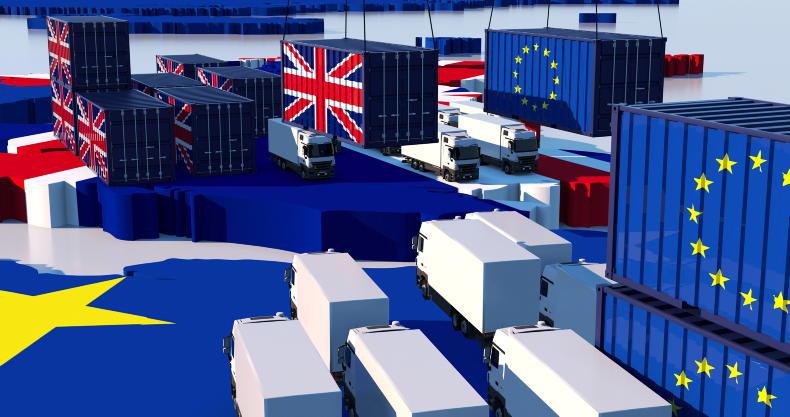
Whenever a government minister visited one of Dawn Meats (Dunbia) factories in England in August, it seemed like a sanitary and phytosanitary (SPS) deal between the UK and EU was imminent.
However, as Peter McCann reports, a response from Andrew Muir, the minister for agriculture in the Northern Ireland Assembly, suggests that it will be 2027 when it comes into effect.
SPS controls are one of the consequences of Brexit that aren’t particularly visible to most people, but are a chore and an expense for exporters and importers of goods that are from either an animal or plant origin.
This means that every consignment of butter, beef, pork, lamb, chicken or vegetables that are moving in or out of the UK from the EU have to be accompanied by a veterinary certificate and are subject to inspection at the ports.
The reality that it could be 2027 when the SPS deal is signed means that businesses will continue to incur the costs of veterinary certification and inspection delays at ports.
The UK has adopted a light-touch approach on imports from the EU, but the EU has been tooled up from the start and impose full border controls on imports from the UK.
This is much to the annoyance of UK agri-food processors. The cost of certification alone has been estimated by the British Meat Processors Association (BMPA) in May this year at £240m (€275m) covering the period since the UK left the EU single market at the end of 2020.
The UK government estimated that the total value of the SPS deal to the UK economy will be worth over £5bn (€5.75bn).
Veterinary medicines
A further benefit of a full SPS deal between the UK and EU would be Northern Ireland again having full access to the range of veterinary medicines that are available in the rest of the UK.
Currently, access from Northern Ireland is enabled by a derogation, but this is due to run out at the end of this year.
Of course, it could be extended, but it means continued uncertainty and this would be removed by an SPS deal.
Why is it taking so long?
It is difficult to understand why - if there is agreement in principle - it will take the rest of this year and all of next year to sort out the details.
It is less than five years since the UK left the single market, which had a full SPS agreement incorporated into it.
While it is never easy reconstructing something that is broken, surely it could still be achieved in a shorter timeframe?
Farmers and food traders in the UK and EU will be hoping that what minister Muir was referring to was a worst-case scenario and that the result can be achieved in a considerably shorter timeframe.
The deal, when it eventually comes into effect, will be transformative. Small micro businesses that were squeezed out of exporting from the UK to the EU because of Brexit administration costs will be able to resume.
Costs for all exporters will fall and products such as British sausages that were banned from sale in the EU will be available again. It is a pity that it will take so long for an agreed deal to come into effect.



SHARING OPTIONS