



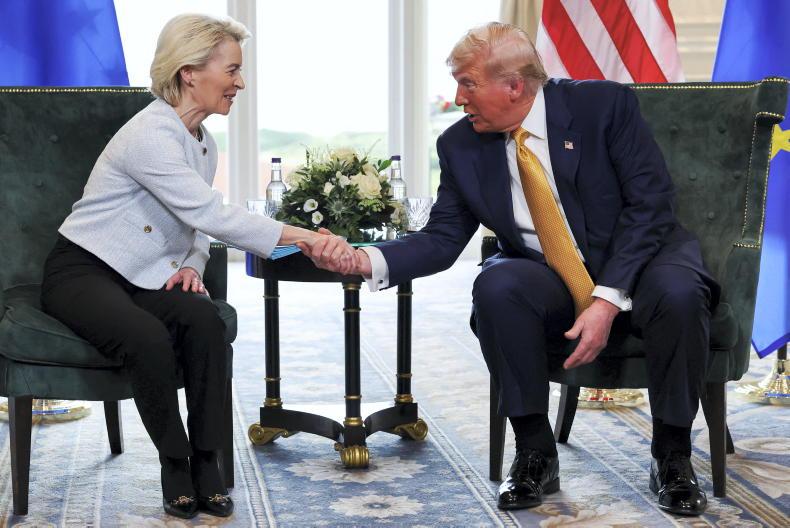
The framework agreement on tariffs on goods exported from the EU to the US sets the tariff rate at a maximum 15%.
At the time of writing, that is about all the certainty which we have. While it is clearly a better situation than the threatened 30% which Trump had said were coming from 1 August, it is a higher rate than the 10% secured by the UK under its trade agreement with the US.
European Commission President Ursula von der Leyen said in a statement that the 15% tariff rate is an “all-inclusive” rate and a “clear ceiling” on how the level of duties which will be placed on exports to the US.
The all-inclusive bit is important for several sectors as they already have faced tariffs on exports which have historically been in place under the Most-Favoured Nation framework and World Trade Organisation commitments.
Key for the Irish dairy industry is the level of tariffs on butter. There is a long-standing rate of $1,541 per tonne tariff on arrival in the US. Since April the 10% rate which has been in place was an additional tariff, making that butter more expensive to the US customer.
The 15% “all-inclusive” tariff will be net of the $1,541 per tonne, which will likely mean that the US customer will see butter prices return to their pre-April level.
A spokesperson for Ornua told the Irish Farmers Journal: “We welcome the certainty a reported framework trade agreement is expected to bring. We will continue to monitor the situation closely and examine the key details as they relate to dairy products, once available.”
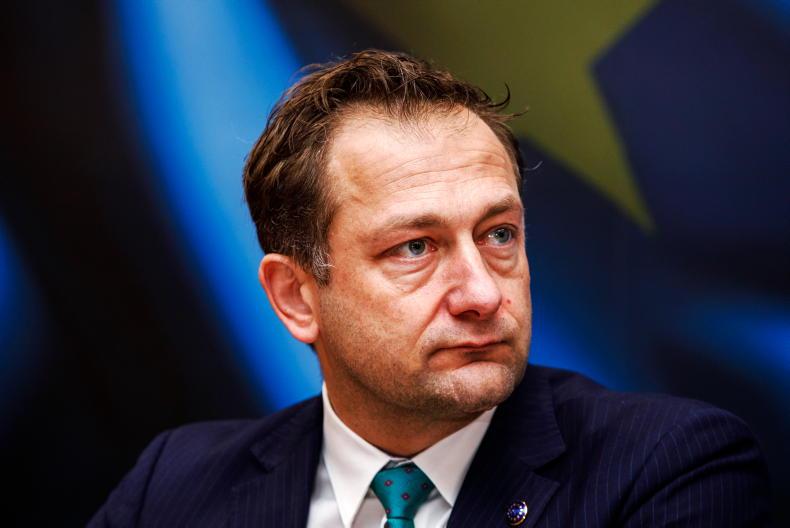
Conor Mulvihill, director of Dairy Industry Ireland (DII) said: “The confirmation that EU exports will now be subject to a single 15 per cent tariff rate, with no additional stacked duties, is particularly important for Irish dairy products such as butter, which had faced a combined tariff burden of over 25 per cent since April.”
Mulvihill noted that the statement from von der Leyen included a reference to the potential for zero-for-zero tariffs on certain agricultural products. He said that DII seeks clarity on whether Irish dairy products could be included in this list.
That need for clarity is driven by the almost complete lack of granular details on the agreement so far.
While both US President Donald Trump and von der Leyen have referred to the agreement as a “deal on tariffs”, it is much closer to a framework agreement, with the details to be sorted out over the coming weeks.
Eoin Ó Catháin, director of the Irish Whiskey Association (IWA), told the Irish Farmers Journal that: “We remain hopeful that the recently agreed deal between the EU and the US can provide the framework for a return to zero-for-zero trade in spirits.
The EU and US governments agreed to this zero-for-zero arrangement in 1997, and this greatly benefitted our shared sector on both sides of the Atlantic. It is therefore logical to return to this.”
Ó Catháin added that the US is the biggest market for Irish whiskey and the 10% tariffs in place since April, coupled with the weakening dollar, have placed significant pressure on distillers in the country, with some having, unfortunately, to close their doors.
In common with other industry insiders contacted by the Irish Farmers Journal, he said that the IWA is awaiting further details on what has been, and will be, agreed.
Minister for Agriculture, Food and the Marine, Martin Heydon said: “Since April, our food and drink businesses have faced major uncertainty around future US trade policy.
“This agreement means an end to that uncertainty and avoids the very significant threats associated with a No-Deal scenario.”
He added that he is looking forward to seeing more details in the coming days.
Minister of State with responsibility for Food Promotion, New Markets, Research and Development, Noel Grealish welcomed the agreement, saying that it “will give certainty to Irish food and drink businesses exporting to the US market”.
Comment
The agreement reached between the EU and the US on tariffs should be welcomed as it takes the threat of 30% rate on EU exports to the US off the table.
However, it is clear that there is considerably more work to be done before a comprehensive trade agreement is in place. There is still a lot of negotiation to be done on the details.
One of those key details for the Irish dairy sector is the emergence of a different tariff rate between the Republic and Northern Ireland. The UK has an agreement in place with the US at a tariff rate of 10%, providing a possible competitive advantage to exports from Northern Ireland.
Conor Mulvihill said that this divergence could introduce complexity, cost, and uncertainty for processors and farmers alike.
The EU Commission spokesperson on trade said that details around the different tariffs “can be worked out” and that negotiators are “at the start of the process” rather than at the end.
Trump’s 1 August deadline did put considerable pressure on the EU to get a deal done. Given the US president’s penchant for showmanship, it is perhaps appropriate that the agreement announced in Scotland is similar to a movie set – it looks like what it is representing from the right angle, but once you get behind the façade, there is little of substance to be found.
The backfilling of that substance over the coming weeks will be critical for the future of the Irish dairy and whiskey industries.


SHARING OPTIONS