



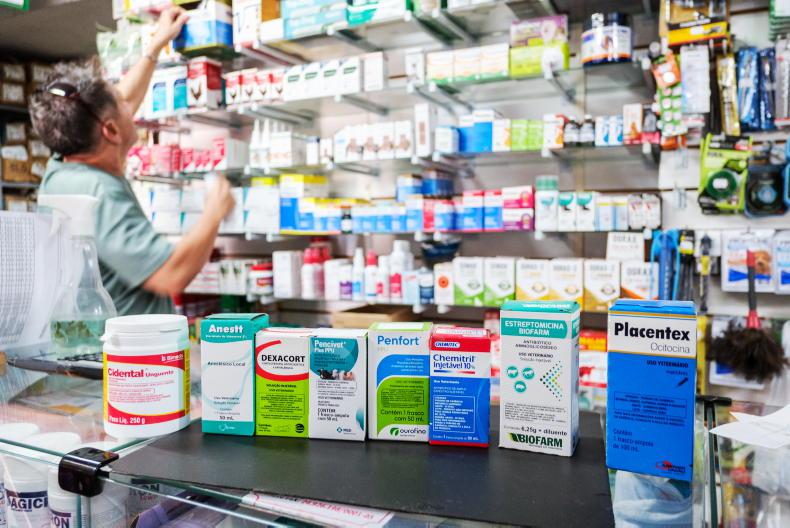
The UK will not automatically follow any EU decision on banning meat imports from Brazil from 3 September.
It had been expected that the UK would match EU policy on the suspension of imports due to unregulated access to and widespread use of antibiotics in Brazil. This is not currently allowed in either the EU nor in the UK.
There are now several reports that the UK Department of Environment Food and Rural Affairs (Defra) will conduct its own investigation independent of the EU before making any change to trade policy.
The EU and UK are currently negotiating a Sanitary and Phytosanitary or veterinary agreement which is expected to be concluded over the next year which will align standards from then on.
Industry view
The current issue is causing concern in the UK industry.
John Powell, chief executive of the British Meat Processors Association (BMPA), told the Irish Farmers Journal: “The BMPA has raised our concerns with the UK government that the EU’s forthcoming ban on Brazilian beef which will come into force in early September, could severely impact the UK beef market and consumer confidence in beef.
“We have urged Defra to conduct and publish an urgent assessment on the safety of Brazilian beef and of the potential impact on the UK beef market if Brazilian beef is banned by the EU but continues to enter the UK, potentially in larger quantities if their access to the EU market is constrained.”
Brazil exports to EU and UK
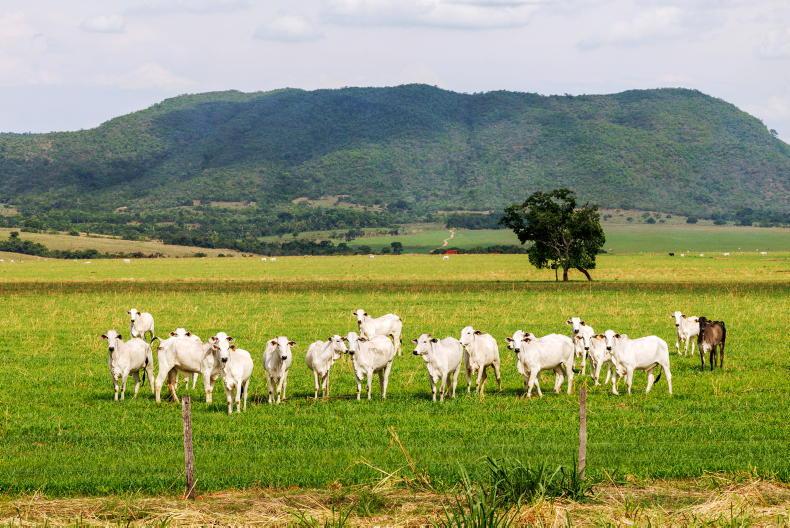
Twenty-five years ago, the EU was Brazil’s largest beef export market but since then they have developed alternative markets, especially China as that country’s demand for beef increased dramatically over the last fifteen years.
While the EU was still a significant market, as Figure 1 shows it had been relatively static for several years ahead of a sharp increase this year.
No doubt the Mercosur trade deal coming into effect has assisted with Brazil growing their market share and they have also realised the need to develop new markets following the change in China’s import policy at the end of last year.
As for the UK, it has been a relatively small market for Brazil’s beef exports. However, it has been growing over the past year.
In the first quarter of 2025, AHDB data shows that the UK imported 1,405 tonnes of beef from Brazil while in the same period this year, the volume has increased to 3,427 tonnes.
Since the beginning of last year, US tariff policy has impacted on global trade flows but to less of an extent that originally feared.
The decision by the US and Israel to attack Iran earlier this year has added to the disruption, but again, the wider impact on global trade is less than might have been expected, so far.
For the second half of the year there are further trade issues a long way from Ireland which could have a negative effect on our beef and lamb price.
Irish farmers can only hope that like US trade policy and wider global conflicts, the consequences aren’t as drastic as they might be and markets adjust and find a way to adapt.
China leaves exporters looking for new markets
For the first time since they became a major importer of beef, China introduced quotas from the start of 2026.
These were allocated for individual major supplying countries, based loosely on what they had supplied previously. In the case of Brazil and Australia, these were significantly lower than the volumes both countries supplied last year. Australia has already filled their quota for 2026; Brazil is on the verge of filling theirs.
As a result, both countries are now faced with a choice between paying a 55% tariff on out-of-quota beef exports to China or finding alternative markets instead.
Fortunately for both these countries which are the world’s top two largest beef exporters, the US has a growing appetite for beef imports.
This reflects the fact that the US cattle herd is at a 75-year low with a corresponding loss of domestic beef production.
The sensitivity of beef prices in the US has also thrown up an interesting anomaly in US trade policy over the past week. On Wednesday, US President Donald Trump’s administration introduced import tariffs on a range of products coming from Brazil following a yearlong safeguarding investigation by the United States Trade Representative (USTR).
A tariff of 25% is being applied to a range of products imported from Brazil but interestingly beef is excluded.
Sheepmeat is now under focus in the US
International trade in sheepmeat rarely attracts much attention. This is largely because there are just two major exporters, Australia and New Zealand and their main markets in China, the US and EU are all net importers.
However, in the US, USTR has just announced that they will commence an investigation of sheepmeat imports.
This follows a campaign by the American Sheep Industry (ASI) that highlighted imports now accounting for “73% of total US lamb and mutton consumption [and] a market share that has steadily increased over the last 25 years”.
They go on to say that “it has now reached a level of criticality that threatens the livelihood and the sustainability of America’s sheep and lamb producers”.
USDA data suggests that the US sheep flock is now around 5m head, less than 10% of what it was in the 1940s. If this results in further tariffs, it will impact Australia and New Zealand who, between them, account for 99% of all US sheepmeat imports.
For Australia in particular, the UK has been a growing market for both beef and sheepmeat, albeit from a very low base and it is a market with considerable further potential.
Unfortunately for Irish beef producers, any growth in Australian beef exports to the UK is likely to squeeze Irish beef in the imported beef category. Sheepmeat will also be squeezed but to a lesser extent as Irish exporters are more focused on the French and wider EU markets.
As for Brazil, any decision by the EU that impacts beef imports creates a deficit of supply that has to be sourced elsewhere.
This creates an opportunity for Irish beef and also the UK, as they are significant beef exporters as well as importers. However, any gain in this respect would be offset if the UK chooses to permit beef imports from Brazil during any suspension period imposed by the EU.
All global trade disruption brings risk, and for some, opportunities. The big opportunities flagged in the last decade with the opening of the US and China for Irish beef exports failed to materialise into anything significant.
Similarly the major threat that was Brexit has been limited to an inconvenience for exporters, though it has increased competition for Irish beef and sheepmeat exporters to the UK market which is so far manageable.
Ireland however can meet the challenge given our location and shared processing industry whichmeans we integrate easily into UK supply chains.



SHARING OPTIONS