



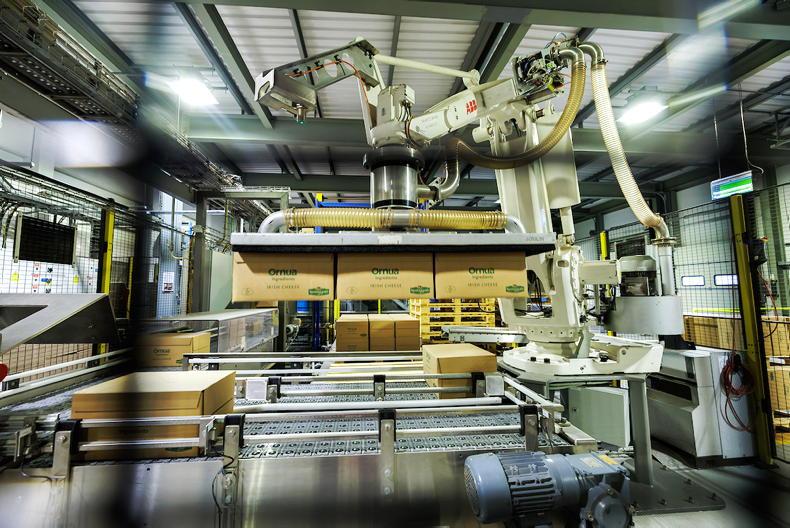
Dairy processors, both in Ireland and across the world, have increasingly invested in cheese production over recent years. These investments are driven by a mixture of the need to diversify products, to access new markets and occasionally, to provide a source of whey protein for that rapidly expanding market.
Cheese also has the inherent advantage of turning a perishable product into one with a much longer shelf life.
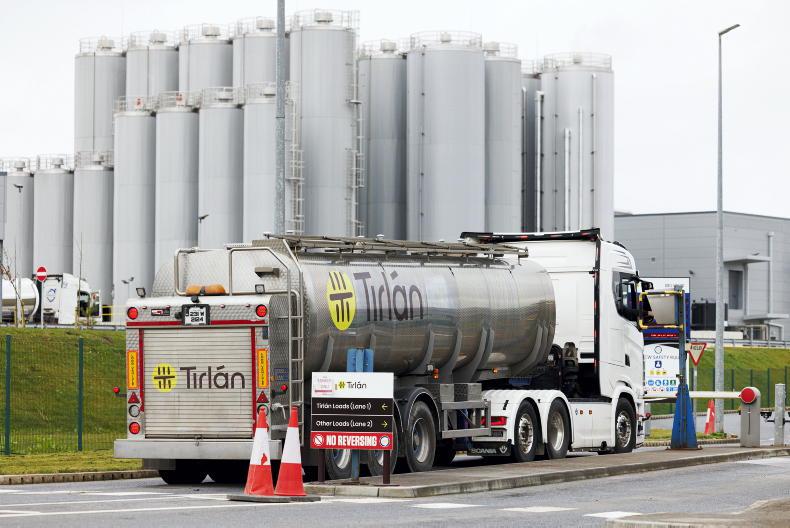
In recent years we have seen the €200m investment by Tirlán and Royal A-ware in the 50,000t capacity Kilkenny Cheese facility, the expansion of Carbery’s mozzarella production, and a 50% increase in capacity at the Kerry Dairy Ireland (now Kinisla) facility in Charleville.
It might be reasonable to think that the interest in cheese at processor level, coupled with the rise in milk supply over the past decade would mean that there has been a substantial rise in production in recent years.
That, however, has not been the case. In fact, data from the Central Statistics Office (CSO) shows that cheese production in the Republic of Ireland in 2025, at 285,800t, was almost exactly the same as the 285,600t produced in 2020.
Even more interestingly, data from Bord Bia shows that the amount of cheese Ireland exports has grown across the same period from 272,200t in 2020 to 341,600t in 2025.
Consumption
Last year Ireland exported 55,900t more cheese than was produced here (see figure 1). The consumption of cheese by Irish consumers also needs to be factored into calculations. Estimates published by Teagasc and elsewhere puts that figure at around 120,000t per year.
According to the CSO, Ireland’s biggest dairy import partners are the UK, Germany, France and Italy
Taking this consumption figure into account, we can see that Ireland had to import approximately 175,900t of cheese in 2025 (the different between imports and exports added to domestic consumption).
While some of this difference is explained by cheese manufactured in Northern Ireland and then exported through ports in the Republic, even if all of Northern Ireland’s cheese production followed that route, it wouldn’t account for the difference.
According to the CSO, Ireland’s biggest dairy import partners are the UK, Germany, France and Italy. While much of the cheese imported from these countries would be specialised products consumed here such as Parmesan and soft cheeses, there is also a significant volume of cheese which is remanufactured in Ireland before being exported again.
This remanufacturing, coupled with Northern Ireland exports shipped through the Republic, accounts for the difference between what is made in Ireland and what is shipped.





SHARING OPTIONS