



A three-year extension was granted for Ireland’s nitrates derogation at the end of 2025 for the 2026-2028 period after a unanimous backing by EU member states.
This allows approximately 7,000 dairy farmers to farm at a higher stocking rate, subject to additional terms and conditions designed to protect watercourses.
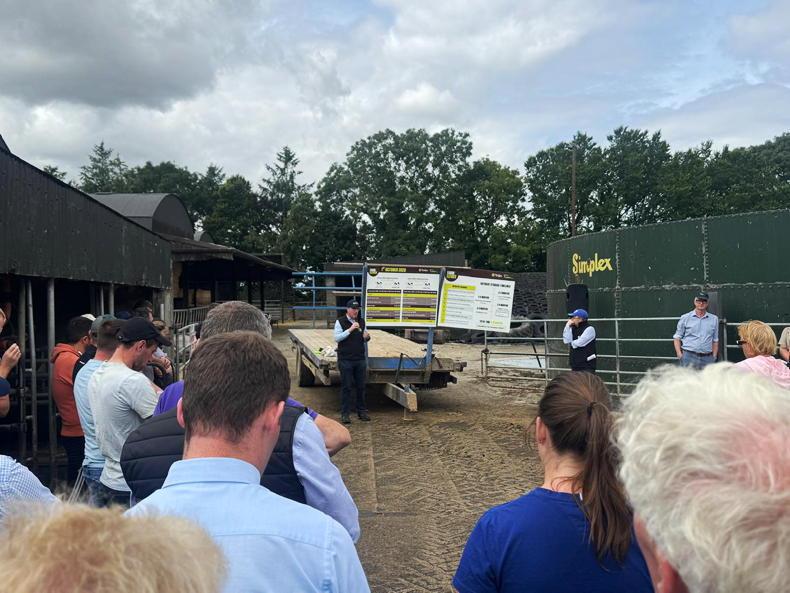
At the inaugural lighthouse farm walk of Tirlán’s FarmElevate programme in collaboration with Teagasc, Martin Doyle dairy advisor with Teagasc and Ciara Doyle farm sustainability development advisor with Tirlán went through a number of looming changes in relation to nutrient storage and the nitrates derogation.
Milking platform
This year, the milking platform was identified on BISS application which included fields within 3km of the milking parlour that can be grazed by dairy cows. That area is then set against the maximum number of milking cows in the year to calculate the stocking rate. If this milking platform stocking rate is too high, then the farmer will have to move slurry off the milking platform to out-farms or fields not used for milking cows. These exports can now be done online where the farmer basically exports slurry to themselves and it must be recorded within four days of the export happening.
Stocking rate
Dairy farmers in derogation must check their organic nitrogen stocking rate is below 220kg organic N/ha for 2027, Martin Doyle highlighted.
Accelerated lime spreading
Farmers in derogation or with a grassland stocking rate above 170kg organic N/ha, who have provided the Department with required soil samples, will have to apply up to 2t/acre lime on this soil within two years of the soil sample being taken to improve soil fertility.
In 2027, all derogation farmers should do a nitrogen balance on AgNav. In simple terms, it involves calculating the amount of nitrogen coming onto the farm versus the amount of nitrogen leaving the farm. For example, nitrogen comes in mainly in feed and fertiliser and goes out in milk sales.
The calculation can be done on AgNav which will show the farmer where they stand so they can get advice on how to improve the use of nitrogen coming onto their farm.
Reduction in chemical nitrogen
All derogation farmers will have to reduce chemical N fertiliser use by 5% in 2028. This aims to reduce the amount of N escaping into watercourses.
“We have the year if you wanted to go down the clover route to try and reduce the fertiliser coming onto the farm,” Martin Doyle explained.
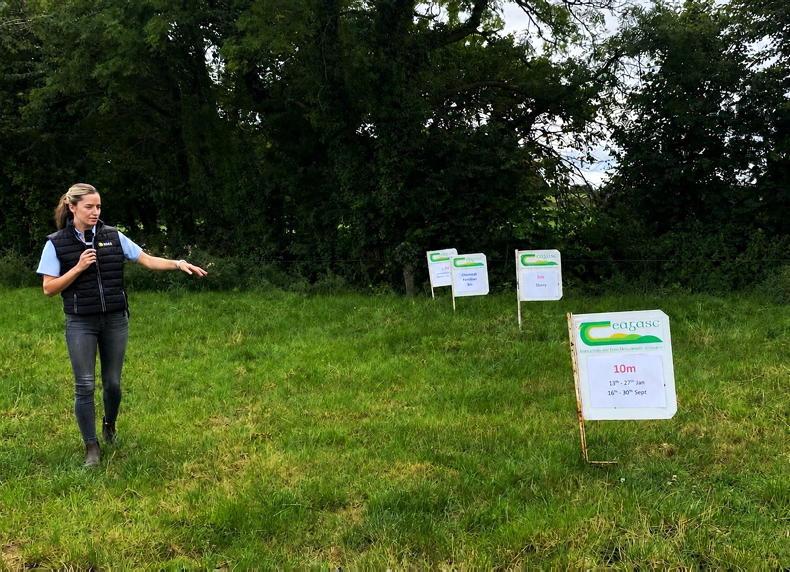
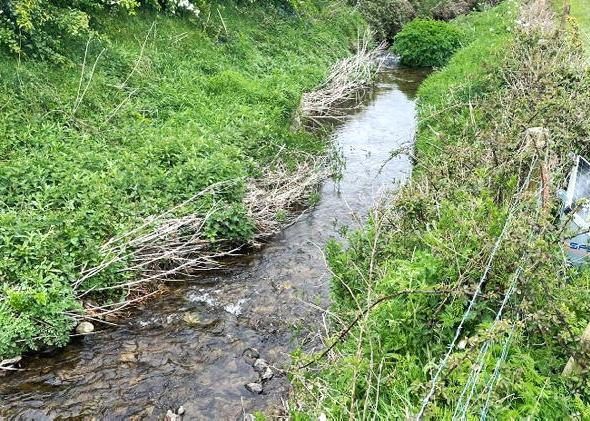
Additionally, in four specific river catchments, including the Slaney, Barrow, Nore and Blackwater, derogation farmers must increase the buffer strips on their farms when spreading chemical fertiliser from 2028 as seen in the image below.
Increased soiled water storage
The requirement for soiled water storage capacity is set to rise on 1 October 2028, from 0.21m3/week to 0.30m3/week, an extra 200 gallons per cow.
“At the moment its 30 litres of soiled water/cow/day,” Martin Doyle stated.
“If you're a spring milk farmer, you'll have the most cows in October of those four months. On the farm here its about 182 cows in the month of October multiplied by 15 days by 30 litres per cow, plus the rainfall on the yard.”
“At the moment, Patrick has enough storage for soiled water for 182 cows. But from the 1 October 2028, 30 litres goes up to about 43 litres, and then Patrick doesn't have enough storage.”
Increased slurry storage
Likewise, slurry storage capacity requirements for all dairy farmers is set to increase from 0.33m3/week to 0.40m3/week, a 21% increase from 1 October 2028.
“If you don't have a soiled water tank, it's really going to hurt the amount of slurry storage on your farm,” he said.
He recommended for dairy farmers to see where they currently stand on soiled water and slurry storage and to identify where they might need to expand or build new storage tanks for the changes coming into play from 1 October 2028.
“Plan ahead”
Ciara Doyle farm sustainability development advisor with Tirlán stressed the importance of starting now to plan ahead for the upcoming nutrient storage changes.
“The deadline is 1 October 2028, so any additional storage needs to be in before this date.”
Firstly, she recommended to calculate current storage, forecast for cow numbers and work out if any extra storage will need to be built.
If a new tank is required, planning permission may need to be applied for which can take anywhere from a minimum of three months up to nine months.
Planning permission can be avoided in some instances through an exemption, based on the size of tanks within 100m of the farm, Martin Doyle highlighted.
The length of the building phase should also be taken into account in planning.
TAMS grants can also be availed of for these storage tanks at 60%, he said which the Department are now prioritising in the ranking and selection process, therefore the chance of approval is now higher.
A challenge with these TAMS applications is that you have to be nitrates compliant at the time of applying for the grant, in other words if applying now, you have to have sufficient nutrient storage according to winter 25/26 requirements.
If a farmer is not compliant when applying, they could drop cow numbers to qualify for the application to expand, he stated.
An estimate of costs ex VAT, including the TAMS grant and tax back for a 50ft x 12.5ft slat x 8ft plus HD slats tank, which was explained at the farm walk, can be seen in Table 1.


SHARING OPTIONS