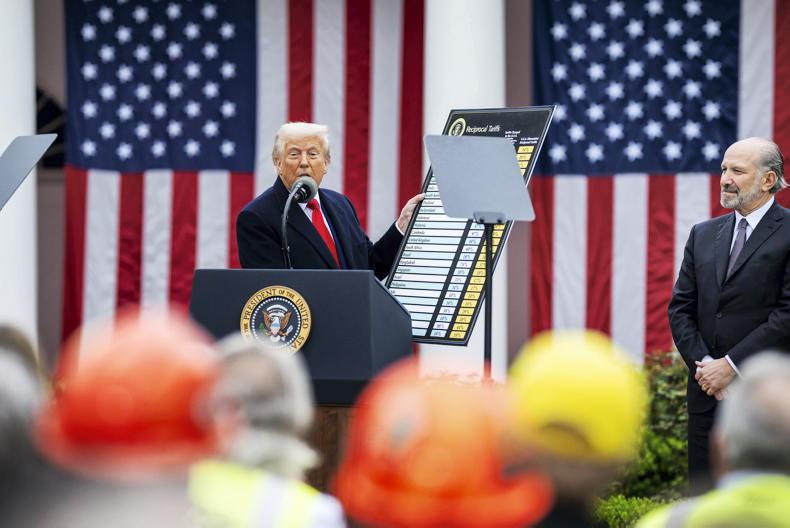
US President Donald Trump has hailed the decision by the Australian government to accept beef imports from the US. He proclaimed on his social media platform that “we are going to sell so much to Australia because this is undeniable and irrefutable proof that US beef is the safest and best in the entire world”.
The ban was put in place in 2003 due to a case of BSE being found in the US. It was lifted in 2019 for beef derived from cattle that spent their entire life in the US but excluded those that originated in Canada and Mexico.
These make up a significant portion of US beef output, so effectively the ban has remained in place until now, with only minuscule quantities of US beef entering Australia. In 2024, US Meat Export Federation (USMEF) data shows that just 418 tonnes of beef was exported from the US to Australia.
Trade imbalance
President Trump has taken great issue with countries that are selling more to the US than they are buying from them.
Beef trade between Australia and the US is a good example of this and Figure 1 shows that the US has grown to be Australia’s largest beef export market taking over 438,000 tonnes in 2024, with just a tiny quantity of beef going the other way.
In 2024, Australia exported 1.268m tonnes of beef in total while the US exported 1.286m tonnes, almost identical totals. Both countries shared markets in Japan, South Korea and China in 2024 though the US supplied greater volumes.
Now that Australia has opened the door for beef imports from the US, the US President expects that large volumes of US beef will now flow to Australia.
While there will be some growth, it is unlikely that volumes will be huge. Firstly, Australia is a major net exporter of beef with over half its production in 2024 sold outside the country.
The second barrier to US beef in Australia is the fact that it is currently almost twice as expensive. As Figure 2 shows, the gap between what is paid for cattle in Australia and the US has widened considerably.
US cattle prices are currently trading at the equivalent of 712c/kg whereas a similar type animal in Australia is making around the equivalent of 370c/kg. This means that export opportunities for US beef in Australia will likely be limited to high value niche opportunities.
Trump warning
President Trump’s social media post also made reference to “other countries that refuse our magnificent beef are on notice.”
This would likely apply to the EU and UK who currently ban imports of beef from cattle that have been fed with growth promoting hormones as part of their diet.
This has been a long-running issue between the EU and US going back to when hormones being used to boost the growth of cattle were banned by the EU in 1988.
The US brought an action against the EU in the WTO on the basis that there was no scientific risk in beef produced from cattle fed with growth promoters and therefore the EU ban on this type of beef was anticompetitive. This was successful but the EU didn’t relent and accept US beef but instead secured an agreement with the US to create a tariff free quota for non-hormone treated beef.
This issue doesn’t appear to have featured in recent trade negotiations between the US and EU but given President Trump’s view on trade and access for US products, it shouldn’t be a surprise if it were to be raised in future talks.
In 2024, USMEF data shows that just 17,320 tonnes of US beef were exported to the EU and UK combined out of the almost 1.3m tonnes of beef exported in total. This is largely because relatively few beef producers in the US elect to produce beef without using growth promoters.
To date this hasn’t really been an issue as the US has had sufficient markets in Asia and the Middle East that are willing to accept US beef.
Also, with the US cattle herd at its lowest point in over seventy years, the total volume of US beef for sale in either the home or export market is lower.
Need for new markets
Despite having fewer cattle to process, both exports and imports are a necessary feature of the US beef industry to achieve carcase balance.
The US imports a similar volume of beef to what it exports because they consume a higher volume of manufacturing burger type beef than they produce while they have a surplus of high value steak type meat relative to what they consume, and this is exported.
China had been a growing market for this type of US beef but since they retaliated with like for like retaliatory tariffs on imports from the US in April this year, US beef sales have collapsed. In May 2024, the US exported 18,659 tonnes of beef to China but in May this year, this had slumped to just 5,639 tonnes.
If the US and China arrive at some sort of deal to reduce trade tariffs this could quickly recover but for now, China’s tariffs leave a gap in the US beef export market.
Europe is a high value market that has long been a major importer of steak meat. This has been largely supplied by South American countries who are willing to accept the standard of no hormones being fed to the cattle from which beef will be exported to the EU.
This ban effectively excludes the US and indeed Canada from supplying this market. Given that the US would welcome an additional export market, it wouldn’t be a surprise if President Trump had the EU and UK in mind when he said that “other countries that refuse our magnificent beef are on notice.”
Australia will accept beef imports from the USA. Cattle that originated in Canada and Mexico now also included. Uncertainty about market opportunity in Australia for US beef. US President warns other countries about US beef bans. EU only imports hormone free beef. Hormone ban prevents EU from being major market for US beef exports.
US President Donald Trump has hailed the decision by the Australian government to accept beef imports from the US. He proclaimed on his social media platform that “we are going to sell so much to Australia because this is undeniable and irrefutable proof that US beef is the safest and best in the entire world”.
The ban was put in place in 2003 due to a case of BSE being found in the US. It was lifted in 2019 for beef derived from cattle that spent their entire life in the US but excluded those that originated in Canada and Mexico.
These make up a significant portion of US beef output, so effectively the ban has remained in place until now, with only minuscule quantities of US beef entering Australia. In 2024, US Meat Export Federation (USMEF) data shows that just 418 tonnes of beef was exported from the US to Australia.
Trade imbalance
President Trump has taken great issue with countries that are selling more to the US than they are buying from them.
Beef trade between Australia and the US is a good example of this and Figure 1 shows that the US has grown to be Australia’s largest beef export market taking over 438,000 tonnes in 2024, with just a tiny quantity of beef going the other way.
In 2024, Australia exported 1.268m tonnes of beef in total while the US exported 1.286m tonnes, almost identical totals. Both countries shared markets in Japan, South Korea and China in 2024 though the US supplied greater volumes.
Now that Australia has opened the door for beef imports from the US, the US President expects that large volumes of US beef will now flow to Australia.
While there will be some growth, it is unlikely that volumes will be huge. Firstly, Australia is a major net exporter of beef with over half its production in 2024 sold outside the country.
The second barrier to US beef in Australia is the fact that it is currently almost twice as expensive. As Figure 2 shows, the gap between what is paid for cattle in Australia and the US has widened considerably.
US cattle prices are currently trading at the equivalent of 712c/kg whereas a similar type animal in Australia is making around the equivalent of 370c/kg. This means that export opportunities for US beef in Australia will likely be limited to high value niche opportunities.
Trump warning
President Trump’s social media post also made reference to “other countries that refuse our magnificent beef are on notice.”
This would likely apply to the EU and UK who currently ban imports of beef from cattle that have been fed with growth promoting hormones as part of their diet.
This has been a long-running issue between the EU and US going back to when hormones being used to boost the growth of cattle were banned by the EU in 1988.
The US brought an action against the EU in the WTO on the basis that there was no scientific risk in beef produced from cattle fed with growth promoters and therefore the EU ban on this type of beef was anticompetitive. This was successful but the EU didn’t relent and accept US beef but instead secured an agreement with the US to create a tariff free quota for non-hormone treated beef.
This issue doesn’t appear to have featured in recent trade negotiations between the US and EU but given President Trump’s view on trade and access for US products, it shouldn’t be a surprise if it were to be raised in future talks.
In 2024, USMEF data shows that just 17,320 tonnes of US beef were exported to the EU and UK combined out of the almost 1.3m tonnes of beef exported in total. This is largely because relatively few beef producers in the US elect to produce beef without using growth promoters.
To date this hasn’t really been an issue as the US has had sufficient markets in Asia and the Middle East that are willing to accept US beef.
Also, with the US cattle herd at its lowest point in over seventy years, the total volume of US beef for sale in either the home or export market is lower.
Need for new markets
Despite having fewer cattle to process, both exports and imports are a necessary feature of the US beef industry to achieve carcase balance.
The US imports a similar volume of beef to what it exports because they consume a higher volume of manufacturing burger type beef than they produce while they have a surplus of high value steak type meat relative to what they consume, and this is exported.
China had been a growing market for this type of US beef but since they retaliated with like for like retaliatory tariffs on imports from the US in April this year, US beef sales have collapsed. In May 2024, the US exported 18,659 tonnes of beef to China but in May this year, this had slumped to just 5,639 tonnes.
If the US and China arrive at some sort of deal to reduce trade tariffs this could quickly recover but for now, China’s tariffs leave a gap in the US beef export market.
Europe is a high value market that has long been a major importer of steak meat. This has been largely supplied by South American countries who are willing to accept the standard of no hormones being fed to the cattle from which beef will be exported to the EU.
This ban effectively excludes the US and indeed Canada from supplying this market. Given that the US would welcome an additional export market, it wouldn’t be a surprise if President Trump had the EU and UK in mind when he said that “other countries that refuse our magnificent beef are on notice.”
Australia will accept beef imports from the USA. Cattle that originated in Canada and Mexico now also included. Uncertainty about market opportunity in Australia for US beef. US President warns other countries about US beef bans. EU only imports hormone free beef. Hormone ban prevents EU from being major market for US beef exports. 






SHARING OPTIONS