The prevalence of lameness in Irish sheep flocks is thought to be as high as 10% (Teagasc survey 2024), contributing to significant losses in animal performance and increased labour.
Getting on top of a significant lameness issue at farm level is not simple but is achievable with the correct diagnosis and facilities.
This was the advice delivered at the recent Teagasc BETTER Farm sheep programme walk on the farm of Michael Forde, Corrandulla, Co Galway. Michael runs a 180-ewe mid-season lambing flock alongside a store-to-beef cattle finishing enterprise with help from his father Bernie on 27ha.
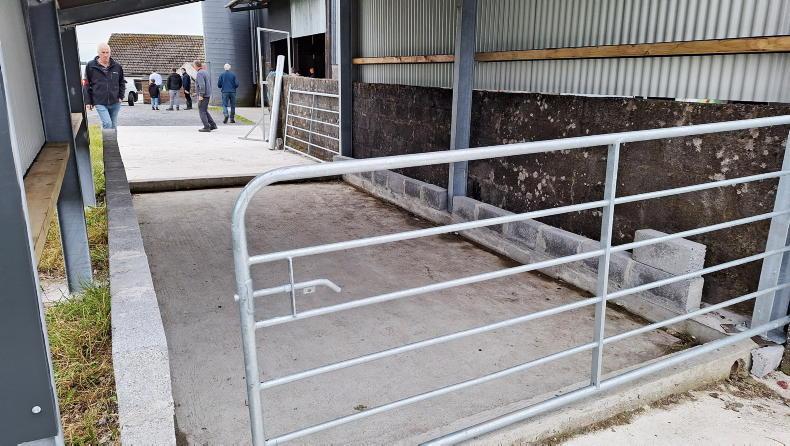
The batch footbath can comfortably hold 30 ewes. Its depth is about 10cm with solution typically filled to a depth of at least 5cm.
Lameness issue
The significant gains achieved in recent years have been limited by an outbreak of lameness in 2023.
Michael comments that lameness was never really an issue prior to this, with the normal incidence of scald and an odd case of footrot.
However, problems with lameness exploded towards the end of 2023 with 20% of ewes affected in December 2023.
The first port of call in getting on top of the issue was to identify the cause as reflected in Figure 1.
In January 2024, Contagious Ovine Digital Dermatitis (CODD) was identified in the flock. Its presence is likely traced back to the purchase of hoggets in autumn breeding sales.
A lameness control programme was put in place in consultation with the farm’s vet and Teagasc sheep specialists. It included prompt treatment of infected ewes and isolation of such ewes.
Michael says that he got on top of the initial outbreak relatively quickly but once CODD is in a flock it will remain there and can flare up again given the right conditions.
The incidence of lameness in the flock was 13% in October 2024 despite targeted control, as outlined in Figure 2. The construction of a batch footbath has been credited with further reducing the prevalence of CODD with lameness estimated to be now running at less than 5%.
Game changer
Michael says that the construction of a batch footbath has been a game-changer in terms of ease of treatment.
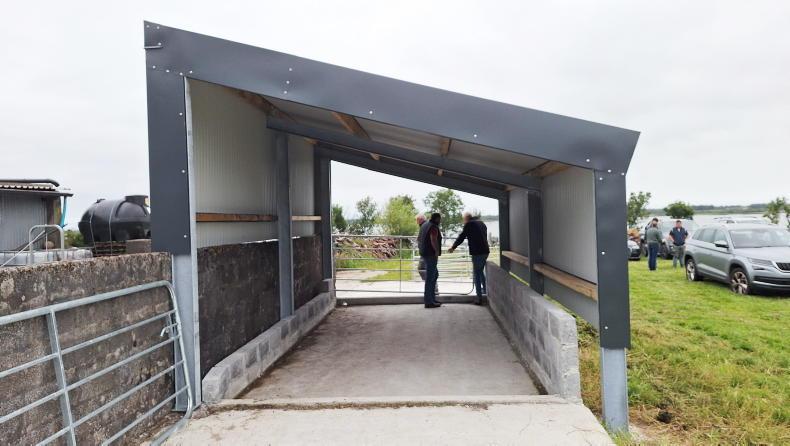
He explains that after much consideration he built a roofed unit which is capable of holding about 30 ewes (20ft long by 10ft wide).
The reason for building the unit at this size is to allow for one pen of housed ewes to be footbathed at any one time.
Time management is a key consideration on the farm with Michael working full-time off farm. A batch of ewes can be transferred to the footbath and allowed to stand for the required timeframe while Michael can go about other tasks.
The unit was constructed adjacent to a simple sheep handling unit and allows sheep to be routinely footbathed when other management tasks are taking place.
The decision to roof the unit stems from the fact that zinc sulphate can be used repeatedly once it is not diluted with water or contaminated with organic material.
Ewes enter the footbath from the handling unit or sheep shed and can see straight through and out the other side to a roadway to paddocks.
Michael says that this is working quite well in moving sheep through the unit.
There are a few aspects to finish in terms of hanging gates and erecting penning to transfer sheep smoothly in and out of the unit but even with this, the unit is working well and encouraging sheep to be treated more often.
The floor of the footbath is concrete with a bung at one end linked to a piped inlet to transfer spent dip to the slatted tank in the cattle shed.
Preventing CODD
Teagasc sheep specialist Damian Costello told farmers at the event that footbathing won’t treat CODD but studies indicate that over 80% of cases of CODD start out as scald or footrot.
Therefore he said that if you can get the basis of lameness control right and limit the incidence of scald and footrot, it will help in eliminating ideal environmental conditions for CODD to establish and spread.
Damian outlined that the most effective way of treating scald is footbathing provided it is done correctly. He stressed the point of footbathing carried out correctly adding that if you are working with two or three small plastic footbathing troughs and hoping to get on top of scald, then nine times out of ten it will fail.
“Effectively treating scald requires sheep standing in a footbath anywhere from 15 to 30 minutes. If you are working with plastic troughs and five to six sheep at a time, you wouldn’t be long before you would give up”. He said that in Teagasc’s experience the farmers that have had a big lameness issue and got on top of it have generally invested in a batch footbath.
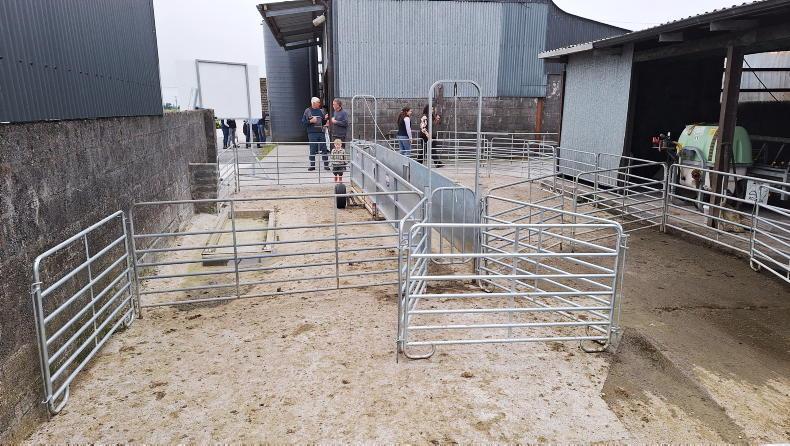
The batch footbath is adjacent to a simple handling unit which works efficiently and a covered dipping tub which can be accessed when required.
Footbath size
Damian outlined that for a flock the size of Michael Forde’s, the recommended size of a batch footbath should typically hold 25 to 30 ewes. He presented the data outlined in Table 1 which shows a range of footbath sizes, the amount of zinc sulphate required to fill the bath and the number of ewes that such a sized bath will hold.
He said that the general advice when going up in footbath size is to go in increments of 5m2 explaining that with a standard depth of solution of 5cm, this translates to one bag of zinc or copper sulphate. The reasoning for focusing on zinc sulphate in Table 1 is due to three factors – it is cheaper than copper sulphate, it can be reused and it won’t corrode galvanised metal like copper sulphate. Formalin was not recommended due to its carcinogenic links.
Footbath design
In terms of design, Damian advised farmers to position a batch footbath where sheep can see an exit route from the point of entry. “Sheep tend to go to daylight when moving through a shed or where they can see an exit point, they move much smoother. The first few times running sheep through a new footbath can be difficult but they get used to it pretty quickly”.
Damian adds that it is vital that there is a concrete or hardcore area available at the exit point to allow sheep to stand until the solution has dried in well. He said that sometimes farmers go to a lot of trouble investing in a footbath only for sheep to exit the area in to a dirty yard or straight back on the grass where the solution is quickly contaminated.
The prevalence of lameness in Irish sheep flocks is thought to be as high as 10% (Teagasc survey 2024), contributing to significant losses in animal performance and increased labour.
Getting on top of a significant lameness issue at farm level is not simple but is achievable with the correct diagnosis and facilities.
This was the advice delivered at the recent Teagasc BETTER Farm sheep programme walk on the farm of Michael Forde, Corrandulla, Co Galway. Michael runs a 180-ewe mid-season lambing flock alongside a store-to-beef cattle finishing enterprise with help from his father Bernie on 27ha.
The batch footbath can comfortably hold 30 ewes. Its depth is about 10cm with solution typically filled to a depth of at least 5cm.
Lameness issue
The significant gains achieved in recent years have been limited by an outbreak of lameness in 2023.
Michael comments that lameness was never really an issue prior to this, with the normal incidence of scald and an odd case of footrot.
However, problems with lameness exploded towards the end of 2023 with 20% of ewes affected in December 2023.
The first port of call in getting on top of the issue was to identify the cause as reflected in Figure 1.
In January 2024, Contagious Ovine Digital Dermatitis (CODD) was identified in the flock. Its presence is likely traced back to the purchase of hoggets in autumn breeding sales.
A lameness control programme was put in place in consultation with the farm’s vet and Teagasc sheep specialists. It included prompt treatment of infected ewes and isolation of such ewes.
Michael says that he got on top of the initial outbreak relatively quickly but once CODD is in a flock it will remain there and can flare up again given the right conditions.
The incidence of lameness in the flock was 13% in October 2024 despite targeted control, as outlined in Figure 2. The construction of a batch footbath has been credited with further reducing the prevalence of CODD with lameness estimated to be now running at less than 5%.
Game changer
Michael says that the construction of a batch footbath has been a game-changer in terms of ease of treatment.
He explains that after much consideration he built a roofed unit which is capable of holding about 30 ewes (20ft long by 10ft wide).
The reason for building the unit at this size is to allow for one pen of housed ewes to be footbathed at any one time.
Time management is a key consideration on the farm with Michael working full-time off farm. A batch of ewes can be transferred to the footbath and allowed to stand for the required timeframe while Michael can go about other tasks.
The unit was constructed adjacent to a simple sheep handling unit and allows sheep to be routinely footbathed when other management tasks are taking place.
The decision to roof the unit stems from the fact that zinc sulphate can be used repeatedly once it is not diluted with water or contaminated with organic material.
Ewes enter the footbath from the handling unit or sheep shed and can see straight through and out the other side to a roadway to paddocks.
Michael says that this is working quite well in moving sheep through the unit.
There are a few aspects to finish in terms of hanging gates and erecting penning to transfer sheep smoothly in and out of the unit but even with this, the unit is working well and encouraging sheep to be treated more often.
The floor of the footbath is concrete with a bung at one end linked to a piped inlet to transfer spent dip to the slatted tank in the cattle shed.
Preventing CODD
Teagasc sheep specialist Damian Costello told farmers at the event that footbathing won’t treat CODD but studies indicate that over 80% of cases of CODD start out as scald or footrot.
Therefore he said that if you can get the basis of lameness control right and limit the incidence of scald and footrot, it will help in eliminating ideal environmental conditions for CODD to establish and spread.
Damian outlined that the most effective way of treating scald is footbathing provided it is done correctly. He stressed the point of footbathing carried out correctly adding that if you are working with two or three small plastic footbathing troughs and hoping to get on top of scald, then nine times out of ten it will fail.
“Effectively treating scald requires sheep standing in a footbath anywhere from 15 to 30 minutes. If you are working with plastic troughs and five to six sheep at a time, you wouldn’t be long before you would give up”. He said that in Teagasc’s experience the farmers that have had a big lameness issue and got on top of it have generally invested in a batch footbath.
The batch footbath is adjacent to a simple handling unit which works efficiently and a covered dipping tub which can be accessed when required.
Footbath size
Damian outlined that for a flock the size of Michael Forde’s, the recommended size of a batch footbath should typically hold 25 to 30 ewes. He presented the data outlined in Table 1 which shows a range of footbath sizes, the amount of zinc sulphate required to fill the bath and the number of ewes that such a sized bath will hold.
He said that the general advice when going up in footbath size is to go in increments of 5m2 explaining that with a standard depth of solution of 5cm, this translates to one bag of zinc or copper sulphate. The reasoning for focusing on zinc sulphate in Table 1 is due to three factors – it is cheaper than copper sulphate, it can be reused and it won’t corrode galvanised metal like copper sulphate. Formalin was not recommended due to its carcinogenic links.
Footbath design
In terms of design, Damian advised farmers to position a batch footbath where sheep can see an exit route from the point of entry. “Sheep tend to go to daylight when moving through a shed or where they can see an exit point, they move much smoother. The first few times running sheep through a new footbath can be difficult but they get used to it pretty quickly”.
Damian adds that it is vital that there is a concrete or hardcore area available at the exit point to allow sheep to stand until the solution has dried in well. He said that sometimes farmers go to a lot of trouble investing in a footbath only for sheep to exit the area in to a dirty yard or straight back on the grass where the solution is quickly contaminated.








SHARING OPTIONS