



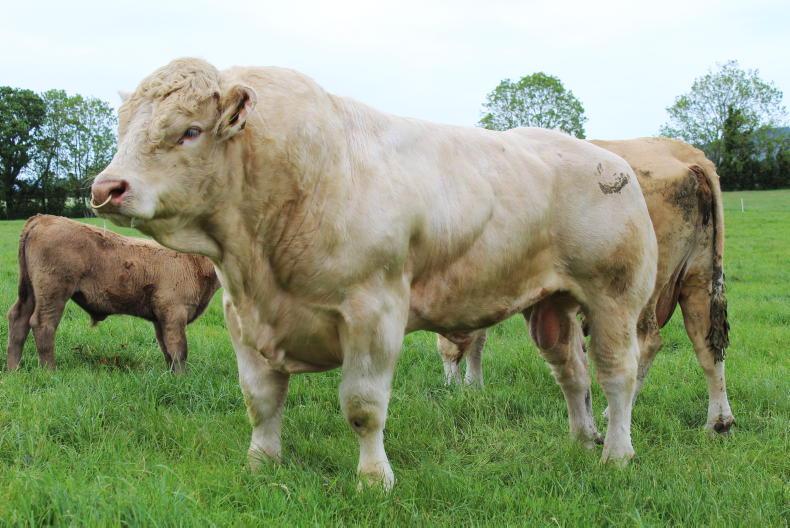
Although many suckler farms are in the middle of calving right now, it is time to start focusing your thoughts on your stock bulls and have them ready well ahead of the breeding season.
The aim of a pre-breeding examination is to identify bulls that are potentially unfit for use as breeding animals - issues that might otherwise go undetected until cows are scanned.
There are five key areas to focus on when preparing bulls already on the farm, particularly for pre-breeding soundness checks, which are designed to ensure the stock bull is healthy, fertile and physically capable. These are discussed below.
Toes
Feet should be sound. Lameness will reduce a bull’s ability to serve cows and may result in an infection, which could increase body temperature and cause the bull to become sub-fertile.
Assess whether foot trimming is required due to overgrown hooves. Ideally, any trimming should be carried out a minimum of eight weeks before mating.
Do not leave foot trimming until the week before bulls are turned out, as their feet will be tender after trimming and if any infections are present, they can take considerable time to heal, with some medications having a significant impact on fertility.
Tone
Body condition needs to be built up in preparation for the breeding season, ideally targeting a condition score of 3.5 to 4.
Introduce concentrates to stock bulls to boost energy reserves. However, avoid feeding high-starch diets that may cause laminitis. There is a fine line - bulls need to be fit, not fat.
Ensure there is appropriate mineral and vitamin supplementation in the diet. Vitamin E and selenium are among the key nutrients required for reproductive health.
Bulls should be conditioned before breeding. The easiest way to do this is to put them in a large field close to the farmyard so they can exercise.
If bulls remain on concrete and rubber mats until breeding - especially heavier bulls - they tend to become stiff and sore, which leads to fewer cows served at the start of the breeding season.
Treat
Give all vaccinations well in advance of the breeding season. Conduct tests for internal parasites and treat as appropriate.
It is also important to treat the bull for lice if applicable, as they will spend more time scratching than eating, which can lead to loss of condition in the run-up to breeding.
Testicles
The general recommendation for a two-year-old bull is a minimum scrotal circumference of 34cm.
Testicles should be checked to ensure they feel firm, with no abnormalities or lumps. Testicle size and tone are directly related to sperm production and, ultimately, herd pregnancy rates.
Test
Only 5% of stock bulls are infertile. However, 25% can be - or become - sub-fertile. Even bulls that were successful breeders last year need to be checked.
The causes of sub-fertility are numerous: infection (viral or bacterial, such as IBR), lameness, excess body condition, injury and more. Therefore, it is critical that your stock bull is assessed well in advance of the breeding season.
Semen test results should be reviewed if available and any issues should be addressed early. If sufficient time is available, a fertility test can be completed six to eight weeks pre-breeding.


SHARING OPTIONS