



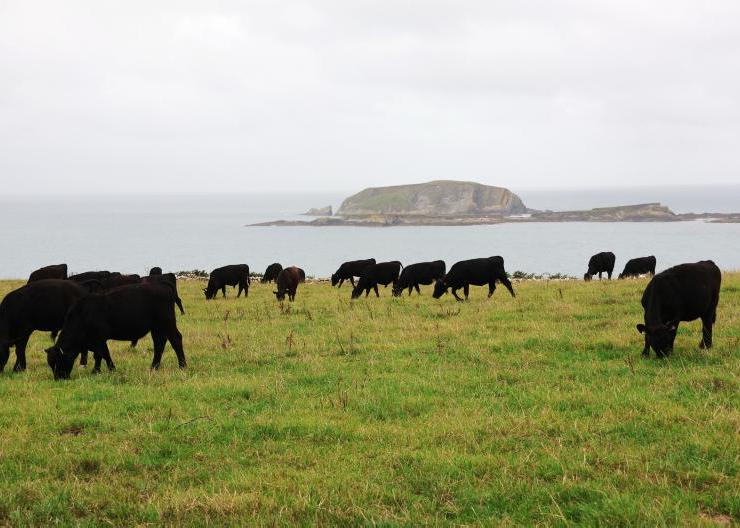
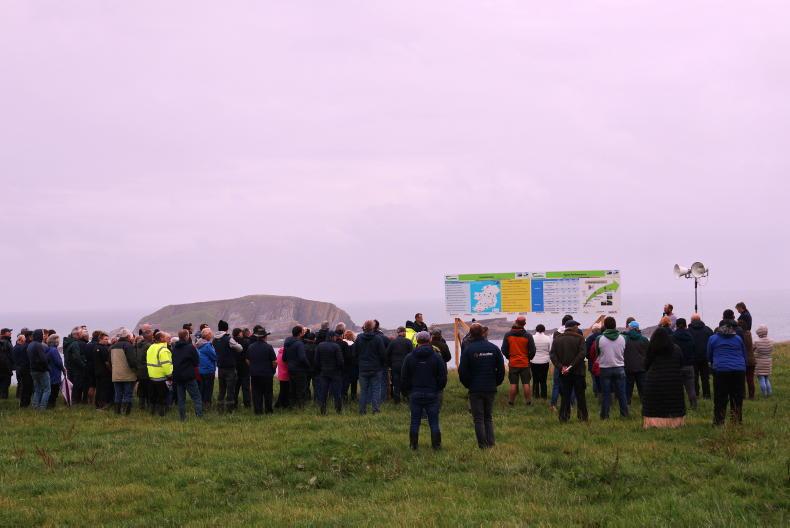
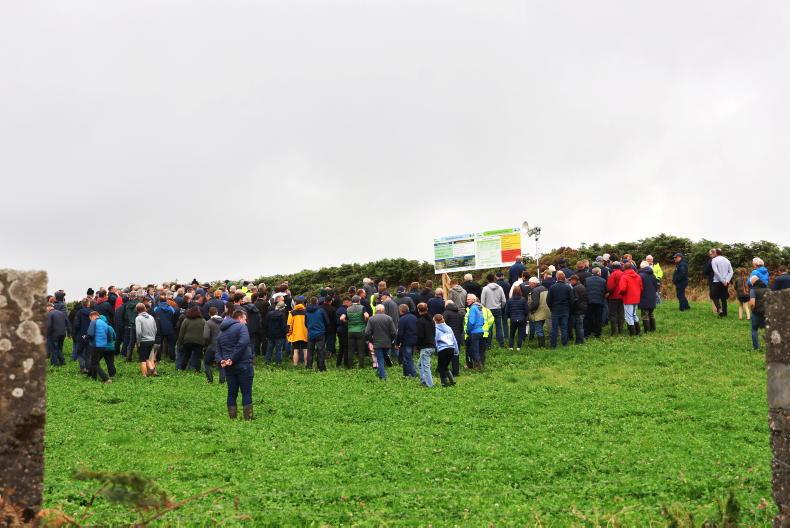
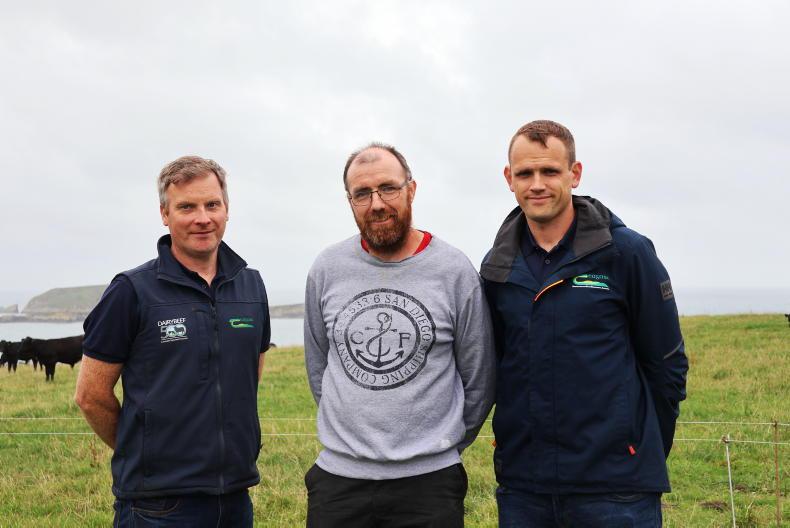
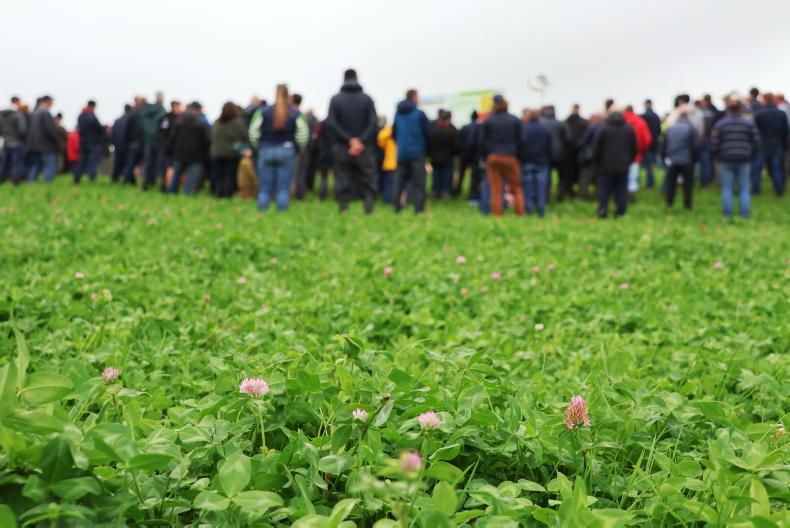
That 300 people from right across the country made their way to the Teagasc DairyBeef 500 farm walk on the farm of James O’Sullivan at Myross, Union Hall in west Cork on Thursday evening last was a testament to the performance of the farm.
They couldn’t go much further south with the first stop in a field over looking the Atlantic and nearby High Island and Low Island.
Operating a dairy calf-to-beef system, with a target of finishing all stock before their second winter, attention to detail on animal performance has seen James make massive strides and in 2025 he achieved a net margin of over €2,600/ha.
A fragmented farm of 31ha in total, 21ha at Myross is used for the older cattle and grazing calves from mid-summer. There is a further 10ha where James lives near Leap and this is where he rears the calves when they first come onto his farm.
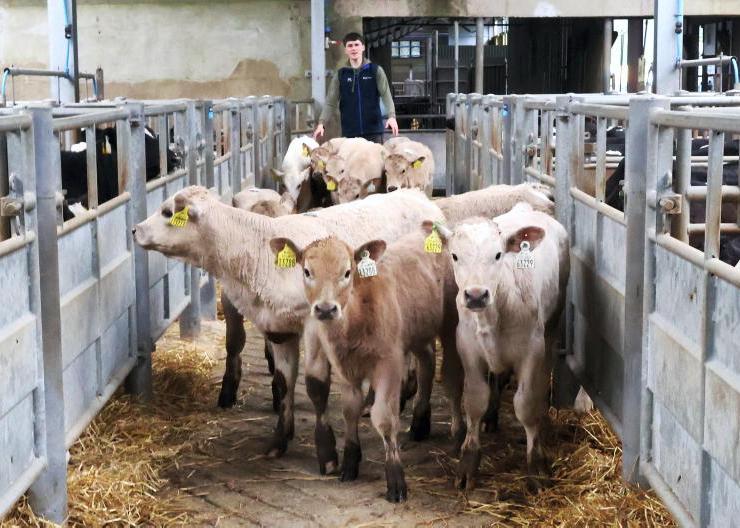
He purchases over 90 calves and takes them through to finish at 20 to 22 months of age.
The farm is in derogation and he is currently at 233kg N/ha.
After an almost perfect farming year in 2025, this year has been more challenging when it comes to managing cattle at grass with weather impacting proceedings significantly.
The land at Myross, runs down to the Atlantic and while it grows grass well in early spring and late into the autumn, it is prone to drying out.
This is beneficial in spring as he has excellent farm roadways in place meaning cattle can get to grass early in spring and by using on/off grazing the first round of grazing is always completed by early April. James is accustomed to being busier at the shoulders of the year but by his own admission, 2026 has been more challenging.
“Like everyone else, it was wet in spring and slow to get going, May and June were super months and then it got dry again.
The rain we got in August put colour on the grass but grass is tight here.”
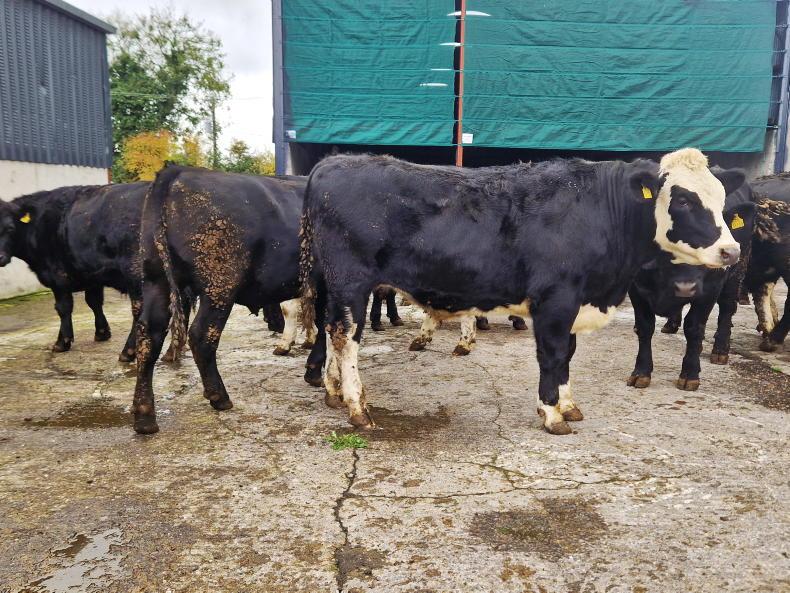
James is back 80 to 100 bales on what he’d like to have. This resulted in him housing 31 bullocks and 15 heavy heifers five weeks ago. The housed cattle are on a finishing diet with some expected to be sold shortly.
The remaining 2025-born cattle have been getting 3kg of ration at grass with the last fortnight. It’s his first year housing heifers early.
“Usually, half the bullocks go in in August and the rest in September and most heifers go off grass. Last year, I had very good weights and heifers went at end of September.
Cattle did well from April to August last year. They done 1.15kg/gain/day in that time when I’d usually be expecting 1kg/day They haven’t done it this year and are back after a tough spring and dry summer.
The most forward ones were housed to prioritise keeping the calves out to keep them going If you can get them into good weight by their first winter housing you have the hard work done.”
In 2022, heifers averaged 236kg, with an average grade of O= 3+ at 19.9 months, while the bullocks had an average carcase of 257kg and graded O=3= aged 20.4 months. By 2025 heifer carcases were 30kg heavier at the same grade and three days older at 20 months.
The performance of the bullocks is where he really made inroads. At 22.4 months they averaged 318kg, a gain of 61kg on his weights from three years earlier.
Fat score also improved giving an average grade of O=3+.
James attributed this overall improvement to a number of tweaks he made to his system that centred around the calf in its first year. A good start is half the battle, is a well-known saying and it seems the mantra that he farms by.
“For those improvements on carcase weights, I’d bring it back to the start. In the last few years, I changed to buying an earlier calf.
There’s a lot of late January- and early February-born calves now. I’ve a lot of the work done rearing them by the time the middle of April comes and AI really kicks off.
“I probably spent about €3,000 or €4000 on the shed at home (where the calves are reared) and it was a big help.
"All the side sheeting was taken down and replaced with Yorkshire boarding and I added a few fans as well. I always had problems with pneumonia before and you’d lose a lot of time messing around with a few calves if they’re sick but it’s not an issue now. Calves all get a pneumonia and IBR vaccine too.”
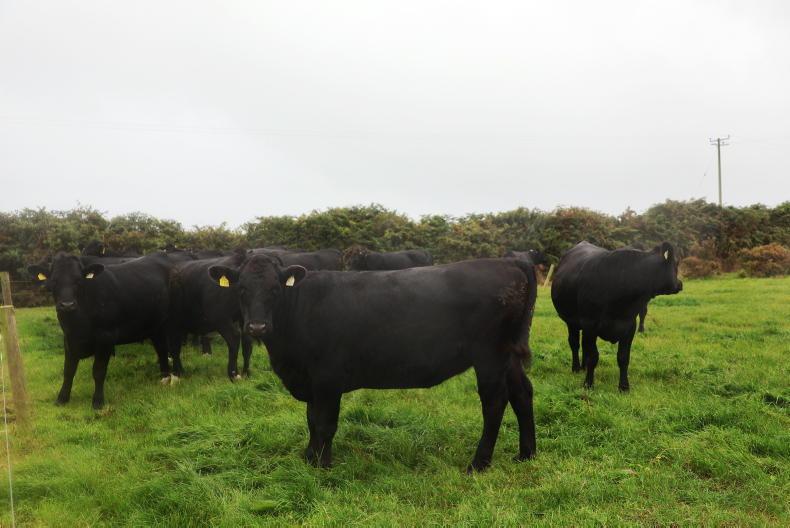
The first summer at grass was the other area where James got major gains. Grass management and the move to having an older calf contributed to this.
“I always weigh them around the first week of November, that would be my usual housing weight and it used to be around 190kg for a calf born later in spring. It’s been 240kg to 250kg the last few years and that extra made an awful difference.”
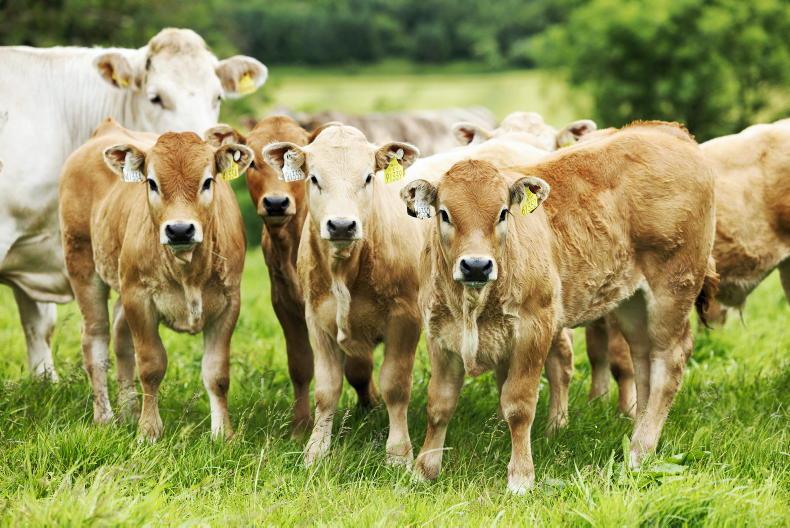
Since 2022, all his calves are purchased from three local dairy farmers. It’s all Angus-sired calves that arrive on farm at anywhere from two- to four-weeks-old. His work off -farm as an AI technician for Munster Bovine, allows him to contribute to the sires picked.
Calving difficulty of 3% with carcase weight index of at least 10kg is the usual when it comes to bull selection but one of the dairy farmers will tolerate a calving difficulty of up to 4.5%.
Higher commercial beef value (CBV) is also a factor.
He has noticed dairy farmers becoming more aware of their beef sires since calf prices rose.
“When calves were cheap, they were aiming for a better CBV so they’d get more for their calves but I suppose in the last two years, dairy farmers are tuning in to the beef calf more.”
James had his calves in the yard at a flat price of €260/head in 2025, buying them ahead of the price surge that began in early March last year.
That rise in price was factored for 2026 and this year he paid a flat price of €460/head for bulls and heifers. That €190/head increase has added a cost of just over €18,000 to the farm this spring.
Buildings and machinery
A slatted shed was built in 2020 with a second one added this year with a solid area to the rear.
This will give James extra options for housing or strong straw in a challenging spring or early winter.
The purchase of a second-hand diet feeder this year drew a few questions on the night.
In response, James said: “Last year was only year where I didn’t have to feed silage.
“Now I can put one bale in the diet feeder and feed it out under the wire and one bale can do a bigger group rather than putting out three or four bales in ring feeders for the same number of animals.
“This autumn too, the finishing cattle are on 7kg of ration and I’d have to split feed if I fed it straight but the feeder saves me an extra half hour in the car if I was to come over twice a day to feed.”
A dry summer left James short 80 to 100 bales at the end of August. He still has a cut of red clover to make, but with less surplus bales about this year, he still has a shortfall.
A decision made earlier this year to buy in 100 ton of maize silage should see him through.
He wanted to trial it and in hindsight that’s a decision that will help build stocks. Along with that having finished cattle gone off the farm earlier will reduce the silage demand as the months go on.



SHARING OPTIONS