Highly variable growth rates have been a pattern for much of this grass growing year.
ADVERTISEMENT
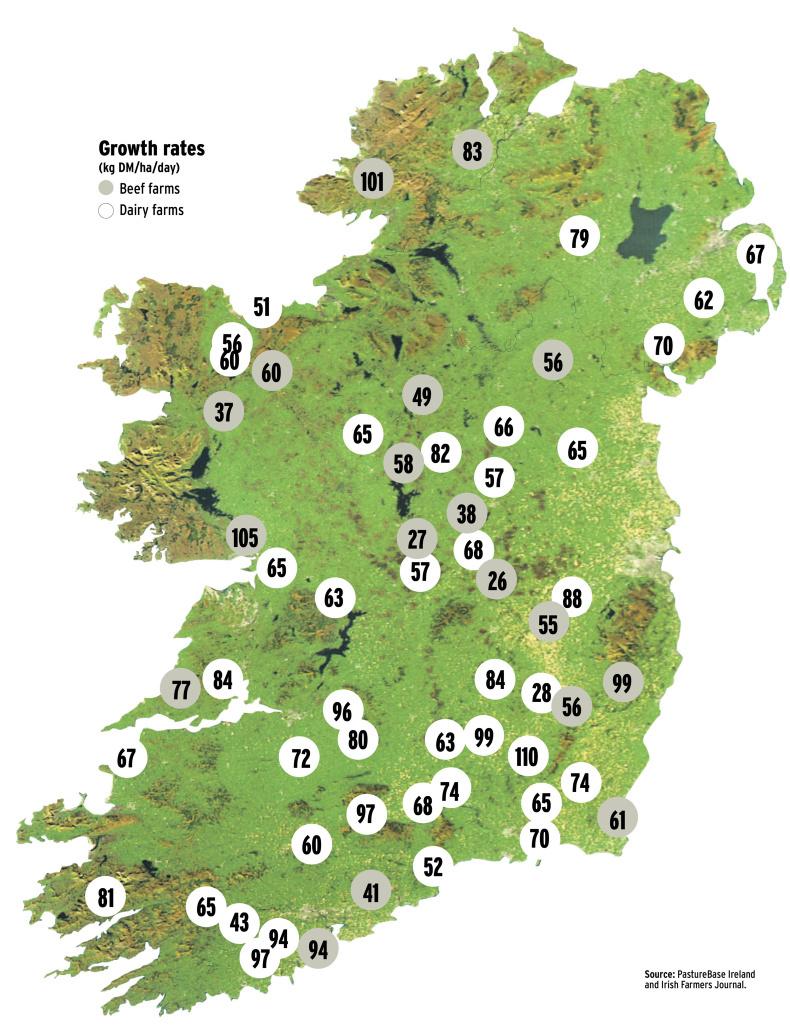
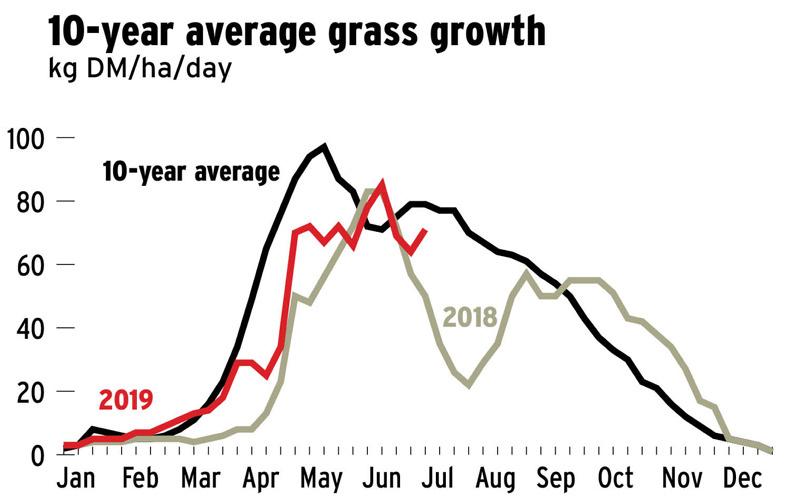
The national average growth rate at present is 63kg DM/ha/day but there is huge variation between farms. Some are growing over 100kg DM/ha/day, others are down below 40kg DM/ha/day. Highly variable growth rates have been a pattern for much of this grass-growing year. Big bursts of growth in between sluggish growth periods have left grass management tricky.
Fertiliser seems to be playing a big role in all of this. High growth rates leave the grass plant hungry. Those adopting a little-and-often approach with N applications this summer appear to be levelling out the growth pattern somewhat and avoiding the lull periods. Many are going with a fertiliser application every month and some are even opting for applications after every rotation (21 days).
Grazing intensity
ADVERTISEMENT
Last week’s Irish Grassland Association beef conference featured many interesting points on grassland and grazing management. In his presentation on soil health, agricultural consultant John Geraghty gave a strong reminder as to the importance of photosynthesis in growing grass. Photosynthesis refers to the way plants take in light energy and convert it to chemical energy (sugars) which acts as the plant’s main food source and ultimately drives plant growth. The more leaf area a plant has, the greater the rate of photosynthesis. This is the science behind the saying “grass grows grass”.
However, what Geraghty focused on was the idea of grazing intensity. Research shows that grazing grass too tightly to the soil and removing excessive levels of herbage can have a significant negative impact on grass recovery and regrowth. Mowing too low can have the same effect. Where 80% of plant herbage is removed in a grazing/mowing, growth can be delayed for 12 days. Ninety per cent herbage removal can delay regrowth for a full 17 days.
In contrast, less intensive grazings of 50-60% herbage removal had little or no impact on plant recovery. It’s a concept to be conscious of this summer. Of course we need to maximise grass utilisation and achieve good post-grazing residuals, just be careful not to overdo it.
Register for free to read this story and our free stories.
This content is available to digital subscribers and loyalty code users only. Sign in to your account, use the code or subscribe to get unlimited access.
The reader loyalty code gives you full access to the site from when you enter it until the following Wednesday at 9pm. Find your unique code on the back page of Irish Country Living every week.
CODE ACCEPTED
You have full access to the site until next Wednesday at 9pm.
CODE NOT VALID
Please try again or contact support.
The national average growth rate at present is 63kg DM/ha/day but there is huge variation between farms. Some are growing over 100kg DM/ha/day, others are down below 40kg DM/ha/day. Highly variable growth rates have been a pattern for much of this grass-growing year. Big bursts of growth in between sluggish growth periods have left grass management tricky.
Fertiliser seems to be playing a big role in all of this. High growth rates leave the grass plant hungry. Those adopting a little-and-often approach with N applications this summer appear to be levelling out the growth pattern somewhat and avoiding the lull periods. Many are going with a fertiliser application every month and some are even opting for applications after every rotation (21 days).
Grazing intensity
Last week’s Irish Grassland Association beef conference featured many interesting points on grassland and grazing management. In his presentation on soil health, agricultural consultant John Geraghty gave a strong reminder as to the importance of photosynthesis in growing grass. Photosynthesis refers to the way plants take in light energy and convert it to chemical energy (sugars) which acts as the plant’s main food source and ultimately drives plant growth. The more leaf area a plant has, the greater the rate of photosynthesis. This is the science behind the saying “grass grows grass”.
However, what Geraghty focused on was the idea of grazing intensity. Research shows that grazing grass too tightly to the soil and removing excessive levels of herbage can have a significant negative impact on grass recovery and regrowth. Mowing too low can have the same effect. Where 80% of plant herbage is removed in a grazing/mowing, growth can be delayed for 12 days. Ninety per cent herbage removal can delay regrowth for a full 17 days.
In contrast, less intensive grazings of 50-60% herbage removal had little or no impact on plant recovery. It’s a concept to be conscious of this summer. Of course we need to maximise grass utilisation and achieve good post-grazing residuals, just be careful not to overdo it.
If you would like to speak to a member of our team, please call us on 01-4199525.
Link sent to your email address
We have sent an email to your address. Please click on the link in this email to reset your password. If you can't find it in your inbox, please check your spam folder. If you can't find the email, please call us on 01-4199525.
ENTER YOUR LOYALTY CODE:
The reader loyalty code gives you full access to the site from when you enter it until the following Wednesday at 9pm. Find your unique code on the back page of Irish Country Living every week.






SHARING OPTIONS