


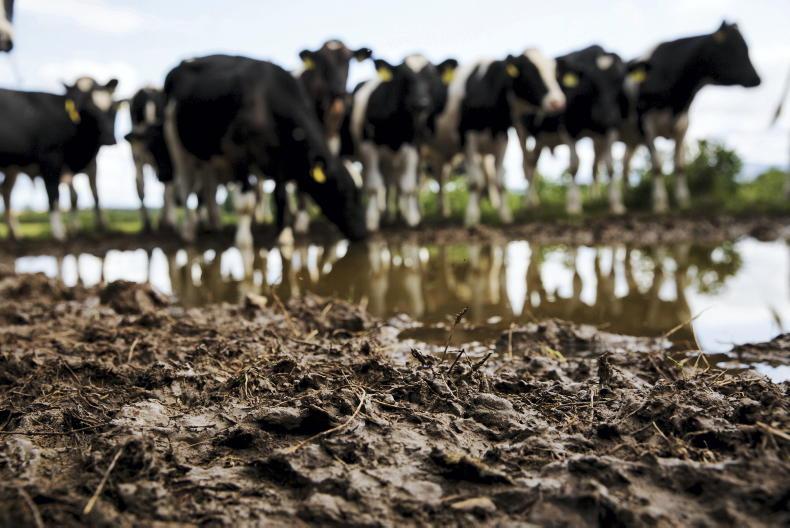
It was inevitable that we would get some deluges of rain at some point after nearly six months of below-average rainfall, but we had been crossing our fingers that September would wait dry and we would just have to suffer the final round with tricky grazing conditions.
However, Pasturebase Ireland has reported this week that many fields are now reaching water capacity, with the next step up being waterlogged, meaning it is increasingly hard to not do damage.
As it stands, next to no damage, bar around gaps or where cattle are being fed meal, has been done.
With more wet weather forecast, it does look likely managing paddocks to try to get the happy medium of achieving a clean-out without damaging paddocks will be harder and harder.
Protect paddocks
If you were to ask my opinion, I would be more inclined to protect paddocks and avoid any medium to heavy poaching, as once these fields are damaged, they will hold water, which may leave them next to ungrazeable in October for the final round.
Leaving a small butt on them isn’t the end of the world, as October could turn frosty, which would leave this ground harder and allow for harder grazing.
The south of the country is in a lot better of a position than western and northern areas due to the prolonged drought in August, so farmers should clean out paddocks well here.
There is still a portion of farms in these areas that are behind on target covers, meaning supplementation may have to continue.
Fertiliser and slurry
The closing date for spreading artificial fertiliser falls on 14 September (excluding straight potash).
Farmers should also note that this date also spells the end of straight unprotected fertiliser.
Farmers with slurry to spread should also likely get this done sooner rather than later as ground conditions deteriorate.





SHARING OPTIONS