



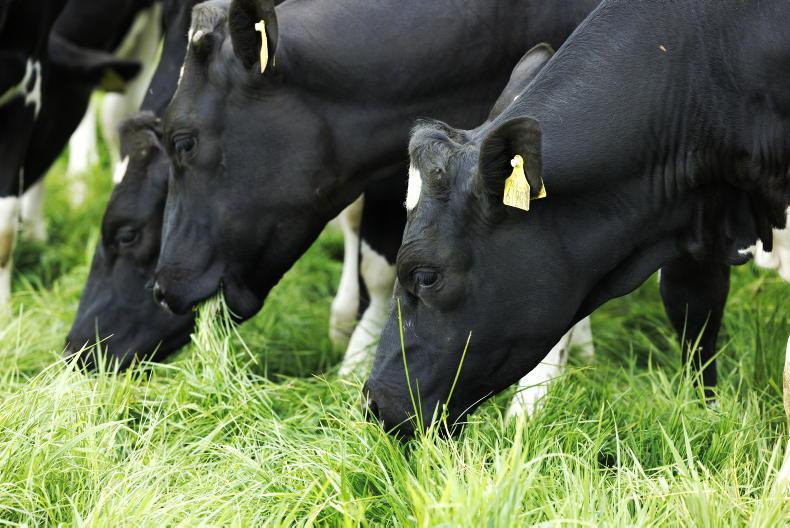
Dry farms had really been struggling to hold cover, never mind to build it, over the last few weeks.
Growth is now behind normal for the time of the year, with Pasturebase Ireland recording growth of 46kg DM/ha and 39kg DM/ha for dairy and drystock farms respectively.
As it stands, over 605 farms are behind target with farm cover, with current supplementation rates of 3.5kg of silage and 1kg of meal on average.
It’s still very much a west/south divide, with farm covers in the west over 800kg DM/ha on average - which is on target - while farms in the south are behind at 672kg DM/ha, with some farms well below this figure.
The one silver lining is that rainfall amounts have been decent this week for the first time in a long while, which should see these farms push on with growth.
For the time, heavy supplementation will have to continue to try to allow farm cover to build on these farms.
With many farmers low on silage yields heading into the winter months, many have been feeding palm kernel meal to help fill the defecit.
Fertiliser
With many of these farms having held off on fertiliser due to the dry conditions, now is an ideal time to get the last round of fertiliser out now that ground has softened.
Be mindful of fertiliser allowances with this last round and, if in any doubt, contact your adviser regarding your fertiliser allowance.
It is also worth noting that any unprotected urea left sitting in the yard should be used and not carried over into spring, as a ban on unprotected urea usage comes into effect from 15 September 2025.
Reducing demand
As mentioned, heavy supplementation will have to continue for these very low cover farms to try to build cover. Another option is to try to reduce demand through offloading stock.
While milk price for dairy farms is solid, so too are beef prices, so the option of offloading empty cows live should be explored if you are in a severe deficit.
As we come into the back end of the year, more cattle will be drafted for slaughter and the market may not be as strong as it is now, so any loss in milk sales could very easily be bolstered through this high cull cow price.
For beef farms, if grass is very tight, then offering concentrates at grass to forward store cattle should be explored.
If these cattle have to be housed in the next few weeks, offering concentrates at grass will mean that, once housed, the change in diet will not be drastic and cattle should push on well and finish easily.
With high weanling prices and the beef welfare scheme, many farmers are also feeding weanlings at grass, which will also help to reduce demand.
While there is no required amount set out by the Department, the recommendation is for 1kg/head/day to be fed prior to weaning. This can be increased if necessary and will likely see a good return on interest, with shippers targeting calves with good weight for age.
Sheep farmers will also be looking at building covers ahead of flushing for mid-season flocks.
In general, grass supplies are good on sheep farms, but for those that are tight, the live ring for stores or culls is very strong at the moment.
Even offloading a small number may tip the scales in favour of grass growth being built instead of being maintained.


SHARING OPTIONS