



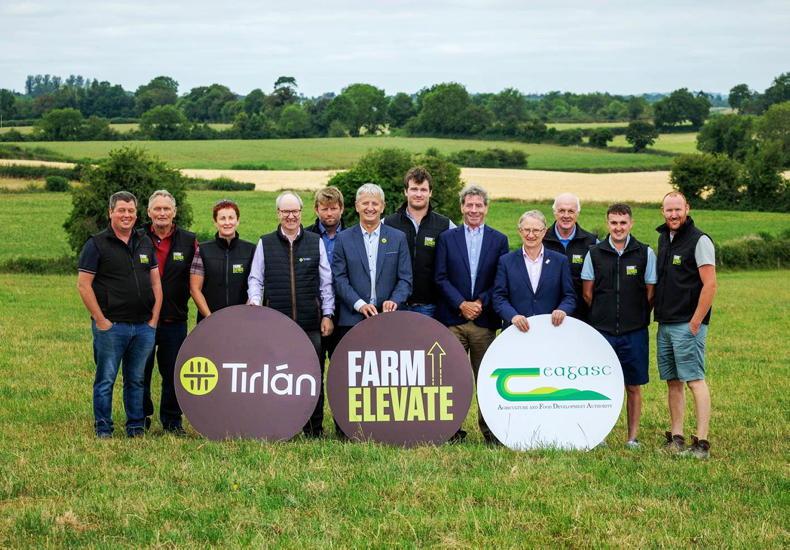
Nearly five years have passed since the launch of the Signpost Programme. In that time, it has grown from a promising idea into a national initiative, that is reshaping the conversation around climate action in Irish agriculture. Supported by 62 industry partners and centred around a network of 120 demonstration farms, the programme is showing that farming can remain productive and profitable while actively working to reduce its environmental footprint.
The aim of the Signpost Programme has always been clear: accelerate the adoption of proven measures that cut agricultural emissions, while maintaining the technical efficiency and profitability of Irish farms. National greenhouse gas emissions from agriculture have fallen by just over 4% since 2018 – equivalent to almost one million tonnes of CO2e. Much of this progress has been driven by reduced fertiliser use and the widespread adoption of NBPT-protected urea, both of which have been central focuses of the Signpost farms.
However, reaching the sector’s 25% reduction target by 2030 will require the next leap forward, particularly in tackling methane from livestock.
Building momentum
One of the most encouraging signs of progress across the Signpost network has been the improvement in soil fertility. On dairy farms, 70% of soils are now at optimum levels for pH, phosphorus (P) and potassium (K), compared with just 24% nationally. Suckler beef farms have doubled their proportion of optimum soils, from 25% to 50%, while tillage farms have risen from 48% to 57%. These improvements in soil fertility allow farmers to get more from every kilogramme of fertiliser, reducing waste and emissions while boosting yields.
The adoption of low-emission slurry spreading (LESS) has also been a success. By 2024, 92% of slurry on suckler farms and 89% on dairy beef farms was applied using LESS technology, ensuring that more nutrients are captured by the soil and less are lost to the atmosphere or waterways. Timing has been equally important: nearly half of this slurry is now spread in spring, when it offers maximum nutrient value to crops and grass. Among tillage Signpost farms, nine out of 10 are now incorporating organic manures, further reducing dependence on chemical fertilisers.
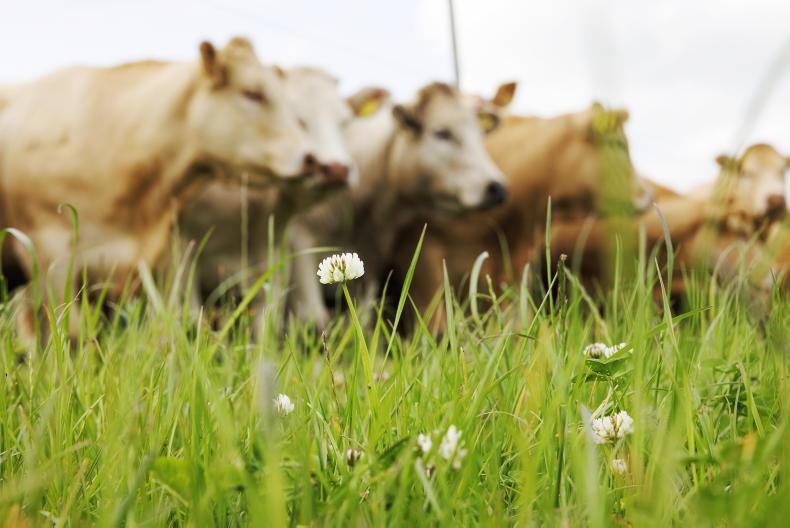
Another major area of progress has been the growing use of clover and multispecies swards. In 2024, 29% of dairy grassland on Signpost farms had medium to high levels of clover, while beef farmers reported a steady increase in the use of white clover, red clover and multispecies swards
Fertiliser use itself has fallen sharply across all systems, with an average reduction of almost 20% in 2023. Although 2024 saw a lift in usage, the overall trend to lower reliance on fertiliser nitrogen is clear. Crucially, NBPT-protected urea has now become the dominant nitrogen source on Signpost farms. By 2024, dairy farms were applying three-quarters of their chemical nitrogen as NBPT-protected urea, suckler farms had increased from just 17% in 2021 to 58%, and dairy beef farms were at 69%. This single shift has been one of the most impactful steps towards reducing nitrous oxide emissions, one of agriculture’s most potent greenhouse gases.
On tillage farms, innovation has been equally visible. Straw incorporation, while affected by shortages and policy changes in 2024, remains a valuable practice for soil health. Legumes now account for 16% of the land area on these farms, close to the maximum feasible level within a five-year rotation, and cover crops are expanding steadily, now covering 26% of land. Together, these measures protect soil, recycle nutrients and contribute to lower emissions.
Cutting emissions
The five main sources of emissions on livestock farms are animals, chemical nitrogen (both quantity and type), organic manures, lime, and urea.
On dairy farms, emissions per hectare decreased by 0.22t (10.5 vs 10.28 t CO2e/ha),, thanks largely to the reduction in fertiliser use and the switch to NBPT-protected urea. While emissions from lime increased, this is expected to be a long-term positive, as better soil pH reduces the need for fertiliser overall.
Suckler farms showed a slightly larger drop, with emissions per hectare falling by 0.36t (6.1 vs 5.74 t CO2e/ha).. This was again linked to reduced fertiliser use and a sharp fall in liming emissions, following high applications at the start of the programme. Dairy beef farms presented a more complex picture. Here, emissions per hectare actually increased by 0.28t (7.44 vs 7.72 t CO2e/ha), largely because of a rise in livestock numbers, which pushed up methane emissions. Fertiliser emissions did fall, but methane remains the dominant factor, illustrating clearly where the next challenge lies.
Productivity and profitability
A central concern for any farmer is whether climate action will come at the expense of output or income. The experience of the Signpost farms shows that the opposite can be true: efficiency measures not only cut emissions but also boost profitability.
Milk solids output on dairy farms has held steady at 483kg/cow over the past four years, even as fertiliser use dropped. Beef output on suckler farms rose by 8% to 720kg/ha, while dairy beef farms reached 1,296kg/ha.
Financial results tell the same story. Family farm income (FFI) on Signpost dairy farms in 2024 was €1,977/ha, well above the national average of €1,552. Suckler beef farms achieved €674/ha, a 32% increase since 2021. Dairy beef farms saw income rise from €693 to €861/ha over the same period. In short, farms are proving that profitability and sustainability can go hand in hand.
The road ahead
The progress achieved to date across the Signpost farms is undeniable. Fertiliser-related emissions have fallen sharply, soil health has improved and family farm incomes remained high. Farmers are proving that it is possible to produce more efficiently, protect the environment and remain profitable.
Yet the challenge of total emissions reduction remains. Small changes in livestock numbers have a large impact, since methane from animals and organic manure accounts for more than 70% of emissions in livestock systems. Cutting methane is the next frontier, and progress will depend on a suite of solutions: breeding for lower-emission animals, reducing age at slaughter, adopting feed and slurry additives, and aligning stocking rates with land capacity.
Achieving this shift will require more than individual farm-level action. A coordinated, whole-of-industry approach is needed, combining supportive policies, financial incentives, continued education and advisory support. The Signpost Programme has laid the groundwork, proving that farmers are willing to change when shown practical, profitable pathways. The next step is to build on that momentum and motivate all farmers to follow the example of the Signpost farms.
Conclusion
The Signpost journey so far has been one of awareness translated into meaningful action. In less than five years, farmers have adopted technologies that reduce emissions, protect soils, and strengthen farm businesses. The progress is significant, but the journey is far from over. The next phase will require locking in lower fertiliser N levels, continuing to strive for optimum soil health and animal performance, and addressing the complex challenge of reducing livestock methane. Irish farmers have shown that they are ready to lead. With the right tools, support and collaboration, the transition from awareness to action can become a leap from action to transformation, securing a more sustainable and resilient future for Irish agriculture.
The real strength of the Signpost Programme lies in the experience of individual farmers who have embraced change and saw results on the ground. Their stories highlight both the opportunities and the challenges of climate-smart farming.
Dermot Heaney, Co Meath – dairy
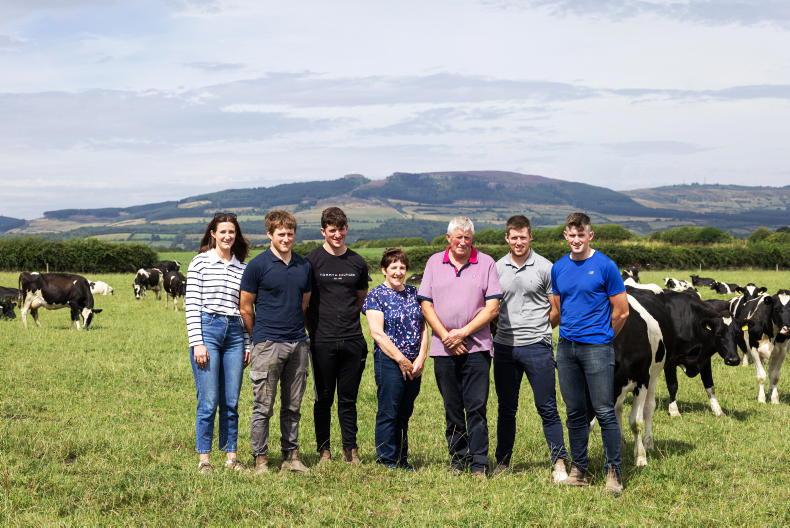
For dairy farmer Dermot Heaney, cutting chemical nitrogen without compromising grass growth has been the central focus. Between 2021 and 2025, soil fertility on his farm improved dramatically, with the proportion of soils at optimum fertility rising from 45% to 83% thanks to targeted lime applications. Over 60% of his milking platform now carries high clover content, allowing him to operate a zero-nitrogen policy on suitable swards during peak growth periods. NBPT-protected urea use rose from 36% to 90%, while CAN has been eliminated entirely. As a result, chemical nitrogen use dropped by 110kg/ha between 2021 and 2023, with a further 5% reduction in 2024. Grass growth has remained robust, averaging between 11.7t and 13.5t DM/ha over the past four years. Importantly, a deliberate decision to align stocking rates with grass growth capacity led to fewer cows, from 234 to 192, reducing both emissions and costs.
James Skehan, Co Clare – suckler beef
In Co Clare, suckler farmer James Skehan manages 24 spring-calving cows with an impressive breeding performance, achieving almost one calf per cow each year. His goal is to grow the herd to 30 cows to avoid buying in stock, though a TB breakdown in 2024 slowed that progress. Despite setbacks, James has embraced key technologies: half of his nitrogen is now applied as NBPT-protected urea, all slurry is spread using LESS and infrastructure investment in paddocks and water troughs has improved efficiency. Age at finish rose temporarily in 2024 due to poor weather, but emissions still dropped from 182t to 153t of CO2e, mainly due to reductions in fertiliser and lime use.
Ciaran Bartley, Co Limerick – dairy beef
Dairy beef farmer Ciaran Bartley has combined productivity gains with lower emissions. Output reached 1,109kg/ha in 2024, and farm income rose from €774 to €925/ha between 2021 and 2024. Nitrogen use has fallen from 113kg to 98kg/ha, with over 90% applied as NBPT-protected urea. By incorporating red clover silage into the system, Ciaran has reduced reliance on chemical fertiliser while producing high-quality feed. Finishing ages have also improved, with steers now leaving at 22.3 months, down from 23.9 in 2021. Total emissions fell sharply, from 669t to 531t of CO2e, primarily due to reduced livestock numbers and the completion of lime applications earlier in the programme.
Tom Barry, Co Cork – tillage
Tom Barry’s tillage enterprise has a diverse rotational system and precision nutrient management. His crop mix includes barley, wheat, oats, beans, cover crops and wild bird cover, spreading risk in increasingly unpredictable weather. He incorporates straw to enhance soil structure and uses bean straw to fuel a biomass boiler, cutting fossil fuel use. Strategic use of imported slurry, supported by a new underground tank and umbilical spreading system, has reduced chemical nitrogen reliance by up to 50%. Direct drilling further reduces carbon emissions and protects soil health. On Tom’s farm, emissions average just 1t of CO2e per hectare, with oats achieving zero net emissions in 2024, thanks to straw incorporation.
John O’Connell, Co Leitrim – sheep
In Ballinamore, Co Leitrim, John O’Connell runs a mid-season lambing flock alongside contract heifer rearing. Soil health has been a cornerstone of his approach: pH has risen from 5.7 to 6.3, and phosphorus and potassium indices are now at optimum levels. All chemical N is applied as NBPT-protected urea. Slurry is applied with LESS. Clover establishment has cut costs without sacrificing yield while helping reduce chemical nitrogen use from 142kg to 103kg/ha since 2021. Improved grazing infrastructure and proactive animal health management have boosted performance while reducing inputs. Although emissions rose initially due to the addition of heifer rearing, they have since stabilised, showing how diversification can be balanced with sustainability.


SHARING OPTIONS