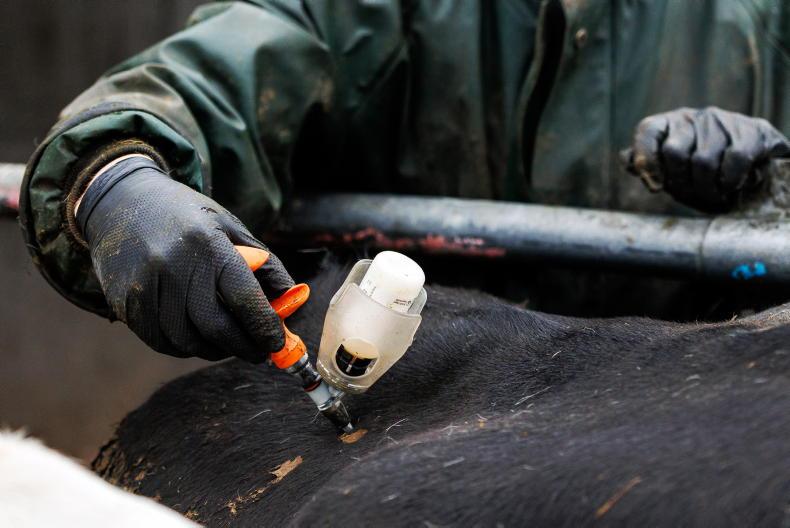
Minister for Agriculture Martin Heydon has firmly ruled out approving bluetongue vaccines for use on livestock while Ireland remains free of the virus.
The minister also stated that there are no plans under consideration to source bluetongue vaccine supplies as a precautionary measure to quicken any vaccination response that may be taken should cases of bluetongue be detected into the future.
Vaccinating against bluetongue serotype 3 on the continent and in Britain has been found to reduce the severity of symptoms, but not safeguard against infection or transmission.
“There is no way I would consider a vaccine when we don’t have it, because like TB, you can’t differentiate between a vaccinated and infectious animal and there are trade implications to vaccination,” he said.
“Vaccinating is something you would consider afterwards if it gets established here. We don’t have it. We are doing everything in our power to keep it off the island.”
The Department of Agriculture is receiving weekly alerts to suspected bluetongue cases from farmers and vets.
Minister Heydon stated that awaiting the results of testing carried out on these suspected cases is a “nervous time” but that both farmers and vets must continue to report any suspected cases as a matter of urgency if Ireland is to be kept bluetongue-free.
The course of action if a case were to be confirmed would be a “very significant lockdown” of animal movements in a bid to contain and eradicate the virus before it spreads wider.
“I can tell you, I’m getting briefings about once a week, or more often where there is a suspected case and there’s testing done, and we’re told that we have 24 hours to wait for the results,” the minister said.
“We need all farmers to play their bit here, because we are doing our best to keep it off but the trick is, if it comes in, if we can lock it down quick, we can stop it becoming established.
“Farmers have a key role to play, particularly in the higher risk areas along the east coast, but nobody’s immune from finding this.”
Although the island of Ireland has so far remained free from bluetongue, a previously unseen strain of the virus – serotype 3 – swept across the continent, decimating infected herds and flocks since September 2023 when it was first detected in the Netherlands.
The virus is not contagious, but spreads via infected Culicoides midges that can be blown significant distances by wind.
Vaccine green light up north
Northern Ireland’s Minister for Agriculture Andrew Muir has permitted the voluntary use of three bluetongue serotype 3 vaccines in the North, subject to licensing.
Vaccination has been pitched by Minister Muir as an option farmers can consider to take “early, informed action as a precautionary, secondary line of defence against the disease” in addition to the surveillance and control measures in place.
The move has been welcomed by the Ulster Farmers’ Union (UFU), which stated that the approval of the vaccines “may offer our members another option in managing potential risks” associated with the virus.