The latest results for the Bovine Viral Diarrhoea (BVD) National Eradication Programme show a total of 573 BVD-positive animals identified in 2025, up 130 head on the corresponding period in 2024. The increase in disease prevalence is concerning, at a time when Ireland is looking to push to the final stages of the programme and power on with the results achieved over the last decade (demonstrated in Figure 1, see below) and achieve BVD-free status.
There is a slight positive in the latest figures published by Animal Health Ireland (AHI), which is charged with the implementation of the eradication programme.
The number of herds with a BVD-positive animal is running at 223 herds marking an increase of just one herd on the corresponding period in 2024.
At a stage earlier in the year, this figure had been running at upwards of 40 more herds with BVD issues but this increase subsequently subsided.
This does not eliminate the apprehension around the increase in cases, but it is bringing the year end to a better conclusion than feared mid-year. This means the foundation for the increased prevalence is a higher number of herds suffering from a larger outbreak.
Data published on the AHI website shows approximately eight herds recording more than 12 BVD-positive calves born in 2025 up to 31 August, with a couple identifying between nine and 12 calves and nine between six and nine calves.
Continued testing
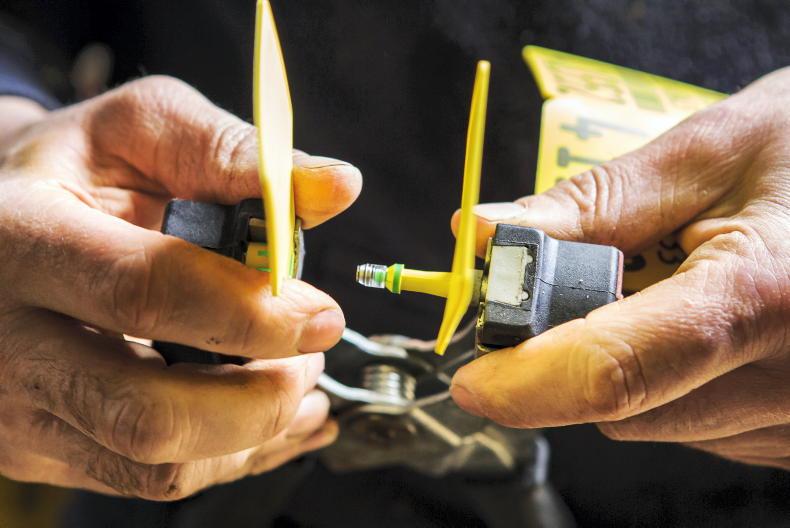
It is pretty clear at this stage that tissue tag testing will continue into 2026 and likely for another couple of years, even if Ireland does proceed to apply for BVD-free status. This is due to the fact that surveillance testing will be required and at present the best option for this is believed to be tissue tagging.
An application to the European Commission for BVD-free status is governed by Animal Health Law and is dependent on not having a confirmed case in the previous 18 months and having BVD-free status for 99.8% of all herds and representing 99.9% of all cattle on farms.
This is based on the total number of farms in Ireland and not just the herds represented in Table 1, where calves were born. As such, Ireland would technically be eligible to apply, but given the increase in numbers in 2025, there is a nervousness around doing so. This is ultimately a decision for the Department of Agriculture guided by the BVD Implementation Group (IG).
The BVD IG comprises members from the Department of Agriculture, AHI and a range of industry stakeholders including farm organisations, Teagasc, Veterinary Ireland and beef factory and milk processor representatives.
It is thought that there is two man concerns – ensuring there is a process in place to continue to ensure the prompt identification of positive animals and taking away the opportunity for farmers to protect their herds. With regard to the latter comment, a condition of securing BVD-free status includes the banning of all vaccination.
The BVD IG will meet again in the coming weeks, when it is expected that discussions on the above topics will continue. Farmers will be keen and deserve to hear what are the next steps and the plan/roadmap, given the challenges discussed above, for bringing the programme to a conclusion.
Support funding
The level of support funding to help assist farmers in covering the ongoing costs in complying with mandatory tissue-tag testing was increased in 2025.
The level of support was increased by 45% from €2.40/calf to €3.50/calf, up to a maximum of 25 calves per herd, or a little over €25 for a farmer testing the maximum number.
It is unlikely given the major increase in funds allocated to the TB Eradication Programme and recent cuts to the National Beef Welfare Scheme and the National Sheep welfare Scheme that there will be any significant changes on the horizon to support payments in 2026, including compensation payments for the quick removal of calves.
Given the higher calf values many farmers are pointing out that a higher payment is required to go anywhere near providing sufficient compensation.
Authorities tightening the BVD noose in Northern Ireland
Legislation which required farmers to test calves for BVD was introduced in Northern Ireland (NI) back in 2016. There was initially a scheme which paid up to £160 (€180) per head to remove persistently infected (PI) calves, but ever since 2017 the costs of testing and slaughtering infected calves has fallen on farmers.
Testing did make significant inroads into disease levels, but it was quickly clear that other interventions were required. In 2018, as part of an industry-led initiative, NI meat plants agreed not to slaughter PI cattle.
Two years later, members of the NI beef and lamb farm quality assurance scheme were told they would be excluded if they retain PI calves over 35 days post-notification of a positive test result.
Incidence
While those initiatives have helped ensure fewer PI cases, the downward trend in BVD herd incidence has stalled over the last two years at between 2% and 3%.
In an attempt to finally eradicate the disease, new BVD legislation came into force on 1 February 2025. It gives the Department of Agriculture, Environment and Rural Affairs (DAERA) powers to apply herd restrictions to herds with BVD positive or inconclusive animals, and to herds with animals of unknown BVD status.
Under that legislation, from 1 February 2026, herds with a positive or inconclusive test result will have immediate movement restrictions put in place (at present, there is a seven-day ‘grace period’).
In addition, the department has also tightened down on the number of untested BVD cattle.
From 1 December 2025, herd restrictions will apply if there are 10 or more untested cattle in a herd which are greater than 30 days old, dropping to five or more from 1 June 2026.
In an attempt to limit the potential for a pregnant animal to carry a PI to another farm, there are also new rules being introduced from 1 February 2026 for females (aged over 12 months) in a herd with a positive test result. These females won’t be allowed to move off the farm (except to slaughter) for 41 weeks from when the last PI calf is removed.
The restriction can be lifted in certain conditions– for example, when an animal has a calf which has a negative test for BVD.
AHI comment
Commenting on the next steps, Dr Maria Guelbenzu, AHI BVD programme manager, told the Irish Farmers Journal: “Our focus around BVD in 2026 is clear – ramp up all efforts to reduce the rates of BVD on farms across the country.
“This is a major priority for everyone in Animal Health Ireland (AHI) and we are putting the full weight of our organisation behind these efforts. Considerable progress has already been made as part of the programme.
“Since the implementation of the programme, the number of herds with BVD has fallen from 10,000 (11% of all herds) to fewer than 230 (0.37% of herds) this year. This has been achieved by farmers, their representatives, vets and industry working collectively and collaboratively to reduce incidence rates across the country.
“Farmers, working with their vets and representatives, can continue to limit the risk of a BVD outbreak on their farm by practising the best standards of biosecurity, testing calves quickly for BVD and by sourcing animals, if required, from low-risk herds. We will double down on these first principles in 2026.
“BVD is a contagious disease and must be treated with the highest degree of caution, especially in herds in the vicinity of BVD-positive herds.
“If this momentum at farm level can be sustained, we will move quickly towards BVD free status.”