Over the next three months, calf buyers will be on the hunt for new stock. Calf prices have risen dramatically over the last 12 months on the back of high beef prices and with this comes a greater expectation from buyers for quality stock that are healthy and disease-free.
Every detail matters that bit more when the margin for error is high, so taking extra precautions will be essential over the coming months.
In this article, the Irish Farmers Journal looks at five top tips for buyers to consider of when it comes to purchasing calves this spring.
1. Health
A healthy calf should always be the number one priority when it comes to deciding on what animals to purchase.
To help guarantee the best chance of purchasing healthy calves, it’s best to buy from a trusted source, whether this is via the mart or direct farm purchase.
Buying from a trusted seller, one can be more confident the calves are being reared correctly from birth.
Colostrum feeding is one of the most important but overlooked practices in a calf’s lifetime. Newborn calves will have no antibodies built up when they are born and that first feed of colostrum is essential for developing their immune system.
Buying a number of calves from the one farm where the farmer can be trusted to have given the calves plenty of quality colostrum and a good start is a big advantage.
The added benefit of purchasing a larger number of calves directly from a single seller, is that any future problems can be traced back to an individual source.
When selecting the calves for purchase, aim for animals over 50kg in weight and at least three weeks old. Those calves are generally healthier and hardier than younger and lighter calves.
The stress of the mart or transporting those older calves will not be as hard on them either.
When it comes to identifying healthy calves, whether it’s privately or through the mart, the eye test will have to be the guide.
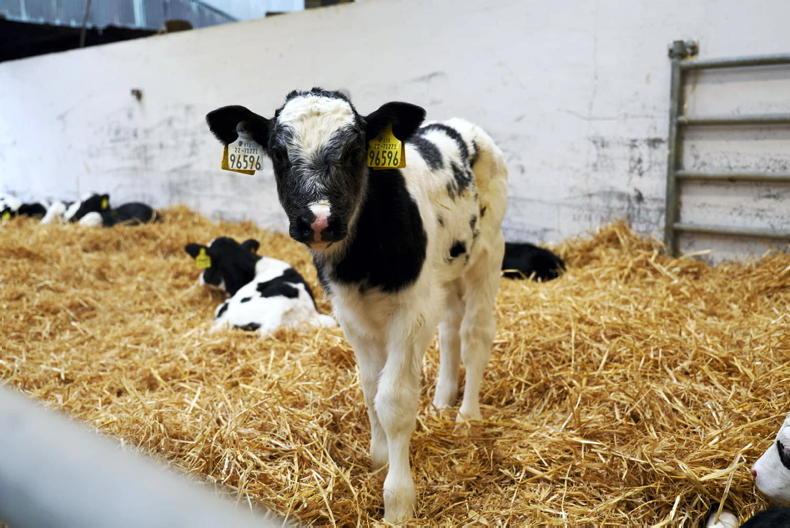
Sick animals may be more lethargic-looking, spending most of their time lying. Sunken eyes, drooping ears, scouring and coughing are sure signs that a calf has picked up something.
Steer clear of any calves with any of the above problems and look for those that are more energetic with bright eyes, a shine to their coat and a healthy-looking navel.
2. Genetics
The genetics of a calf will go a long way in determining its future capabilities, whether that is as a breeding animal or as an animal for slaughter.
In terms of calves purchased as future milking cows, the higher the EBI the more profitable that animal will be as a cow.
When it comes to purchasing dairy beef animals, the CBV value should be taken into account. The CBV is short for Commercial Breeding Value and this is an index used to identify animals with greater profitability potential at slaughter.
A CBV value is only available however, on animals that have been genotyped.
High CBV animals will have higher carcase weights with fewer days to slaughter and better carcase confirmation than their lower CBV counterparts. The value is expressed as a euro value and is rated using stars, with a 5-star animal being the best and 1-star animals the worst.
If buying direct from a farm, the CBV value can be ascertained from the selling farmer via ICBF, provided they have recorded the sire of the calf. When buying from the mart, the CBV value is displayed on the ring screen in the majority of marts around the country.

Buying calves from the mart will inevitably carry a higher disease risk than private farm purchases.
3. Transport
Moving any animals from one location to another can be a stressful experience, but particularly so for young calves.
When a calf is stressed, their immune system can be slightly suppressed and they are far more sensitive to picking up illnesses and health problems.
Making the transport process from farm to farm, or from the mart to the farm as smooth and as stress-free as possible, is an important component in maintaining healthy calves.
Where possible, keep the time spent travelling to a minimum.
Whatever the means of transport, it should be clean, dry and well-ventilated. It’s difficult to create a warm environment in some trailers or lorries, but providing a good deep bed of fresh straw will go some of the way in doing so.
Calves should have adequate space to lie down and be comfortable, particularly if the journey is of any significant distance.
In a scenario in which calves are purchased from different farms, it is best to avoid mixing herds where possible.
Unless the journey is going to take a significant length of time, there is no need to give the calves a break or a feed.
Nonetheless, calves should be checked at regular intervals to ensure they are all in good order.
4. Quarantine
When the calves eventually land on the home farm, there is a strong chance at least one of them could be harbouring some health issue, either clinical or sub-clinical.
Therefore, it’s essential to quarantine those animals for a period of time, to reduce the risk of disease spreading to other animals on the farm.
Disease spreads very quickly in calf houses. Only the most minimal of contact with each other is required to cause an outbreak.
Minimising the risk will be difficult but necessary.
In terms of the time period, two weeks is typically seen as an appropriate quarantine.
During that time, watch the calves closely to ensure they’re drinking milk correctly and showing no signs of pneumonia, coughing or scouring.
That two-week window will give the farmer an opportunity to intervene in the case of sick calves before the problem travels to other animals.
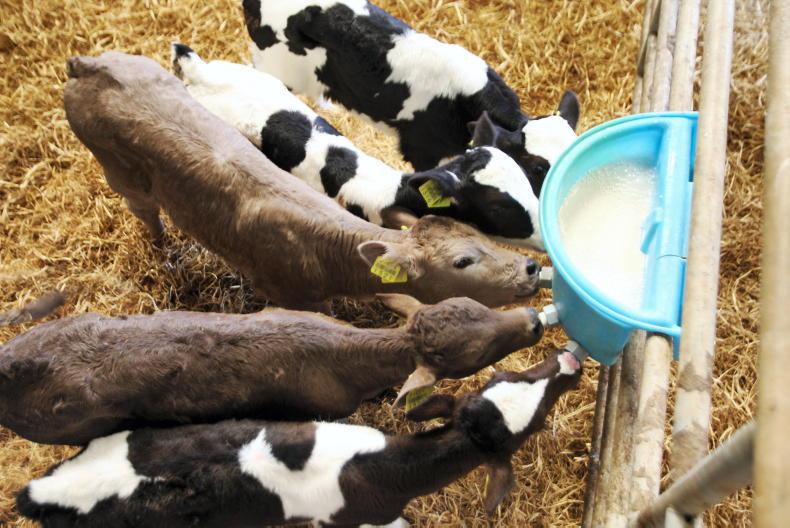
The calves first feed after landing on the new farm should include some electrolytes for re-hydration.
5. Feeding
Upon arrival calves should be allowed to rest and settle in the new environment for a couple of hours before starting to feed them.
When it’s time for the first feed, the best option is an electrolyte solution. Use an electrolyte that’s milk soluble if possible.
This will help to rehydrate calves and replenish nutrients lost over the course of the journey.
In mart-purchased calves, this rehydration is particularly important. Those calves could be anywhere from six to 12 hours on from their last feed, meaning they are likely to be very dehydrated even if they are not presenting as such.
The next feed should be a milk feed. When buying calves from different farms, they will have been exposed to a range of different feeding regimes, with some already eating meal and others not.
Best advice is to offer calves 10-15% of their body weight in milk over the course of two feeds. It’s best to keep this feeding level below six litres to encourage calves to start picking at meal.
Offer a starter ration of meal ad lib and ensure clean fresh water is always available. Good-quality fresh straw should be offered to young calves as a source of roughage.
Over the next three months, calf buyers will be on the hunt for new stock. Calf prices have risen dramatically over the last 12 months on the back of high beef prices and with this comes a greater expectation from buyers for quality stock that are healthy and disease-free.
Every detail matters that bit more when the margin for error is high, so taking extra precautions will be essential over the coming months.
In this article, the Irish Farmers Journal looks at five top tips for buyers to consider of when it comes to purchasing calves this spring.
1. Health
A healthy calf should always be the number one priority when it comes to deciding on what animals to purchase.
To help guarantee the best chance of purchasing healthy calves, it’s best to buy from a trusted source, whether this is via the mart or direct farm purchase.
Buying from a trusted seller, one can be more confident the calves are being reared correctly from birth.
Colostrum feeding is one of the most important but overlooked practices in a calf’s lifetime. Newborn calves will have no antibodies built up when they are born and that first feed of colostrum is essential for developing their immune system.
Buying a number of calves from the one farm where the farmer can be trusted to have given the calves plenty of quality colostrum and a good start is a big advantage.
The added benefit of purchasing a larger number of calves directly from a single seller, is that any future problems can be traced back to an individual source.
When selecting the calves for purchase, aim for animals over 50kg in weight and at least three weeks old. Those calves are generally healthier and hardier than younger and lighter calves.
The stress of the mart or transporting those older calves will not be as hard on them either.
When it comes to identifying healthy calves, whether it’s privately or through the mart, the eye test will have to be the guide.
Sick animals may be more lethargic-looking, spending most of their time lying. Sunken eyes, drooping ears, scouring and coughing are sure signs that a calf has picked up something.
Steer clear of any calves with any of the above problems and look for those that are more energetic with bright eyes, a shine to their coat and a healthy-looking navel.
2. Genetics
The genetics of a calf will go a long way in determining its future capabilities, whether that is as a breeding animal or as an animal for slaughter.
In terms of calves purchased as future milking cows, the higher the EBI the more profitable that animal will be as a cow.
When it comes to purchasing dairy beef animals, the CBV value should be taken into account. The CBV is short for Commercial Breeding Value and this is an index used to identify animals with greater profitability potential at slaughter.
A CBV value is only available however, on animals that have been genotyped.
High CBV animals will have higher carcase weights with fewer days to slaughter and better carcase confirmation than their lower CBV counterparts. The value is expressed as a euro value and is rated using stars, with a 5-star animal being the best and 1-star animals the worst.
If buying direct from a farm, the CBV value can be ascertained from the selling farmer via ICBF, provided they have recorded the sire of the calf. When buying from the mart, the CBV value is displayed on the ring screen in the majority of marts around the country.
Buying calves from the mart will inevitably carry a higher disease risk than private farm purchases.
3. Transport
Moving any animals from one location to another can be a stressful experience, but particularly so for young calves.
When a calf is stressed, their immune system can be slightly suppressed and they are far more sensitive to picking up illnesses and health problems.
Making the transport process from farm to farm, or from the mart to the farm as smooth and as stress-free as possible, is an important component in maintaining healthy calves.
Where possible, keep the time spent travelling to a minimum.
Whatever the means of transport, it should be clean, dry and well-ventilated. It’s difficult to create a warm environment in some trailers or lorries, but providing a good deep bed of fresh straw will go some of the way in doing so.
Calves should have adequate space to lie down and be comfortable, particularly if the journey is of any significant distance.
In a scenario in which calves are purchased from different farms, it is best to avoid mixing herds where possible.
Unless the journey is going to take a significant length of time, there is no need to give the calves a break or a feed.
Nonetheless, calves should be checked at regular intervals to ensure they are all in good order.
4. Quarantine
When the calves eventually land on the home farm, there is a strong chance at least one of them could be harbouring some health issue, either clinical or sub-clinical.
Therefore, it’s essential to quarantine those animals for a period of time, to reduce the risk of disease spreading to other animals on the farm.
Disease spreads very quickly in calf houses. Only the most minimal of contact with each other is required to cause an outbreak.
Minimising the risk will be difficult but necessary.
In terms of the time period, two weeks is typically seen as an appropriate quarantine.
During that time, watch the calves closely to ensure they’re drinking milk correctly and showing no signs of pneumonia, coughing or scouring.
That two-week window will give the farmer an opportunity to intervene in the case of sick calves before the problem travels to other animals.
The calves first feed after landing on the new farm should include some electrolytes for re-hydration.
5. Feeding
Upon arrival calves should be allowed to rest and settle in the new environment for a couple of hours before starting to feed them.
When it’s time for the first feed, the best option is an electrolyte solution. Use an electrolyte that’s milk soluble if possible.
This will help to rehydrate calves and replenish nutrients lost over the course of the journey.
In mart-purchased calves, this rehydration is particularly important. Those calves could be anywhere from six to 12 hours on from their last feed, meaning they are likely to be very dehydrated even if they are not presenting as such.
The next feed should be a milk feed. When buying calves from different farms, they will have been exposed to a range of different feeding regimes, with some already eating meal and others not.
Best advice is to offer calves 10-15% of their body weight in milk over the course of two feeds. It’s best to keep this feeding level below six litres to encourage calves to start picking at meal.
Offer a starter ration of meal ad lib and ensure clean fresh water is always available. Good-quality fresh straw should be offered to young calves as a source of roughage.







SHARING OPTIONS