The expanding dairy herd has been highlighted as a problem.
ADVERTISEMENT
Agriculture emissions are set to increase by up to 4% by 2020 and up to 7% by 2030, according to the latest report from the Environmental Protection Agency (EPA).
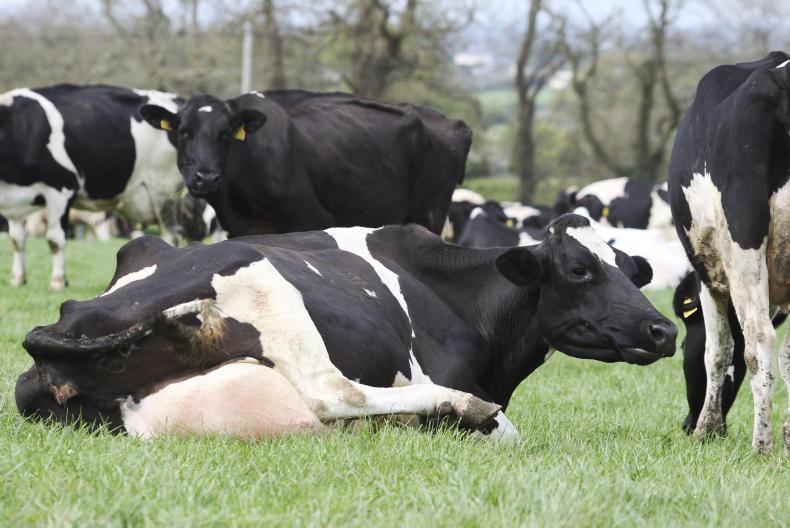
The EPA has pointed to the expanding dairy herd as a particular contributing factor to agriculture emissions.
Ireland’s target for 2020 had been to reduce emissions by 20% but the EPA predict that at best, the reduction will be around 1%.
ADVERTISEMENT
The results have heralded a fresh wave of calls from the IFA for a climate activation programme that would see an increased level of focus and funding targeted at a number of methods.
Climate programme
“The EPA’s figures published today represent a real call to action. While emissions from agriculture are expected to increase by 3-4% between now and 2020, transport will go up by 17-18%,” IFA environment chair Thomas Cooney said.
The IFA’s proposals include:
A biomass development programme would eliminate peat and coal burning, which is responsible for 64% of greenhouse gasses from the electricity sector.
The re-opening of the Green Low Carbon Agri-Environment Scheme.
A zero-carbon electricity tariff for community based renewable projects.
The scaling up of on-farm emission reduction programmes identified in the National Mitigation Plan, such as Smart Farming, Origin Green and the Carbon Navigator.
A full review by the Department of Agriculture’s Forest Services division of the new forestry programme and a commitment to remove barriers, as planting is down 14% year on year.
This content is available to digital subscribers and loyalty code users only. Sign in to your account, use the code or subscribe to get unlimited access.
The reader loyalty code gives you full access to the site from when you enter it until the following Wednesday at 9pm. Find your unique code on the back page of Irish Country Living every week.
CODE ACCEPTED
You have full access to the site until next Wednesday at 9pm.
CODE NOT VALID
Please try again or contact support.
Agriculture emissions are set to increase by up to 4% by 2020 and up to 7% by 2030, according to the latest report from the Environmental Protection Agency (EPA).
The EPA has pointed to the expanding dairy herd as a particular contributing factor to agriculture emissions.
Ireland’s target for 2020 had been to reduce emissions by 20% but the EPA predict that at best, the reduction will be around 1%.
The results have heralded a fresh wave of calls from the IFA for a climate activation programme that would see an increased level of focus and funding targeted at a number of methods.
Climate programme
“The EPA’s figures published today represent a real call to action. While emissions from agriculture are expected to increase by 3-4% between now and 2020, transport will go up by 17-18%,” IFA environment chair Thomas Cooney said.
The IFA’s proposals include:
A biomass development programme would eliminate peat and coal burning, which is responsible for 64% of greenhouse gasses from the electricity sector.
The re-opening of the Green Low Carbon Agri-Environment Scheme.
A zero-carbon electricity tariff for community based renewable projects.
The scaling up of on-farm emission reduction programmes identified in the National Mitigation Plan, such as Smart Farming, Origin Green and the Carbon Navigator.
A full review by the Department of Agriculture’s Forest Services division of the new forestry programme and a commitment to remove barriers, as planting is down 14% year on year.
If you would like to speak to a member of our team, please call us on 01-4199525.
Link sent to your email address
We have sent an email to your address. Please click on the link in this email to reset your password. If you can't find it in your inbox, please check your spam folder. If you can't find the email, please call us on 01-4199525.
ENTER YOUR LOYALTY CODE:
The reader loyalty code gives you full access to the site from when you enter it until the following Wednesday at 9pm. Find your unique code on the back page of Irish Country Living every week.







SHARING OPTIONS