



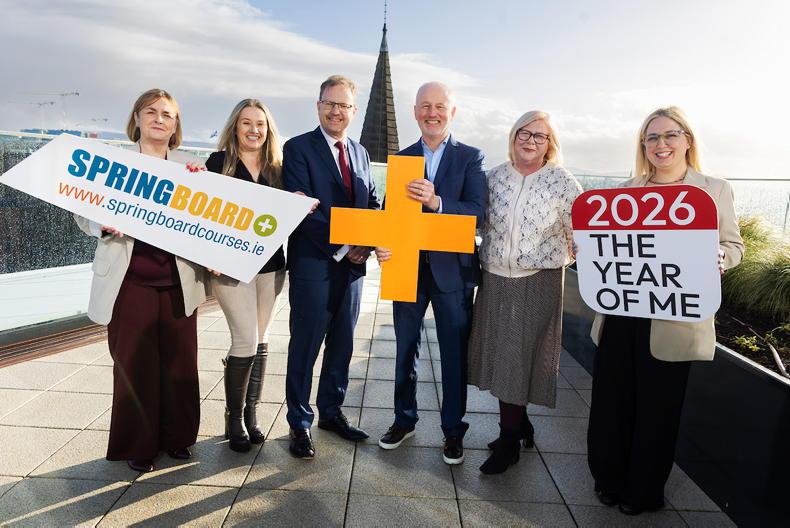
Ireland’s job market is evolving rapidly, and to keep up with this, it is essential that we have a workforce of people with the right skills. That’s where Springboard+ courses come in.
Designed to equip learners with expertise in some of the most in-demand areas of the Irish economy, the initiative opens doors to new and emerging career opportunities. Courses also help to develop skills that are in demand across the Irish economy.
From artificial intelligence and digital technologies to sustainability and healthcare innovation, Springboard+ offers courses across a wide range of future-focused fields. Learners can also explore cutting-edge areas such as offshore wind energy, the circular economy, carbon accounting, aircraft leasing, agri innovation and climate-focused enterprise.
Courses available
With many courses aligned to fast-growing sectors like digital technology, sustainability and advanced manufacturing, Springboard+ is helping people stay competitive in a changing world of work.
Minister for Further and Higher Education, James Lawless, recently launched Springboard+ 2026, which will provide more than 7,200 places across 244 courses delivered by 36 education providers nationwide. He also acknowledged the role Springboard+ plays in helping people across Ireland develop new skills.
“Springboard+ offers practical pathways into emerging industries and areas of strong growth such as artificial intelligence, offshore wind, sustainability, healthcare innovation and advanced manufacturing. By supporting people to upskill and reskill, Springboard+ also helps ensure Irish enterprise has access to the talent and expertise needed to compete and grow.
“The programme is part-funded through the National Training Fund, which is supported by contributions from businesses and reinvested in workforce development. This gives employers an opportunity to see a practical return on that investment by helping staff develop new skills and capabilities that strengthen their organisations,” he says.
A wide variety of courses are available to those currently employed, self-employed, unemployed, or returning to the workforce. Many courses are delivered on a part-time, flexible or online basis, enabling people to gain new qualifications while continuing to work or manage other commitments.
The programme is structured to be flexible and accessible, with heavily subsidised costs for employed learners and fully funded options for unemployed participants.
Full or part-time Springboard+ courses are free for unemployed participants and returners to the workforce, while those in employment typically pay just 10% of the course fee. Micro-credentials or short, flexible, university-accredited courses are 50% subsidised for all learners, regardless of employment status.
Springboard+ courses are developed in partnership with higher education institutions and industry to ensure they align with current and future workforce needs.
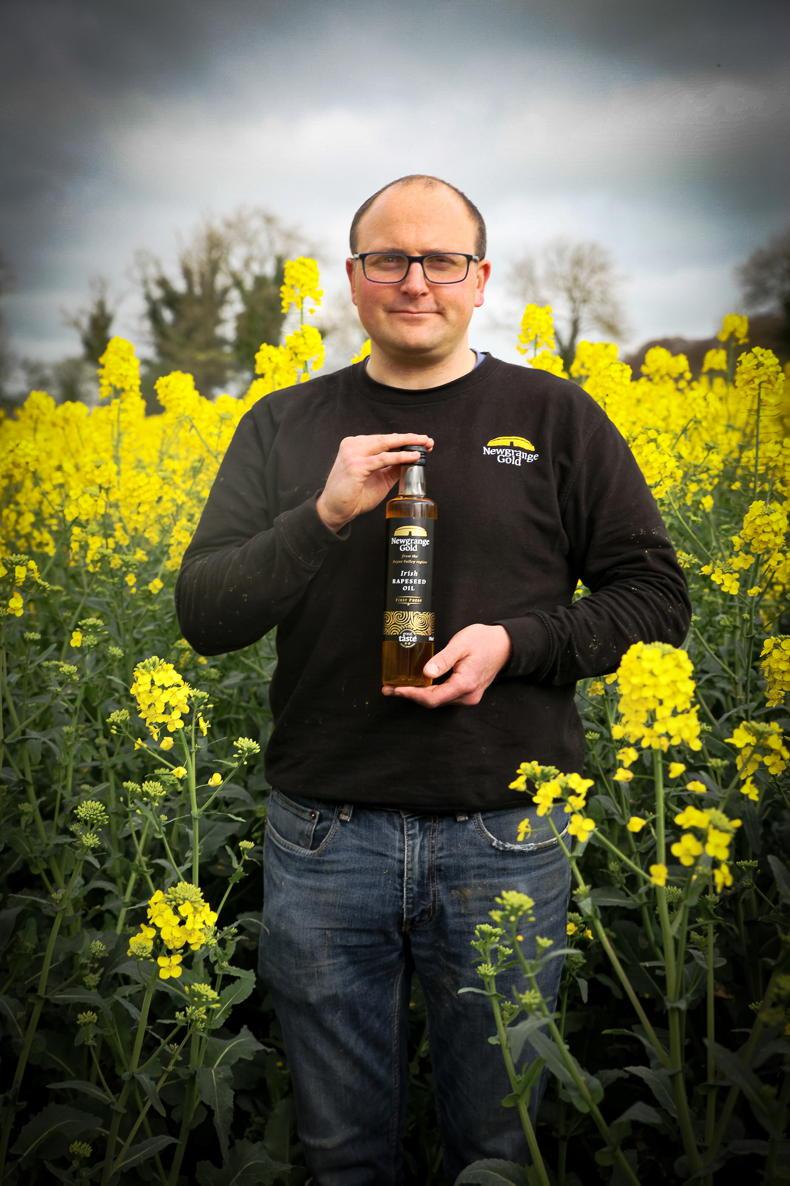
Jack Rogers, owner of Newgrange Gold and Springboard+ student
“We produce rapeseed oil, and we sell it in supermarkets. I studied agriculture at UCD and qualified as a barrister. I came back to the family company and have been running it since 2012.
Part of why I wanted to do the postgrad diploma in Innovation and Sustainable Agriculture was to get a better handle on all of that sustainability piece and innovation in the industry, around the agronomy. In 2021, a group of us set up the Boyne Rivers Trust, and I wanted to get stronger on the actual science.
“I found the Springboard+ course online, I read through it and thought it was probably closer to where I’d like to be, and it had more relevance to a lot of things I am involved in.
"The innovation side opened up my eyes. Unfortunately, in my line of work, you end up in sales a lot. The most enjoyable part of this business has always been meeting people like chefs or getting on to farms and seeing what other people are doing. It offered that opportunity.
“The aspects of precision agriculture were quite eye-opening. Even then, having to get into data science gets you out of your comfort zone and makes you think differently.
“I started in January last year and finished in December. I was going to do the Master’s, but with work, it was intense. I pushed myself quite hard with it. While I have several degrees and qualified as a barrister, I have dyslexia, which has always been something that I’ve struggled with.
“I was very proud of myself for getting a first, but I also felt the course was set up well for neurodivergent brains, because it was more often offline and continuous throughout the year.
“We had to be down in Munster Technological University twice every semester. There were about six trips in total over a weekend, usually on a Friday morning, and then a Saturday. The soil science module required you to do a presentation, which was quite full on.
“You were able to do most of your work from home. The course has helped with the thinking aspect around planning what’s next and looking at the future. From the agronomic side, I’m able to engage with people more and have confidence in what I am saying.”
See springboardcourses.ie



SHARING OPTIONS