



Jim Skea, formerly of Imperial College London and a prominent expert on climate science, has just taken over as head of the UN’s Intergovernmental Panel on Climate Change.
His first intervention in the public debate has been to lament the rise of fatalism about the planet’s prospects, including the despondent reaction to extreme weather events seen around the world in recent months. “I’m very conscious that constant drip-drip anxiety messages could have a paralysing effect on climate action,” he said.
He fears a growing air of pessimism that “the world’s going to hell anyway, so why bother about it?”
Climate paralysis has supporters in Ireland, including those who believe that somebody else should do the job.
For every tonne of greenhouse gas emissions debited to Ireland, about 500 tonnes are down to other countries around the world, notably China and the USA, the two biggest emitters as currently measured, and jointly responsible for about 45% of the world total (32.93% for China in 2021 and 12.55% for the USA). If they, and big countries like India where emissions are already 7% of the world total and rising, decide to do nothing, any sacrifices made here will have negligible benefit.
The earth has just one atmosphere and every tonne, wherever emitted, does roughly the same amount of damage.
People who acknowledge this reality are not deniers of climate science, they accept the earth has a problem and that unilateral sacrifices by a tiny country achieve little.
But Jim Skea’s conclusion is that paralysis must be resisted. All countries must do their best and the small must campaign for swifter action by the giants, without which all share the consequences of failure.
'Simply no problem'
A true climate change denier would argue that there is simply no problem and that there is no need for anyone to do anything at all.
The closest to this position, in a query quoted last week in the Irish edition of the Sunday Times, was Kerry’s Michael Healy-Rae, who defended agriculture: “What effect did the diesel engine have on stopping the world from being covered in ice? It had none because there was no diesel engine then.”
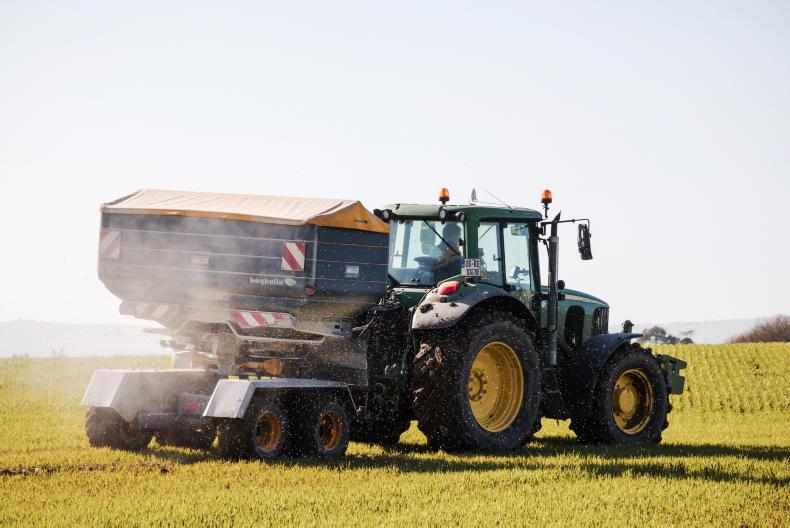
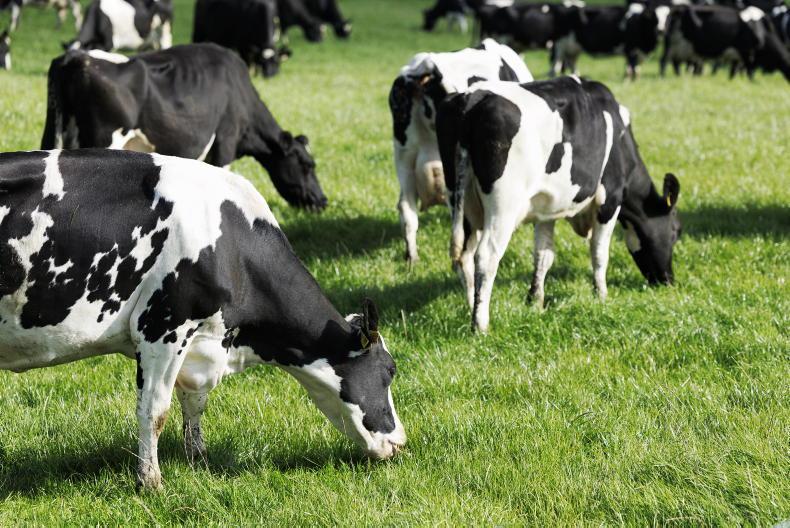
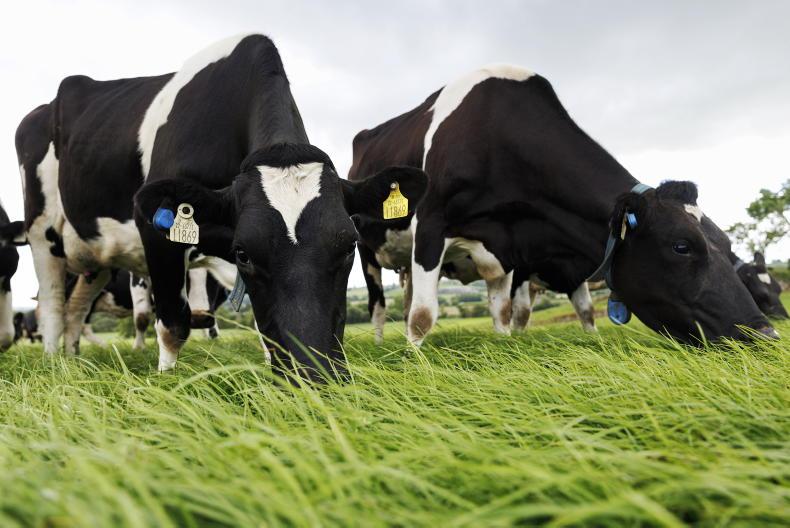
The finger-pointing at agriculture is based on the high percentage of Irish emissions that can be traced, using the sector-of-production methodology in widespread use, to farming and food-processing.
Any country with a large farm sector, exporting most of its output, would register the same pattern using the same methods.
It does not follow that the Environmental Protection Agency (EPA) is cooking the books, by design or through carelessness. They are following guidelines for measuring emissions in use internationally and endorsed by the European Union.
But nor does it follow that there is a ‘scientific’ basis for sharp reductions in whichever sector appears to have high measured emissions.
Since Ireland is an exporter of agricultural products, the associated carbon emissions are feeding demand elsewhere and there is a problem with using production-based measurement. Ireland’s emissions from petrol and diesel are debited to Ireland, even though production is in the Middle East. Dairy products which are consumed in oil-producing countries miraculously leave their emissions behind in Ireland.
Universal system
The same logic, a legacy of the failure in the 1990s to agree a universal system of discouraging worldwide demand through carbon taxes, would see all Irish emissions from fossil fuels debited to Saudi Arabia and other producers.
This would be absurd and economists argued, unsuccessfully, for consumption-based policies for the past 30 years.
The current system of allocating ‘blame’ for emissions between countries, and within them to sectors, is arbitrary and a reflection of long-ago policy failures. The EU has begun to acknowledge the inconsistencies through border taxes on imports of high-carbon products from China and elsewhere.
The policy is called C-BAM, for carbon border adjustment mechanism.
The idea is to offset the unfair disadvantage faced by European firms competing against imports from countries which have lax climate regulations and negligible carbon taxes on inputs.
The logic of this level playing-field approach is that the consuming country should arrange suitable taxes and rules to discourage consumption of carbon-intensive items and let them be produced where it is efficient to do so.
If this is to apply between the EU’s single market and China, should it not also apply between EU countries if the carbon content of agricultural production varies substantially? Rather than encouraging the climate change deniers, or questioning the emissions measurement by the EPA, the farm organisations ought to be seeking changes to policy at EU level.
It makes no more sense to discourage dairy production in Ireland than it would to impose limits on growing grapes in Spain, knowing that the level of demand will be unaffected by regional herd limits.
Milking cows in southern Europe makes no more sense than growing grapes in Donegal.




SHARING OPTIONS