


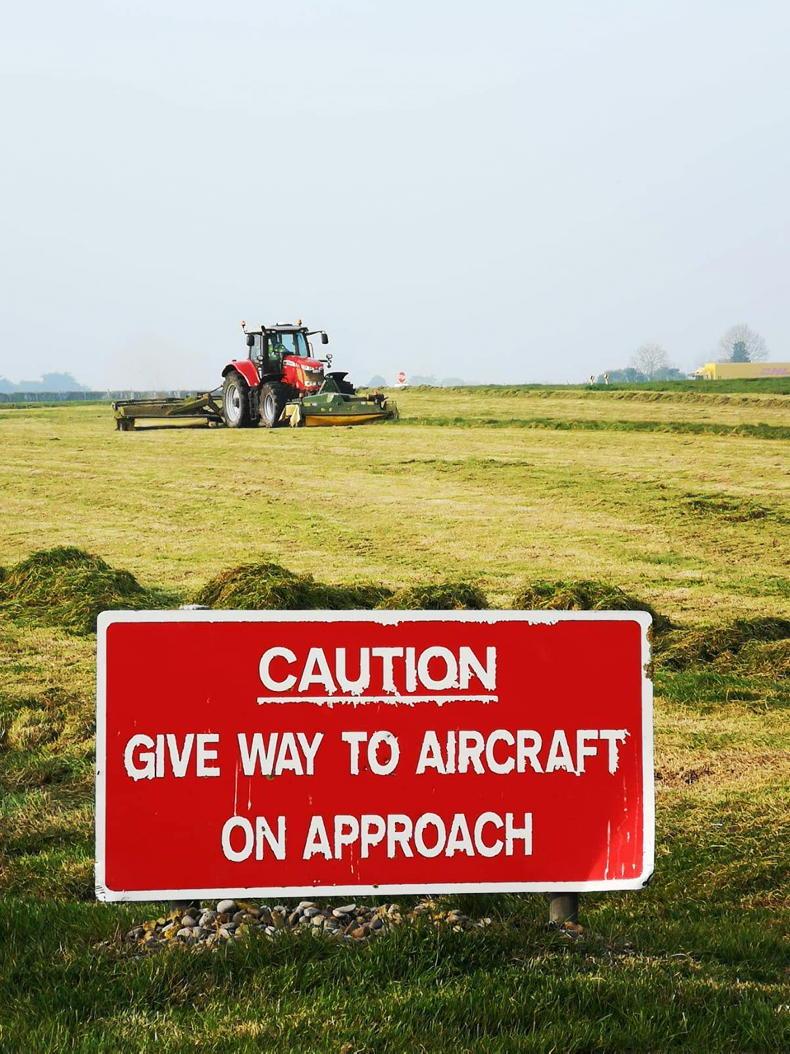
Removing restrictions on the use of the new runway at Dublin airport needs Government intervention.
Central government may, in effect, over-rule the local council which has chosen to get involved in the airport’s operational management through passenger caps and limits on nighttime flights, in response to concerns and objections from local residents.
The delays and restrictions have angered the Dublin Airport Authority (DAA) which owns and manages the facility (disclosure – the writer was a board member at DAA prior to the runway’s construction). Domestic airlines Ryanair and Aer Lingus have criticised the stance taken by Fingal County Council as have foreign carriers including transatlantic operators like Delta, United Airlines and American Airlines.
Dublin Airport is a national rather than a Dublin facility – the passenger volumes at the Republic’s seven airports in 2024 are outlined in Table 1.
The dominant share of Dublin in the total has two simple explanations. The Dublin area hosts the only large city in the country and has the best surface connections to the regions. The same two factors explain the equally dominant share of Dublin’s sea port in the national total for freight movements.
Of the seven airports shown, only Dublin has been earning sufficient revenue to cover operating costs – all the others lose money, including Cork, the runner-up in terms of passenger numbers but stuck at less than one-tenth of the Dublin figure. Airports handling 3m passengers, the 2024 figure at Cork, can theoretically earn enough to cover costs but international studies have found that they rarely do so. Smaller airports, say those handling 2m or fewer, almost always lose money, even if they can earn some non-aeronautical revenue from retail and parking since these income sources require passengers too.
Operating an airport is largely a fixed-cost business. A recent report for ACI Europe, the industry body for European airport operators, by the consultants Oxera concluded that somewhere between 70% and 90% of costs are fixed. Thus an expansion in the number of passengers will deliver a big boost to the bottom line when volumes improve. The corollary though is that low-volume airports cannot realistically expect to reach break-even on operations.
If the European Commission is serious about the State aid rules, there will be arguments about definitions, particularly the treatment of capital subventions and subsidised fares, some of which sustain airlines in paying landing charges to the regional airports which they would not serve at all without the fare subsidies
The smallest Irish airport, Carrickfin in Donegal, handles just 50,000 passengers per annum, barely half the number using Dublin every day. There are three flights per week to Glasgow (four for a couple of months in the summer), plus a subsidised departure twice daily to Dublin. Thus two departures, sometimes three, per day, in small aircraft.
The European Commission has rules about State aid and will have to check in due course whether Ireland’s regional airports are receiving more than is permitted.
The actual losses at Shannon are not disclosed, aggregated into the total for the Shannon Group which also owns a rent roll of industrial premises and the Bunratty entertainment business.
Cork’s losses are hidden in the DAA total which includes the Dublin profits. By 2027, the rules appear to imply that every single airport, other than Dublin, will struggle to pass the tests the European Commission has outlined.
The strictest interpretation of the rules would even affect Cork, since 3m passengers is the upper limit for subsidies from 2027 onwards. DAA has recently announced expansion plans at Cork, welcomed by Taoiseach Micheál Martin and other Cork politicians, and the other airports have ambitions.
Two of Ireland’s regional airports, Sligo and Galway, have closed entirely and Waterford, still staffed and nominally open for business, has had no scheduled flights since 2016. A recent council meeting in Waterford saw every member present, and from all political parties, express support for a runway extension to be paid for by the Exchequer.
If the European Commission is serious about the State aid rules, there will be arguments about definitions, particularly the treatment of capital subventions and subsidised fares, some of which sustain airlines in paying landing charges to the regional airports which they would not serve at all without the fare subsidies.
Commercial companies
The rationale for State aid rules at EU level is the protection of commercial companies from unfair competition driven by overt or hidden State subsidies to favoured rivals.
Thus a large manufacturer would be expected to suffer if a serious rival got free electricity or direct State subvention. But why should the Commission care if a tiny airport gets public money when it is simply too small to damage its commercial rivals? The best defence for the Irish regional airports may well be their small size rather than debatable assertions about their importance for regional development.
Neither Galway nor Sligo have collapsed following the demise of their airports. There is a fair chance the Commission will blink.




SHARING OPTIONS