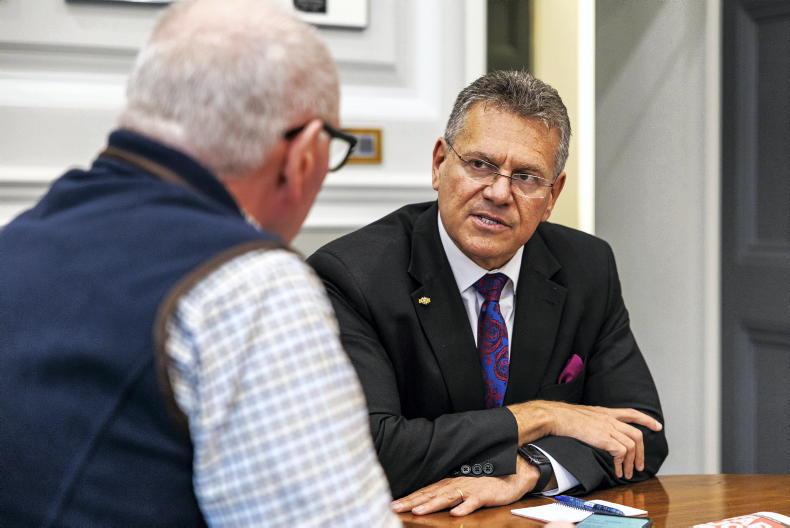
After a busy two days of engagements in Ireland, the European Commissioner with responsibility for trade sat down with the Irish Farmers Journal for a wide-ranging interview on issues impacting farmers across the island of Ireland.
Coming the day after his meeting with the Dáil’s Trade and Agriculture committees, it was no surprise that the challenges to the heavily promoted safeguards in the Mercosur deal, featured prominently.
The Commissioner rejected the suggestion that multi-annual price falls of less than 10%, while legally robust, would be of no practical benefit.
He referred to the other safeguards that were in place alongside the 10% reduction in price combined with the 10% increase in import volumes from the Mercosur countries of Argentina, Brazil, Uruguay and Paraguay.
He said that “we are living in a political environment” and that the impact would be assessed “through regular monitoring” and they “will be looking every six months at the concrete figures”. He added: “We’ll be sharing these with Irish farmers and your Government and everyone else.”
The Commissioner was referring to was the clauses that stated that there would be:
Full transparency including reporting to European Parliament and Council twice a year.Swift provisional measures in no more than 21 days after the identification of a sufficient risk in urgent cases.He was implying that it wasn’t just the 10% fall in price combined with the 10% increase in imports that would result in EU action, but he didn’t elaborate further on what action would be taken.
Trade opportunity
The Commissioner was keen to move the discussion on to the theme of Ireland being what he described as an “agri food export superpower”.
The Irish Farmers Journal asked him would it not be better to just level with farmers and say that overall, the Mercosur trade deal is good for the EU and Ireland and beef producers would just have to accept the Mercosur beef quota.
He pushed back strongly against this suggestion saying that “we are not negotiating the deals for somebody to be a loser, and I believe that the high-quality Irish beef will be under no circumstances, in any danger [from Mercosur imports].”
The Commissioner referred to the example of Canada who secured a 50,000t beef quota for the EU as part of the CETA trade deal and said that “exports of agri food products from Ireland to Canada are skyrocketing”.
As Figure 1 shows, Irish beef exports to Canada have increased significantly over the past decade, reaching 6,800 tonnes in 2024, but this remains a small market in the context of almost 500,000 tonnes of beef in total that was exported last year.
The Irish Farmers Journal put it to the Commissioner that impact assessment studies carried out by both the Irish Government and EU showed that Mercosur would, in fact, have a negative impact on beef.
His response was that in a “worst case scenario, we are talking between 1% and 2% of the of the price” and suggested that “there were the same worries and concerns with the Canada deal”.
These haven’t materialised as Canadian beef producers have been reluctant to give up the use of hormones to have the EU market as an option.
Other deals
The Commissioner was very keen to discuss the other trade deals that the EU has made which potentially offer opportunities for farmers.
He said: “It’s not only Mercosur that we are talking about; we are opening a huge market in Mexico, one of the biggest net food importers and we have just made the agreement with Indonesia, also a big importer.”
The prospect of a trade deal with Australia which has been in negotiation since 2018 also remains.
Discussions broke down in Osaka, Japan, in October 2023 and while it was never confirmed by either party, it is widely believed that the size of beef quota the EU would give Australia was the stumbling block.
Commissioner Šefcovic declined to reveal any details but did say that “we have been very clear with Australians that in these sensitive commodities, we have no flexibility”.
When pressed by the Irish Farmers Journal about if he had a number of tonnes in his head that he would accept, his reply was: “No, I do not have the number in my head.” See also page 28 for more on this negotiation.
US deal
Commissioner Šefcovic was very comfortable when discussing the merits of the recent deal with the US. He described it as “quite good, definitely the best under circumstances”, adding: “I’m very happy to compare this deal to any other deals which the US signed with other countries.”
He also referred to the feedback that he received during his meetings saying: “I haven’t met one single business personality who would advocate a trade war, which was the alternative.”
As for seeing the detail, that seems like the EU is buying into the President Trump modus operandi!
The bottom line for the Commissioner is that for him the “Americans respected all the agreements which we have in the joint statement and, on our side, we also respected our side of the bargain, so we proposed two legislative proposals on where to lower tariffs for American products, and they are now with the member states and with the European Parliament”.
Brexit aftermath
Our conversation with the Commissioner began with his reflection on his pleasure in coming back to Ireland because “I know that I always find here very strong pro-European attitudes, and that was confirmed in all the meetings [that] we had”.
When he was asked about recent comments by Northern Ireland Executive Minister for Agriculture Andrew Muir on the SPS deal not being implemented before 2027, he gave a detailed explanation, saying: “We have to get the mandate from the 27 member states to negotiate with the UK.
“I believe we will get it in the next few weeks, and then we just should really start negotiate very quickly. I think that UK colleagues know the system very well, and we want to progress quickly, so I believe that 2027, is a realistic assessment.”
He also spoke about the positive tone of engagement with the UK, hinting that maybe even faster progress could be made but that work remained to be done.
Comment: Mercosur will always be a threat for Irish beef producers
It was clear that the Commissioner is a huge advocate for trade deals and that he genuinely seems to believe that having lived with the Canada agreement, Mercosur wont be a problem for Irish and EU beef producers.
He is adamant that the tools are in place to prevent the Mercosur deal from being a negative disruption on beef production in Ireland and across the EU.
His argument failed to convince many in the Trade and Agriculture Committees of the Dáil last week, Irish farmers are left hoping that their analysis is wrong and that the Commissioner has got it right with the safeguards. What remains absolutely certain is that no matter what safeguards are in place, the Mercosur trade deal will only ever be a threat to Irish beef producers irrespective of the opportunities it may present to every other sector of the economy.
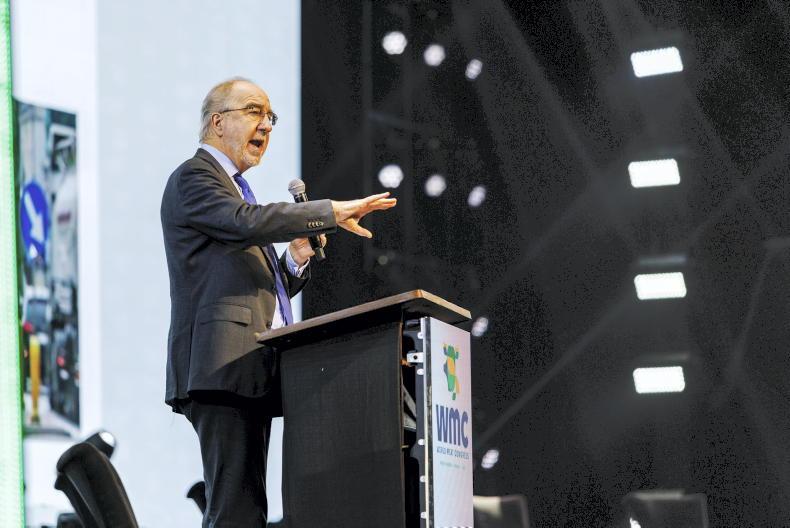
European Commissioner for Trade shares thoughts with the Irish Farmers Journal.
Commissioner says:
Ireland is an agri food export superpower. Beef producers won’t lose out in Mercosur deal.US trade deal is much better than the alternative.Brexit veterinary deal will take time.
After a busy two days of engagements in Ireland, the European Commissioner with responsibility for trade sat down with the Irish Farmers Journal for a wide-ranging interview on issues impacting farmers across the island of Ireland.
Coming the day after his meeting with the Dáil’s Trade and Agriculture committees, it was no surprise that the challenges to the heavily promoted safeguards in the Mercosur deal, featured prominently.
The Commissioner rejected the suggestion that multi-annual price falls of less than 10%, while legally robust, would be of no practical benefit.
He referred to the other safeguards that were in place alongside the 10% reduction in price combined with the 10% increase in import volumes from the Mercosur countries of Argentina, Brazil, Uruguay and Paraguay.
He said that “we are living in a political environment” and that the impact would be assessed “through regular monitoring” and they “will be looking every six months at the concrete figures”. He added: “We’ll be sharing these with Irish farmers and your Government and everyone else.”
The Commissioner was referring to was the clauses that stated that there would be:
Full transparency including reporting to European Parliament and Council twice a year.Swift provisional measures in no more than 21 days after the identification of a sufficient risk in urgent cases.He was implying that it wasn’t just the 10% fall in price combined with the 10% increase in imports that would result in EU action, but he didn’t elaborate further on what action would be taken.
Trade opportunity
The Commissioner was keen to move the discussion on to the theme of Ireland being what he described as an “agri food export superpower”.
The Irish Farmers Journal asked him would it not be better to just level with farmers and say that overall, the Mercosur trade deal is good for the EU and Ireland and beef producers would just have to accept the Mercosur beef quota.
He pushed back strongly against this suggestion saying that “we are not negotiating the deals for somebody to be a loser, and I believe that the high-quality Irish beef will be under no circumstances, in any danger [from Mercosur imports].”
The Commissioner referred to the example of Canada who secured a 50,000t beef quota for the EU as part of the CETA trade deal and said that “exports of agri food products from Ireland to Canada are skyrocketing”.
As Figure 1 shows, Irish beef exports to Canada have increased significantly over the past decade, reaching 6,800 tonnes in 2024, but this remains a small market in the context of almost 500,000 tonnes of beef in total that was exported last year.
The Irish Farmers Journal put it to the Commissioner that impact assessment studies carried out by both the Irish Government and EU showed that Mercosur would, in fact, have a negative impact on beef.
His response was that in a “worst case scenario, we are talking between 1% and 2% of the of the price” and suggested that “there were the same worries and concerns with the Canada deal”.
These haven’t materialised as Canadian beef producers have been reluctant to give up the use of hormones to have the EU market as an option.
Other deals
The Commissioner was very keen to discuss the other trade deals that the EU has made which potentially offer opportunities for farmers.
He said: “It’s not only Mercosur that we are talking about; we are opening a huge market in Mexico, one of the biggest net food importers and we have just made the agreement with Indonesia, also a big importer.”
The prospect of a trade deal with Australia which has been in negotiation since 2018 also remains.
Discussions broke down in Osaka, Japan, in October 2023 and while it was never confirmed by either party, it is widely believed that the size of beef quota the EU would give Australia was the stumbling block.
Commissioner Šefcovic declined to reveal any details but did say that “we have been very clear with Australians that in these sensitive commodities, we have no flexibility”.
When pressed by the Irish Farmers Journal about if he had a number of tonnes in his head that he would accept, his reply was: “No, I do not have the number in my head.” See also page 28 for more on this negotiation.
US deal
Commissioner Šefcovic was very comfortable when discussing the merits of the recent deal with the US. He described it as “quite good, definitely the best under circumstances”, adding: “I’m very happy to compare this deal to any other deals which the US signed with other countries.”
He also referred to the feedback that he received during his meetings saying: “I haven’t met one single business personality who would advocate a trade war, which was the alternative.”
As for seeing the detail, that seems like the EU is buying into the President Trump modus operandi!
The bottom line for the Commissioner is that for him the “Americans respected all the agreements which we have in the joint statement and, on our side, we also respected our side of the bargain, so we proposed two legislative proposals on where to lower tariffs for American products, and they are now with the member states and with the European Parliament”.
Brexit aftermath
Our conversation with the Commissioner began with his reflection on his pleasure in coming back to Ireland because “I know that I always find here very strong pro-European attitudes, and that was confirmed in all the meetings [that] we had”.
When he was asked about recent comments by Northern Ireland Executive Minister for Agriculture Andrew Muir on the SPS deal not being implemented before 2027, he gave a detailed explanation, saying: “We have to get the mandate from the 27 member states to negotiate with the UK.
“I believe we will get it in the next few weeks, and then we just should really start negotiate very quickly. I think that UK colleagues know the system very well, and we want to progress quickly, so I believe that 2027, is a realistic assessment.”
He also spoke about the positive tone of engagement with the UK, hinting that maybe even faster progress could be made but that work remained to be done.
Comment: Mercosur will always be a threat for Irish beef producers
It was clear that the Commissioner is a huge advocate for trade deals and that he genuinely seems to believe that having lived with the Canada agreement, Mercosur wont be a problem for Irish and EU beef producers.
He is adamant that the tools are in place to prevent the Mercosur deal from being a negative disruption on beef production in Ireland and across the EU.
His argument failed to convince many in the Trade and Agriculture Committees of the Dáil last week, Irish farmers are left hoping that their analysis is wrong and that the Commissioner has got it right with the safeguards. What remains absolutely certain is that no matter what safeguards are in place, the Mercosur trade deal will only ever be a threat to Irish beef producers irrespective of the opportunities it may present to every other sector of the economy.
European Commissioner for Trade shares thoughts with the Irish Farmers Journal.
Commissioner says:
Ireland is an agri food export superpower. Beef producers won’t lose out in Mercosur deal.US trade deal is much better than the alternative.Brexit veterinary deal will take time. 





SHARING OPTIONS