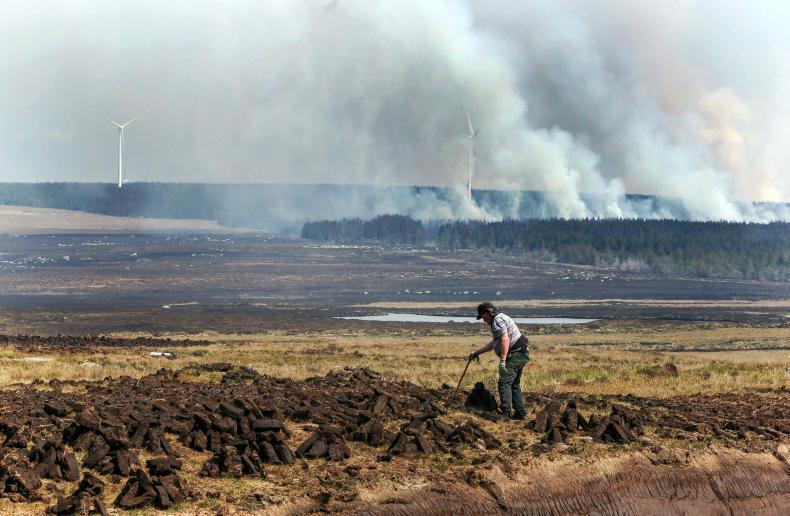
The Cloosh Valley fire viewed from near Seanafeistín, Co Galway \ Sean Lydon
ADVERTISEMENT
The cost of fighting last year’s fires as well as the loss of standing timber is expected to be significant and the process in doing so is ongoing, a spokesperson for Coillte has said.
In 2017, 85 separate fire events were recorded by Coillte with over 1,700ha of forestry and 2,000 hectares of bog land, on Coillte property, affected.
The largest and most dangerous of these incidents was the forest fire at Cloosh Valley, County Galway.
ADVERTISEMENT
The spokesperson said: “To estimate the full cost of the fires, Coillte are engaged in an ongoing process to evaluate the additional cost of forests and habitat regeneration.
“This process is very challenging as significant work is required to remove burnt material and prepare the lands for reforestation.
“Most areas will be fully replanted while others may be converted to biodiversity and nature conservation areas with the agreement of the Forest Service,” the spokesperson said.
This content is available to digital subscribers and loyalty code users only. Sign in to your account, use the code or subscribe to get unlimited access.
The reader loyalty code gives you full access to the site from when you enter it until the following Wednesday at 9pm. Find your unique code on the back page of Irish Country Living every week.
CODE ACCEPTED
You have full access to the site until next Wednesday at 9pm.
CODE NOT VALID
Please try again or contact support.
The cost of fighting last year’s fires as well as the loss of standing timber is expected to be significant and the process in doing so is ongoing, a spokesperson for Coillte has said.
In 2017, 85 separate fire events were recorded by Coillte with over 1,700ha of forestry and 2,000 hectares of bog land, on Coillte property, affected.
The largest and most dangerous of these incidents was the forest fire at Cloosh Valley, County Galway.
The spokesperson said: “To estimate the full cost of the fires, Coillte are engaged in an ongoing process to evaluate the additional cost of forests and habitat regeneration.
“This process is very challenging as significant work is required to remove burnt material and prepare the lands for reforestation.
“Most areas will be fully replanted while others may be converted to biodiversity and nature conservation areas with the agreement of the Forest Service,” the spokesperson said.
If you would like to speak to a member of our team, please call us on 01-4199525.
Link sent to your email address
We have sent an email to your address. Please click on the link in this email to reset your password. If you can't find it in your inbox, please check your spam folder. If you can't find the email, please call us on 01-4199525.
ENTER YOUR LOYALTY CODE:
The reader loyalty code gives you full access to the site from when you enter it until the following Wednesday at 9pm. Find your unique code on the back page of Irish Country Living every week.





SHARING OPTIONS