



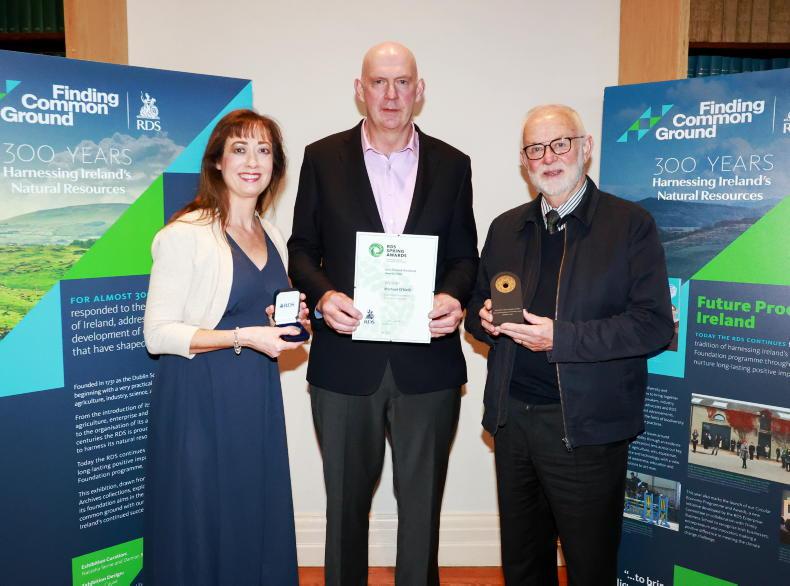
The four major RDS forestry awards were won this year by forest owners in counties Kilkenny, Kildare, Galway and Mayo. They were presented during a two-day RDS event titled Finding Common Ground.
The commercial forestry awards illustrated how forestry has common ground with agriculture while the community and native woodland awards demonstrated commonality between forestry and non-wood aspects, including community, heritage and ecology.
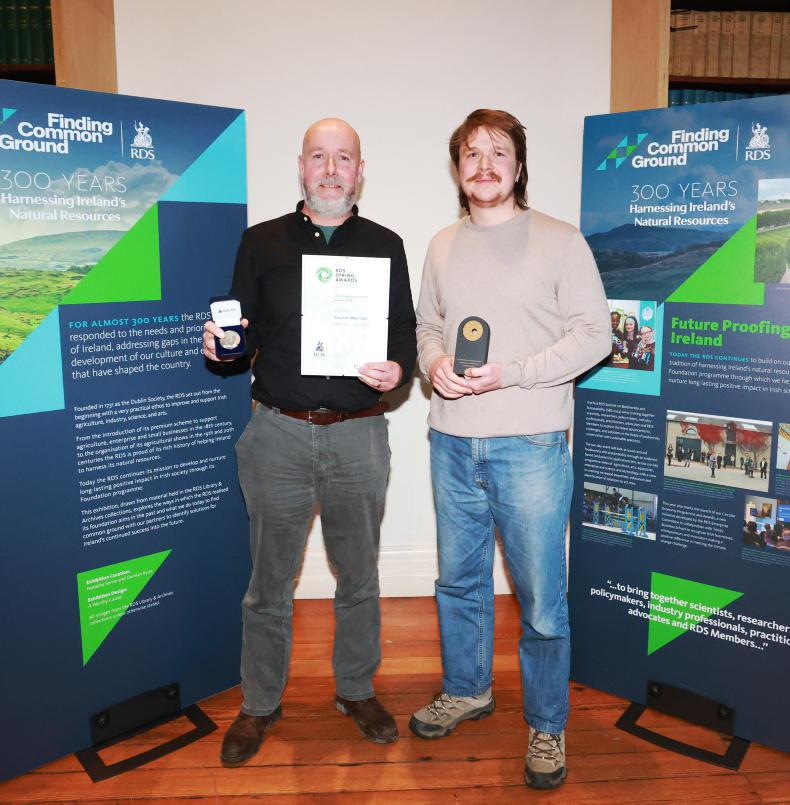
The Silvicultural Excellence & Innovation Award went to Michael O’Neill, Gowran, Co Kilkenny, who combines commercial Sitka and Norway spruce timber production along with native oak and alder in his 30ha forest. Although he still fattens lambs, he carries out all the forest tending and harvesting himself.
“O’Neill’s forest has direct hydrological connections to both the Barrow and Nore river catchments and this has influenced his forest management hugely,” said Mick Keane, chair of the RDS forest judging panel.
The Teagasc Farm Forestry Award went to Stephen Morrison, the owner of a woodland and farm in Co Kildare. Over the last six years he has planted 24ha of native forestry while he converted his farm to an organic system three years ago. Keane and his fellow judges PJ Fitzpatrick and Joe Gowran were impressed by operations such as the establishment of hedgerows, digging of farm ponds and the preservation of a unique fen to enhance biodiversity.
The Native Woodland Conservation Award, which recognises excellence in the care of indigenous woodlands, was won by Paul Maguire, Furnace, Co Mayo. Apart from managing and maintaining his woodland he hosts woodland walks and forest bathing sessions.
“He has huge passion for this piece of land and plans to establish forest therapy sessions there in the future,” said Keane.
Tuatha Terryland Forest Park, Galway won the Community Woodland Award for their city project which has been designated the “Lungs of the City,” the largest urban neighbourhood forest project in the history of the Irish State. Today it represents an active partnership between Galway City Council and the Tuatha volunteers’ group, working together to develop a unique green resource of native woodlands, meadows, wetlands and heritage trails.
The finalists and runner-up were praised by Sarah Keating, Sustainability and Innovation Programme Manager at the RDS for their multipurpose approach to land use. “They are perfect examples of the ‘Common Ground’ we are seeking to highlight,” she said.
Forestry development agency needed to provide continuity
The political events of the past couple of weeks demonstrate again the need for an independent state Forestry Development Agency (FDA).
IFA, Forest Industries Ireland (FII), all the major sawmills, SEEFA, Irish Timber Growers Association (ITGA), forestry companies, Society of Irish Foresters (SIF), forestry producers groups, universities and individual companies such as the Irish Forestry Unit Trust (IForUT) and None-so-Hardy Nurseries support the establishment of an FDA.
Forestry is the only natural resource without such an agency, which they believe would provide leadership, continuity and cohesion to a sector that badly needs it right now.
An FDA would “make meaningful changes to the current forestry model and reenergise afforestation,” claims FII while IFA believes it would “support and enable the forest sector, to not only achieve the afforestation targets but also to support private wood mobilisation and increase its value across the supply chain”.
They believe the new minister for forestry should listen to these views.
Sitka spruce
In its absence as a promotional body, hard-pressed but fragmented individual organisations will defend commercial forestry as a viable land use option.
This was the case last week when a group of stakeholders circulated the booklet Sitka Spruce, the Amazing Timber Tree, to primary schools across Ireland.
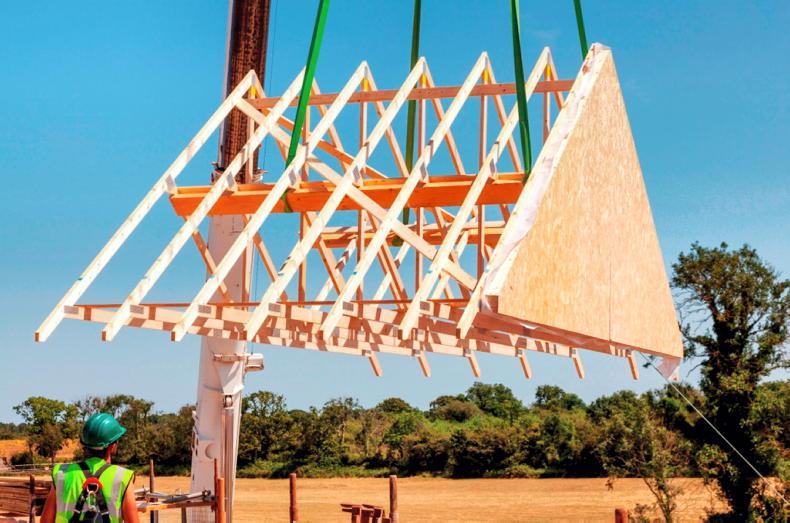
The publication, although aimed at a different audience, mirrors the work of the Government-appointed Timber in Construction Steering Group (TCSG) which advocates higher use of home-grown timber – mainly Sitka spruce – in construction.
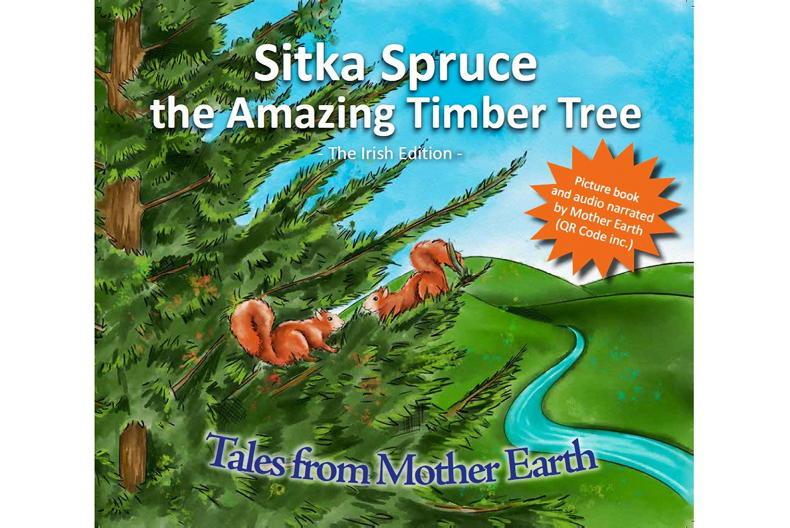
The booklet is likely to open a debate inside and outside the classroom on Sitka spruce and commercial forestry in general but there is no entity to represent forestry in this debate. An FDA would be equipped to promote forestry – and defend it where necessary – on ecological, social and economic grounds. It would ask those who attack it to explain why Europeans use more and more softwood timber to displace concrete and steel in construction, the biggest global emitter of greenhouse gas (GHG).
These questions need to be addressed because in the absence of Sitka and other commercial softwoods, Ireland will end up using more fossil-based materials in building and energy or rely on imported wood for as long as the planet lasts.
New schoolchildren’s booklet on Sitka spruce defended
In recent weeks copies of the children’s booklet Sitka Spruce, the Amazing Timber Tree have been sent to every primary school in Ireland.
The pamphlet is funded by the Society of Irish Foresters (SIF), the Irish Timber Council (ITC) and the Social, Economic, Environmental Forestry Association (SEEFA), who stress that Sitka is a major timber tree in Irish forestry. It is also “the most misunderstood tree in Ireland” – according to the publication’s promoters
The booklet tells the story from the perspective of Sitka “and how it helps to construct the world in which we live”. It explains the transition from forest to end use – mainly construction – and includes all operations in between such as harvesting, haulage and processing. It outlines how timber can be reused and stresses the renewability of Sitka and its ability to capture carbon.
Few would dispute the importance of Sitka spruce as a commercial timber tree as it produces far higher yields than its comparative species – Norway spruce – in Europe. Even though it covers just under 5% of the land in Ireland and 45% of forests, “it produces 90% of all timber required and the income generation required to drive the forestry and forest products industry,” according to Teige Ryan of SEEFA.
The booklet has been criticised by the Irish Wildlife Trust (IWT).
“It provides a one-sided industry messaging, presented as environmental fact,” said Oisín Ó Néill, IWT Nature Advocacy Officer who has called for its removal.
Joe Codd, PRO of the Society of Irish Foresters, said the emphasis is on Sitka as a timber tree in the booklet but maintained its benefits are many-sided.
“Sitka is a major species in Ireland’s Climate Action Plan especially in construction and energy where it displaces fossil-based materials,” he said. “It is also a key recreational species since Ireland adopted an open forest policy in the 1970s. Most of the annual 29 million visits to Irish forests are to Sitka spruce-dominated recreation sites.”


SHARING OPTIONS