




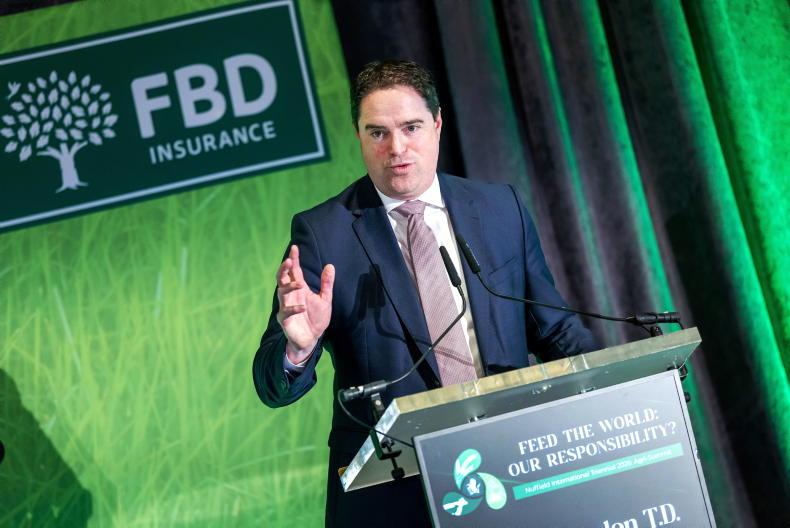
If Ireland agrees to address the Habitats Directive as part of its nitrates derogation application to Brussels, the country will be seeking a derogation term of “much longer than four years”, Minister for Agriculture Martin Heydon has said.
Irish farmers who undergo any screening process for the Habitats Directive “should not be back in a four-year process again”, he told farmers at a meeting on water quality organised by the Clonmel Show committee on Thursday 24 July.
“My very clear ask in this process will be to let every farmer that has a derogation now continue to have one beyond the end of this year – and for the time it would take to undertake this [Habitats Directive] process,” Minister Heydon said. “And, depending how deep you have to go into the Habitats Directive, that process will take years.”
“I’ll be very ambitious on the ask for time through this process,” he said.
“I’ll make a very strong case that if Ireland goes through an appropriate assessment process, or whatever element to address Habitats Directive we end up having to do, that this will give a level of certainty afterwards,” he said.
“We should not be back in a four-year process again,” he said. “A farmer that comes through that process should have a derogation for much longer and have more certainty.”
Habitats bombshell
While the linking of Ireland’s nitrates derogation application to the Habitats Directive in a letter from the European Commission to Ireland on 10 June came as a bombshell to the industry, Minister Heydon said its officials had previously raised the directive.
He told farmers gathered at the Clonmel Show committee – organised meeting that there is “existing case law from a Dutch nitrates case a number of years ago” that linked the project to the Habitats Directive.
He added that the An Taisce court case taken against Ireland’s Nitrates Action Programme, has been referred to the Court of Justice of the European Union.
An Taisce argued that under the European Habitats Directive, the Department of Agriculture must be certain “beyond reasonable scientific doubt” that a plan or project will have no adverse impact on highly protected European habitats before it can be approved. An Taisce said the environmental assessment of Ireland’s Nitrates Action Programme (NAP) acknowledged an uncertainty as to whether the NAP measures would adequately prevent water pollution, which could potentially impact on protected European sites.
“The Commission is deeply aware of that,” Minister Heydon told farmers present.
“We are defending that case, as a State, very vigorously,” he said, adding that specialists in the area of the Habitats Directive have been seconded into the Department of Agriculture as a result.
“It wasn’t my intention to have to address the Habitats Directive as part of our [nitrates derogation] application at this time,” he said, adding: “That changed on 10 June when they [the Commission] wrote to us and put it in writing that for them to put forward their application for us to get another derogation, they needed us to address the Habitats Directive.”
“When they agree to do that [propose to member states that Ireland should get another derogation], it then becomes their proposal, they own it and they’ll fight for it as much as if it was them that drove it at the start,” he said.
Commission buy-in to Ireland’s derogation is important, the minister stressed.
“We have to work with them to put ourselves in the best, strongest position here,” he said, adding that he intends to respond to the Commission, by the end of July, to indicate whether Ireland will address the Habitats Directive as part of its derogation application.
Onerous undertaking
He described addressing the Habitats Directive as an “onerous undertaking”, saying that farm by farm appropriate assessment would be “extremely onerous and not practical”.
“We could look at it at a catchment or sub-catchment level but again, that is an onerous undertaking that would take a lot of time.”
The minister warned that getting a derogation through a political “nod and a wink” without it being scientifically robust would be challenged.
“If we don’t develop a legally robust case, then we could lose it, and we could lose it in the blink of an eye, overnight in a court case, on a cliff edge which we do not want to have,” he said.
“Our derogation currently falls on the 31 December. It needs an action for us to have another derogation extended.
“Building a robust case over time is very, very important. It’s the right thing to do, from a scientific perspective, but also for protection, to give certainty to farmers into the future as well,” the minister said.
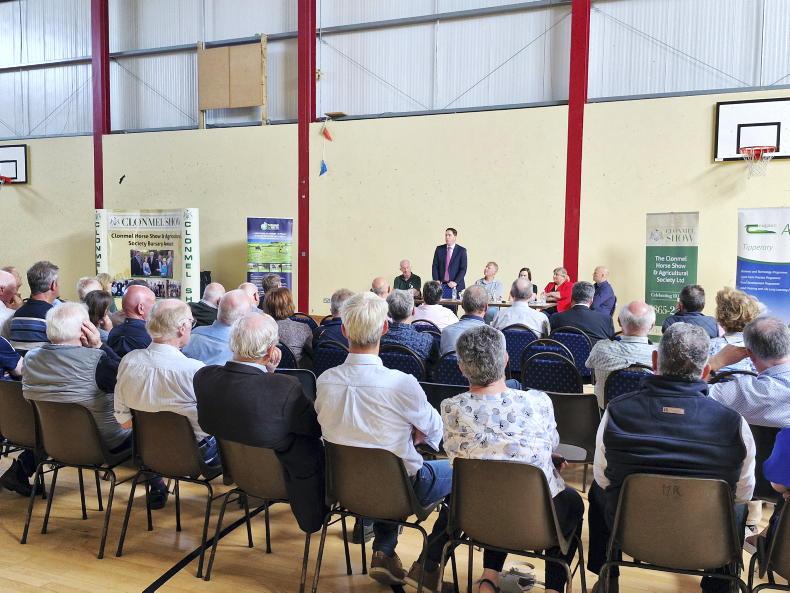
Responding to suggestions from the floor that Ireland should resist any link to the Habitats Directive in its application, the minister was very direct.
“We’re seeking consent from the Commission and from member states to have a higher stocking density than everybody else.
“This is an EU set of rules, it’s an EU game, played on an EU pitch and we’re looking for something from them. We’re playing on their pitch and we have to play by their rules.
“That doesn’t mean we’re going to roll over, it doesn’t mean we’re going to do anything more than we have to do.
“I could be a great fellow here and say I’ll go back to Brussels, tell them they’re wrong and they can shove it. And we’d all have the consequences of that on 1 January next year,” he warned.
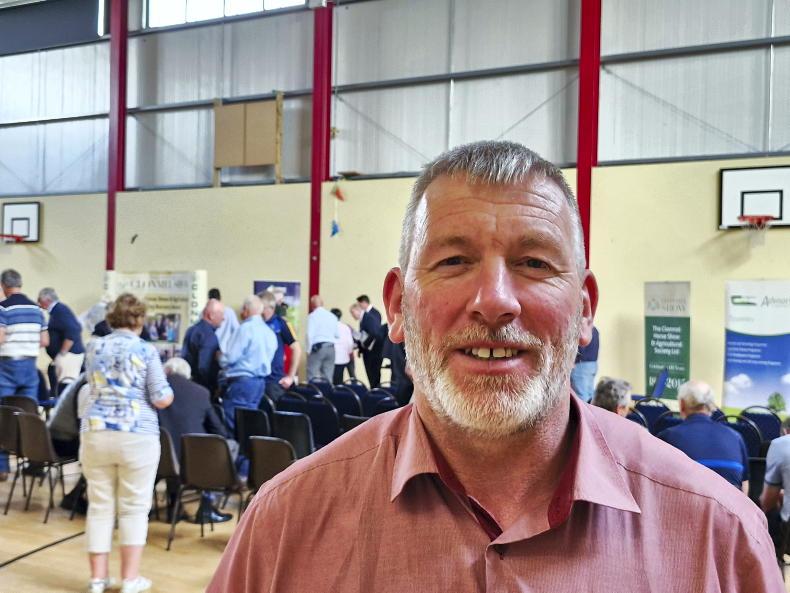
Pat Carroll, IFA South Tipperary chair
“We still have no answers, we’ve no route plan. And for a lot of farmers that need to invest that have work to do on their farms, how do you decide what to do when you don’t know where your farm is going to be at in 12 months’ time or four years’ time or seven years’ time?
“There’s no long-term plan here. And I think that’s the biggest weakness coming from the minister today.
“More time is definitely needed. If the shoe was on the other foot, they [the Commission] would have probably kicked the can down the road a couple of years until it suited them, but they expect us to jump in [with] only six months’ notice.
“It’s not possible to put a plan in place, and so whatever we need to deal with the Habitats Directive, and also get a Nitrates Action Plan in place definitely more time is required.
“Farmers need that, and a bit of surety that they have a couple of years here to walk through this. So, yeah, definitely more time needed.”
Joe Tobin, Dairygold milk supplier and board member
“I’m very impressed with what the minister outlined in terms of his plan, his ambition and, more importantly, the structure. He was very clear on the challenge that we face out there as farmers, but I think he outlined a lot of the good work that has been done by industry [on water quality] and by co-ops and everyone, all stakeholders involved.
“The key thing and the key ask from the minister is he needs time. His officials need to be afforded time to carry, to fulfil their plan to get this issue [Ireland’s derogation] over the line. Everyone realises the threats, from an Irish context around rural regeneration. We know the challenges we face getting younger people back home to farming. What was was really emphasised here today was this isn’t just a sectoral issue – it has implications right across all the different sectors. I think he needs our support. And no doubt, I have every confidence the minister will be successful. I think he’s ambitious. And think the country needs it [the derogation].”
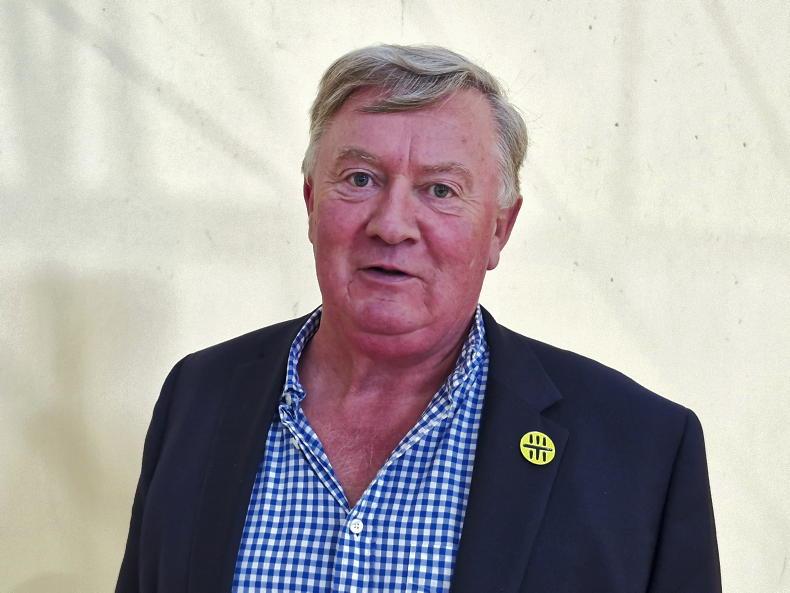
Bill Carroll, Dairy farmer and Tirlán board member
“The big issue I see is the uncertainty, going forward, with the whole derogation issue and the CAP issue as well.
“Farmers, like any businessmen, need certainty to plan the next five years, 10 years ahead, and especially young farmers nowadays need more certainty than anyone.
“We have less than 4% of our dairy farmers under the age of 35 and we need to get young people in. The only way you get them in is get certainty. So we need, in derogation, to know a clear footpath or road map for the next five to 10 years where we’re going. Not this ad-hoc every couple of months, changing it around, you know that will we, won’t we, whatever.
“That’s the big issue with it. And let farmers get on. Farmers have a lot of work done on water quality, we have to do a lot more. The Environmental Protection Agency has stated clearly in its report that river quality has improved by 10% over the last number of years.”



SHARING OPTIONS