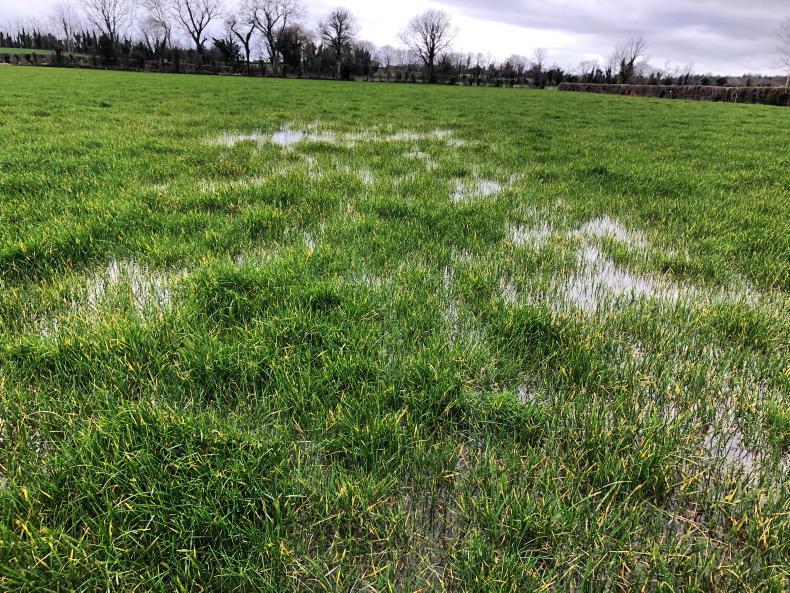
Unlike dairy farmers, drystock management during wet weather is much more challenging, as you don’t have the luxury of bringing in animals twice a day and being able to decide if grazing for the next 10-12 hours is a possibility.
However, it’s a matter of dealing with the cards you're dealt, and with the poor grazing conditions it’s a choice of housing stock (hopefully temporarily) or trying to struggle on with grazing. Heavy covers are a headache during wet weather and can lead to stock being in a paddock too long. Target those drier paddocks with some shelter and possibly a lower cover on them. Where these are in short supply, paddocks with access to a roadway that cattle may be able to have a dry lie on would be a solid option.
If rehousing stock, as hard as it is to, try and pick a dry day to prevent wet cattle being housed, which can increase the risk of pneumonia and other airborne diseases in the shed.
John Hally – Thrive Farm, Co Tipperary
We have been fortunate not to get the level of rainfall that was promised, with only 6mm falling between Sunday and Tuesday. Grass cover is a shade on the tight side now.
We baled out three paddocks during the hot spell earlier in the month and they have been very slow to come back.
Grazing conditions are ok, but in order to push on cattle we are not going too hard with residuals. Cattle are getting 3kg of meal at grass.
The first draft of cattle went two weeks ago, with a second draft now due. No slurry remains in the yard, and barring some potash, there has been no chemical N spread since July.
I plan on soil testing each paddock this year as there has been a lot of surplus bales removed.
System Dairy calf to beef
Soil Type Free draining
Farm cover (kg/DM/ha) 882
Growth (kg/DM/ha/day) 43
Demand (kg/DM/ha/day) 35
Stephen Frend – Newford Herd, Co Galway
We are getting by with grazing. All calves are weaned and back out to grass, as well as the cows. Cows were housed for four to five days at weaning time which gave grass a chance to recover a bit.
Cows will likely come back inside in mid-October.
Weanlings are being moved frequently, due to the mix of the weather and them being on the unsettled side post-weaning. The second draft of cattle for slaughter will be happening this week or early next week.
The more store-type steers are still on grass only, and have been doing an average daily gain of 1.2kg/day. These will likely be brought in soon and finished indoors to get the correct cover on them, with no feeding facilities on the outfarm in this poor weather.
System Suckler to beef
Soil Type Variable
Farm cover (kg/DM/ha) 1,195
Growth (kg/DM/ha/day) 39
Demand (kg/DM/ha/day) 46
Derek O’Donoghue – Salesian College, Co Limerick
Quantities are ok, but getting grass grazed is posing a challenge. We are trying to graze paddocks in 24 hours and move stock on to limit damage.
The in-calf suckler heifers are following the dairy beef calves, with these heifers to be scanned next week. The calves have been bumped up to 1.5kg ration per head with the wet weather.
The last of the slurry went out on Tuesday so we didn’t avail of the extension. Some straight potash is to be spread, probably after mid-October. Our pre-grazing yield is 1,600-1,700kg DM/ha and we are grazing down to 150.
With the weather, we are not getting hung up on residuals as we plan on trying to get these paddocks grazed tight in the next round if the weather improves.
System Dairy Beef/ sucklers
Soil Type Free draining
Farm cover (kg/DM/ha) 1,202
Growth (kg/DM/ha/day) 60
Demand (kg/DM/ha/day) 17