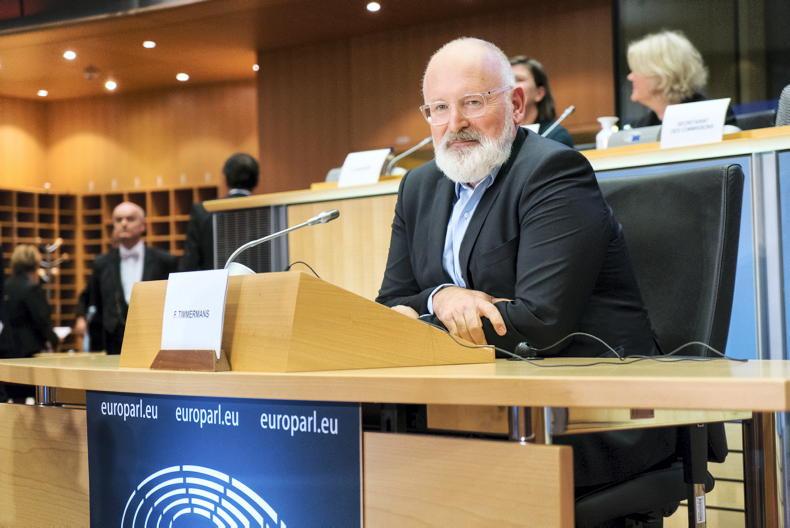
Nobody in life is irreplaceable, particularly in politics, but if European Commission vice-president Frans Timmermans leaves his post early, it will leave big shoes to fill.
Timmermans has declared his ambition to return to Dutch politics and lead a Labour-Green party coalition in the upcoming Dutch elections, which will take place some time later this year.
If he succeeds in being chosen, that will mean he has to take leave of absence from the Commission and, of course, if successful in the Dutch elections, it will mean resigning his position.
Serious blow
The Commission has already lost a member when Bulgarian commissioner Mariya Gabriel resigned in May this year to return to domestic politics and attempt to form a government.
While commissioners from time to time leave before the end of their term for various reasons, losing the senior vice-president late in his second term would be a serious blow for the remainder of this Commission term and the portfolio he carried.
This is where it becomes interesting for Irish farmers.
In his profile on the European Commission website, the top items in his portfolio of responsibilities are:
Leading the Commission’s work on the European Green Deal and its aim to become the first climate-neutral continent by 2050.Delivering on the EU’s climate target to reduce emissions by at least 55% by 2030, ensuring that all economic sectors contribute to the efforts.Leading international climate negotiations on behalf of the European Union.Co-ordinating work on the just transition fund, to support EU regions that face the steepest path to climate neutrality.Overseeing implementation of the biodiversity strategy to help tackle the biodiversity crisis, including by protecting and restoring nature across the EU, reducing the use of chemical pesticides and planting three billion trees.Co-ordinating work on a zero-pollution future, covering air, water, noise and chemical pollution.Overseeing implementation of the Farm to Fork strategy for sustainable food systems, covering every step from production to consumption, to reduce the pressure our food systems put on climate and environment and answer to consumers’ growing demand for sustainable food.This has meant he has shaped policy that impacts directly and indirectly on Irish farmers more than any other commissioner, including the agriculture commissioner. It also explains how his policies comfortably align with the Green Party in the Netherlands.
Lame duck Commission
If he exits the Commission in the coming weeks, it creates a problem for the Commission’s ambitions for the remainder of this term.
The EU political cycle operates in five-year blocks, with a new Commission being formed in the months after elections to the European Parliament. These will take place in May 2024 and the next Commission will be put together over the autumn of next year.
That means that the current Commission has effective operating time until the end of this year, because by January 2024, Brussels goes into election mode and the Commission operates in something of a caretaker mode for the remainder of the term.
If the Dutch government is appointing a new commissioner or even while Commissioner Timmermans' functions are being taken care of by colleagues, it means that policy formation will be kept ticking over, with major new developments unlikely.
By the same token, it won't reverse policies already in place or are being developed, as Irish farmers might wish in relation to the above policy areas.
A new Commission always brings a change in emphasis, even if it isn’t a complete change in policy.
If Timmermans goes, Irish and EU farmers will be waiting to see the shape of the next Commission at least six months earlier than they might have expected to.
Nobody in life is irreplaceable, particularly in politics, but if European Commission vice-president Frans Timmermans leaves his post early, it will leave big shoes to fill.
Timmermans has declared his ambition to return to Dutch politics and lead a Labour-Green party coalition in the upcoming Dutch elections, which will take place some time later this year.
If he succeeds in being chosen, that will mean he has to take leave of absence from the Commission and, of course, if successful in the Dutch elections, it will mean resigning his position.
Serious blow
The Commission has already lost a member when Bulgarian commissioner Mariya Gabriel resigned in May this year to return to domestic politics and attempt to form a government.
While commissioners from time to time leave before the end of their term for various reasons, losing the senior vice-president late in his second term would be a serious blow for the remainder of this Commission term and the portfolio he carried.
This is where it becomes interesting for Irish farmers.
In his profile on the European Commission website, the top items in his portfolio of responsibilities are:
Leading the Commission’s work on the European Green Deal and its aim to become the first climate-neutral continent by 2050.Delivering on the EU’s climate target to reduce emissions by at least 55% by 2030, ensuring that all economic sectors contribute to the efforts.Leading international climate negotiations on behalf of the European Union.Co-ordinating work on the just transition fund, to support EU regions that face the steepest path to climate neutrality.Overseeing implementation of the biodiversity strategy to help tackle the biodiversity crisis, including by protecting and restoring nature across the EU, reducing the use of chemical pesticides and planting three billion trees.Co-ordinating work on a zero-pollution future, covering air, water, noise and chemical pollution.Overseeing implementation of the Farm to Fork strategy for sustainable food systems, covering every step from production to consumption, to reduce the pressure our food systems put on climate and environment and answer to consumers’ growing demand for sustainable food.This has meant he has shaped policy that impacts directly and indirectly on Irish farmers more than any other commissioner, including the agriculture commissioner. It also explains how his policies comfortably align with the Green Party in the Netherlands.
Lame duck Commission
If he exits the Commission in the coming weeks, it creates a problem for the Commission’s ambitions for the remainder of this term.
The EU political cycle operates in five-year blocks, with a new Commission being formed in the months after elections to the European Parliament. These will take place in May 2024 and the next Commission will be put together over the autumn of next year.
That means that the current Commission has effective operating time until the end of this year, because by January 2024, Brussels goes into election mode and the Commission operates in something of a caretaker mode for the remainder of the term.
If the Dutch government is appointing a new commissioner or even while Commissioner Timmermans' functions are being taken care of by colleagues, it means that policy formation will be kept ticking over, with major new developments unlikely.
By the same token, it won't reverse policies already in place or are being developed, as Irish farmers might wish in relation to the above policy areas.
A new Commission always brings a change in emphasis, even if it isn’t a complete change in policy.
If Timmermans goes, Irish and EU farmers will be waiting to see the shape of the next Commission at least six months earlier than they might have expected to.
SHARING OPTIONS