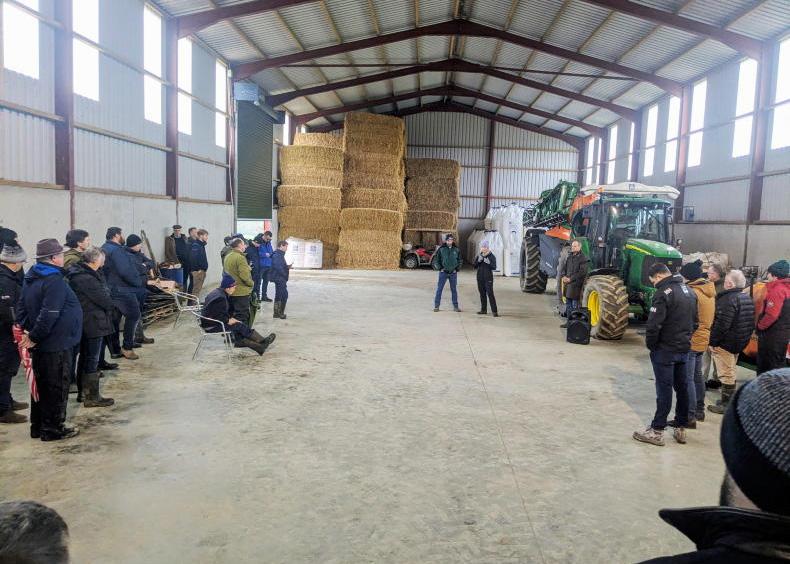
A crowd of approximately 600 people attended last week’s national tillage conference and the higher proportion of growers was noticeable. Six technical presentations reported on grass weed control, yield generation in wheat, SDHI resistance in septoria, the power of group discussion, a study on options for break crops and bean husbandry.
This first report concentrates on the grass weeds presentation.
The need to return to the broad principles of good farming was a theme that ran through many presentations. We can no longer rely on chemicals to continue to control our problems.
Grass weed control
The need for a broad husbandry approach to grass weed control was forcibly stated in the presentation by Sarah Cook of ADAS. She said that weed control must involve techniques known to affect the germination of the grasses or to prevent seed return. Things such as planting date, planting time, the crop grown, planting method, etc, should all be targeted to help tackle weeds. “Herbicides alone are not the answer and successful weed control must use good farming practice,” Sarah stated.
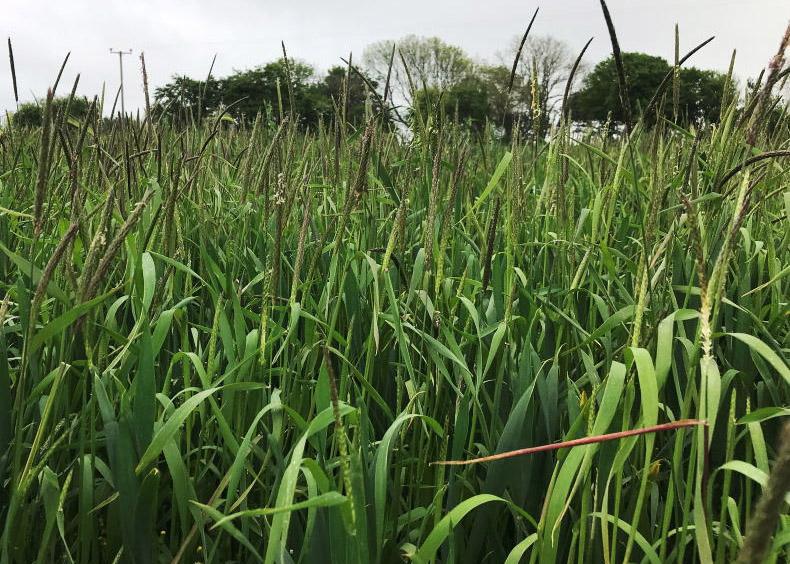
Sarah said that there are many lessons we can learn from mistakes made by English growers. While the big problem in Britain is black-grass, the principles involved apply to all weeds, especially grass weeds. And we now know that we have high black-grass levels in some fields in this country.
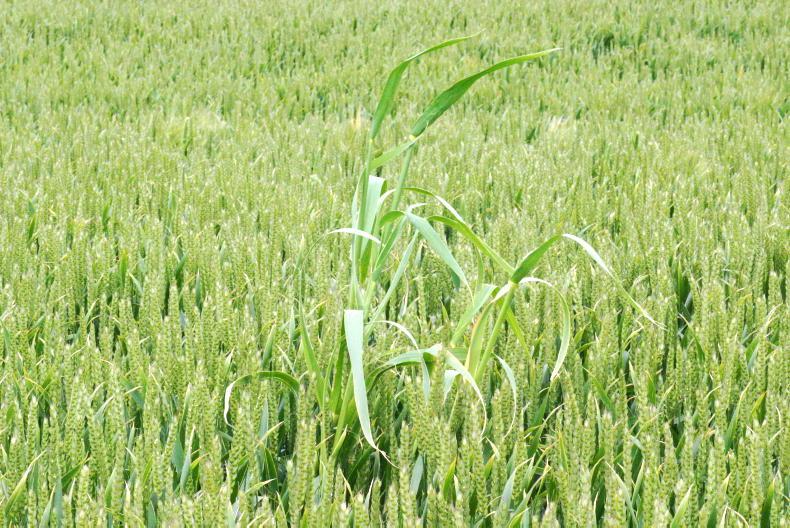
In England, black-grass is a serious problem and it continues to spread north and west. While seeds can be moved in a range of ways, Sarah suggested that straw and pea viners are major culprits in England. She reported that 21% of growers there are now spending in excess of €120/ha on herbicides just for black-grass.
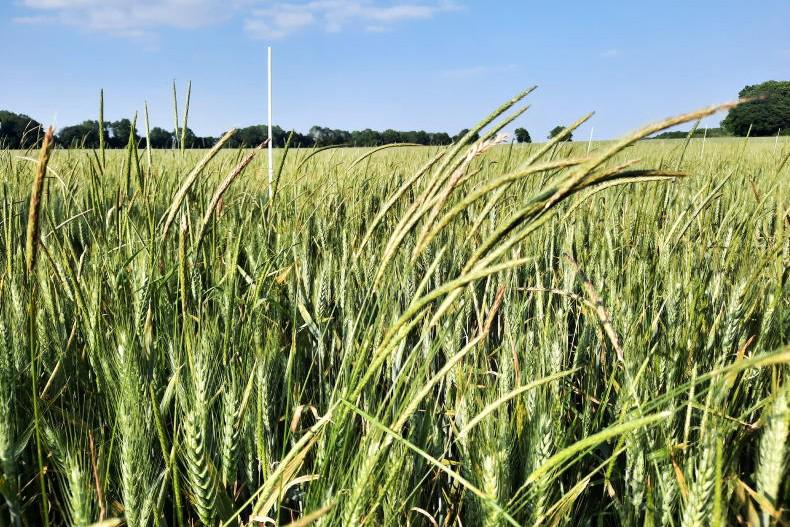
Black-grass is worst in winter wheat and winter oilseed rape because these crops are planted early and this suits its peak germination period. Spring cropping will decrease black-grass numbers and so this is a useful control element. That said, Sarah warned that this weed could thrive in a spring cropping scenario as spring-germinating plants take over.
Herbicide resistance
One of the major issues with black-grass is that it has developed resistance to all the major families of actives over the years. There are three types of resistance and now there are a number of fields where post-emergence herbicides no longer work. The consequence of this is that there were 33,000ha of crop either sprayed off with Roundup or cut for silage in 2015 to prevent further seed return to the soil.
Numbers game
Movement of the weed itself, or of resistance, is directly related to the movement of seeds. Seeds can move in many ways but straw can move the biggest numbers. There was some discussion about the importation of straw for composting and a call that this should be banned given the threat it poses to our tillage industry. While straw and compost are potential risks, imported seed is also a big concern.
Control is very much a numbers game, Sarah stated. The bigger the numbers the greater the yield loss and the greater the pressure to select for resistance. Seed production per plant is variable, but if one plant has 10 ears and each produced 100 seeds, then a single plant can give rise to 1,000 plants in the following year. If you start with 10 plants/m2, you can return 100 million seeds per hectare, which is about 0.8 t/ha.
Sarah listed a number of husbandry actions which favour black-grass:
Continuous autumn cropping of cereals.Using same cultivation system every year (non-inversion worst).Early drilling (August/September).Poor crop structure.Relying on post-emergence herbicides only.Allowing the return of seeds to the soil. These points tend to apply for most grass weeds, so growers should pay heed.
Cultural control
Stubble cultivation can be very beneficial and it is useful for all major grass weeds. It helps to germinate seeds in the weed bank before the crop is planted to reduce numbers.
Results of a study of husbandry factors which can influence black-grass numbers are shown in Table 1.
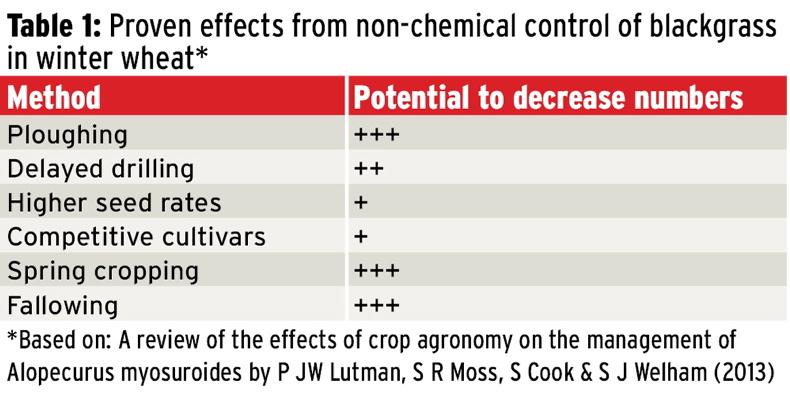
Spring cropping gives the most consistent drop in black-grass numbers and fallowing is also a powerful option. Ploughing can have a strong effect, but is more variable depending on burial.
Good ploughing was also found to be useful in reducing numbers of wild oats, brome and, to a lesser extent, annual meadowgrass. And, provided they are well buried, bromes tend to have short longevity in the soil while things like black-grass, canary grass and perennial ryegrass can survive for up to five years.
The challenge is to reduce the size of the weed bank over time by growing out the seeds already present and preventing seed return.
While good ploughing is useful, Sarah stated that continuous ploughing is of limited benefit because you plough up in year two what you ploughed down in year one. Ploughing every three to four years can be a lot more beneficial, but complete burial is essential.
Delayed drilling is useful as it provides a bigger gap between harvest and replanting. A bigger gap allows for stubble cultivation but delayed planting also carries the risk of poor establishment or failure to plant. Delayed drilling moves the establishing crop into a time slot where fewer weed seeds are likely to germinate.
Alternating crops is also advantageous as this can significantly alter the time of drilling, the type and timing of cultivation, the choice of herbicides and the use of more competitive crops.
Based on all of these individual effects, Sarah recommends the use of a combination of cultural control methods, all of which constitute good farming practice.
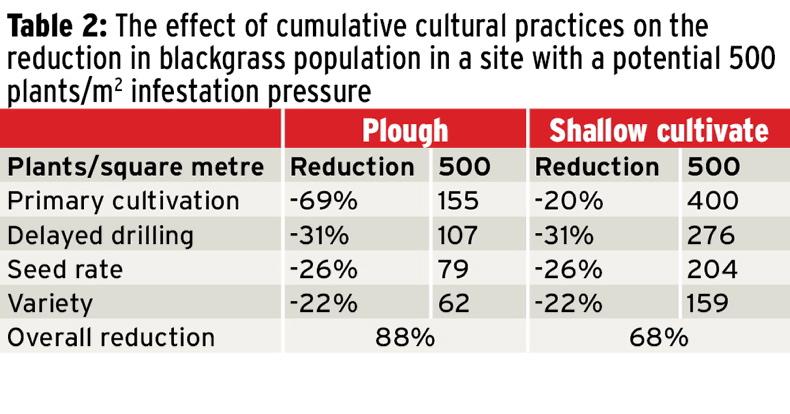
The example in Table 2 shows the effect of ploughing versus shallow cultivation on black-grass reduction based on research findings.
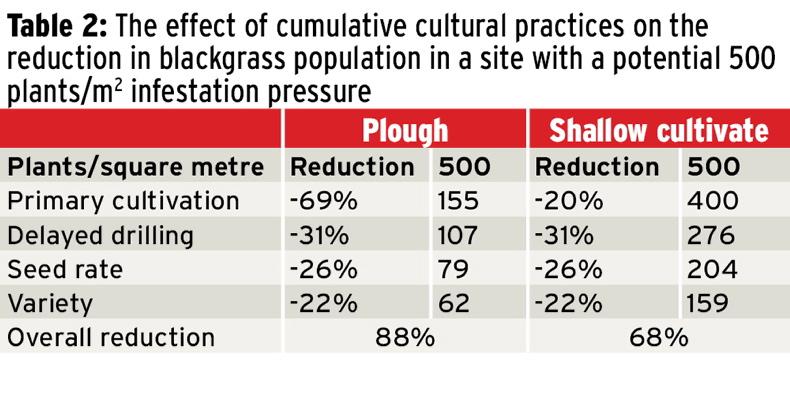
Where the plough was used at the start, a potential black-grass population of 500/m2 was reduced to 62/m2 in the crop. This compares with 159/m2 where the crop was established by shallow cultivation.
For those who do not have grass weed problems, it is essential to keep them out. This means taking great care with all hired or secondhand machinery, being conscious of the origin of straw or compost and knowing where hired combines or balers have been on previous jobs. And if you have strange or unknown plants, rogue and remove them. Herbicides should be the last resort.
Herbicides can no longer be regarded as the sole method of weed control, as resistance will prevail.The effects of cultural control on grass weed reduction tends to be cumulative so it pays to use as many different techniques as impossible. Spring cropping, fallowing and good rotational ploughing tend to be the most successful techniques in reducing black-grass weed numbers.
A crowd of approximately 600 people attended last week’s national tillage conference and the higher proportion of growers was noticeable. Six technical presentations reported on grass weed control, yield generation in wheat, SDHI resistance in septoria, the power of group discussion, a study on options for break crops and bean husbandry.
This first report concentrates on the grass weeds presentation.
The need to return to the broad principles of good farming was a theme that ran through many presentations. We can no longer rely on chemicals to continue to control our problems.
Grass weed control
The need for a broad husbandry approach to grass weed control was forcibly stated in the presentation by Sarah Cook of ADAS. She said that weed control must involve techniques known to affect the germination of the grasses or to prevent seed return. Things such as planting date, planting time, the crop grown, planting method, etc, should all be targeted to help tackle weeds. “Herbicides alone are not the answer and successful weed control must use good farming practice,” Sarah stated.
Sarah said that there are many lessons we can learn from mistakes made by English growers. While the big problem in Britain is black-grass, the principles involved apply to all weeds, especially grass weeds. And we now know that we have high black-grass levels in some fields in this country.
In England, black-grass is a serious problem and it continues to spread north and west. While seeds can be moved in a range of ways, Sarah suggested that straw and pea viners are major culprits in England. She reported that 21% of growers there are now spending in excess of €120/ha on herbicides just for black-grass.
Black-grass is worst in winter wheat and winter oilseed rape because these crops are planted early and this suits its peak germination period. Spring cropping will decrease black-grass numbers and so this is a useful control element. That said, Sarah warned that this weed could thrive in a spring cropping scenario as spring-germinating plants take over.
Herbicide resistance
One of the major issues with black-grass is that it has developed resistance to all the major families of actives over the years. There are three types of resistance and now there are a number of fields where post-emergence herbicides no longer work. The consequence of this is that there were 33,000ha of crop either sprayed off with Roundup or cut for silage in 2015 to prevent further seed return to the soil.
Numbers game
Movement of the weed itself, or of resistance, is directly related to the movement of seeds. Seeds can move in many ways but straw can move the biggest numbers. There was some discussion about the importation of straw for composting and a call that this should be banned given the threat it poses to our tillage industry. While straw and compost are potential risks, imported seed is also a big concern.
Control is very much a numbers game, Sarah stated. The bigger the numbers the greater the yield loss and the greater the pressure to select for resistance. Seed production per plant is variable, but if one plant has 10 ears and each produced 100 seeds, then a single plant can give rise to 1,000 plants in the following year. If you start with 10 plants/m2, you can return 100 million seeds per hectare, which is about 0.8 t/ha.
Sarah listed a number of husbandry actions which favour black-grass:
Continuous autumn cropping of cereals.Using same cultivation system every year (non-inversion worst).Early drilling (August/September).Poor crop structure.Relying on post-emergence herbicides only.Allowing the return of seeds to the soil. These points tend to apply for most grass weeds, so growers should pay heed.
Cultural control
Stubble cultivation can be very beneficial and it is useful for all major grass weeds. It helps to germinate seeds in the weed bank before the crop is planted to reduce numbers.
Results of a study of husbandry factors which can influence black-grass numbers are shown in Table 1.
Spring cropping gives the most consistent drop in black-grass numbers and fallowing is also a powerful option. Ploughing can have a strong effect, but is more variable depending on burial.
Good ploughing was also found to be useful in reducing numbers of wild oats, brome and, to a lesser extent, annual meadowgrass. And, provided they are well buried, bromes tend to have short longevity in the soil while things like black-grass, canary grass and perennial ryegrass can survive for up to five years.
The challenge is to reduce the size of the weed bank over time by growing out the seeds already present and preventing seed return.
While good ploughing is useful, Sarah stated that continuous ploughing is of limited benefit because you plough up in year two what you ploughed down in year one. Ploughing every three to four years can be a lot more beneficial, but complete burial is essential.
Delayed drilling is useful as it provides a bigger gap between harvest and replanting. A bigger gap allows for stubble cultivation but delayed planting also carries the risk of poor establishment or failure to plant. Delayed drilling moves the establishing crop into a time slot where fewer weed seeds are likely to germinate.
Alternating crops is also advantageous as this can significantly alter the time of drilling, the type and timing of cultivation, the choice of herbicides and the use of more competitive crops.
Based on all of these individual effects, Sarah recommends the use of a combination of cultural control methods, all of which constitute good farming practice.
The example in Table 2 shows the effect of ploughing versus shallow cultivation on black-grass reduction based on research findings.
Where the plough was used at the start, a potential black-grass population of 500/m2 was reduced to 62/m2 in the crop. This compares with 159/m2 where the crop was established by shallow cultivation.
For those who do not have grass weed problems, it is essential to keep them out. This means taking great care with all hired or secondhand machinery, being conscious of the origin of straw or compost and knowing where hired combines or balers have been on previous jobs. And if you have strange or unknown plants, rogue and remove them. Herbicides should be the last resort.
Herbicides can no longer be regarded as the sole method of weed control, as resistance will prevail.The effects of cultural control on grass weed reduction tends to be cumulative so it pays to use as many different techniques as impossible. Spring cropping, fallowing and good rotational ploughing tend to be the most successful techniques in reducing black-grass weed numbers. 






SHARING OPTIONS