Fertiliser nitrogen (N) is a key nutrient in ensuring high yields of cereals crops. The optimum amount of N to apply to cereal crops varies considerably between different fields within a season and within the same field in different seasons.
Indeed, it has been shown that the optimum amount of N varies between different locations within the same field in a given season. This makes optimising nitrogen inputs to cereal crops notoriously difficult.
Work is ongoing at Oak Park with a view to further fine-tuning N inputs.
The potential of some of the new fertiliser types available on the market is a focus of current work.
In the past, CAN was the main form of N used in cereal production, with some urea used, particularly early in the season. In recent years, a number of new fertiliser N products have arrived on the Irish market, with the potential to give agronomic, economic and/or environmental benefits over CAN.
These include protected urea products (+/- nitrification inhibitor) and liquid nitrogen.
Protected urea products substantially reduce the risk of N loss that can occur when “normal” urea is used.
They contain a chemical additive, a urease inhibitor that slows down the conversion of urea to ammonium, which can be lost to the atmosphere as ammonia gas, thereby reducing the potential for N loss via ammonia volatilisation. This gives protected urea products a double advantage over “normal” urea.
They give lower emissions of ammonia to the atmosphere which is subject to environmental limits and improve the agronomic efficiency of urea such that it is consistently comparable to CAN.
Current work is examining urea products that contain two different inhibitors, NBPT and NPT, applied to wheat and barley in terms of their efficacy relative to CAN.
UAN
Liquid nitrogen or urea ammonium nitrate (UAN) is a relatively new product to Ireland and its efficacy relative to CAN has not been extensively studied under Irish conditions. It is a solution where 50% of the N is present as ammonium nitrate and 50% as urea and is applied using a sprayer rather than a fertiliser spreader.
Because it is applied using a sprayer, it has the advantage of allowing even application over wide tramline widths even in conditions where it would be difficult to apply granular products (eg windy conditions). It also allows even application on the headland run. However, it will be very unforgiving of overlaps (which will receive a double dose of N) so it is essential that tramlines are at the correct spacing.
This can be an issue where crops are sown without GPS where, for example, tramlines that should be 24m are often less than 24m in width.
Additional cost
It has a number of potential disadvantages such as additional costs and the risk of scorch to the crop. The primary uptake route of liquid fertiliser is through the root and not through the leaf and therefore the objective is to get the fertiliser on to the soil rather than on to the leaf.
It should not be applied with normal nozzles so special liquid fertiliser nozzles or dribble bars will be required.
These produce coarse droplets that are more likely to make their way to the soil thereby reducing the risk of scorch.
Storage facilities may also be required if the supplier’s premises is not within driving distance of the farm, which will be an added cost.
It must also be remembered that like any nitrogenous fertiliser it will lead to corrosion if the spraying equipment is not thoroughly washed down after use.
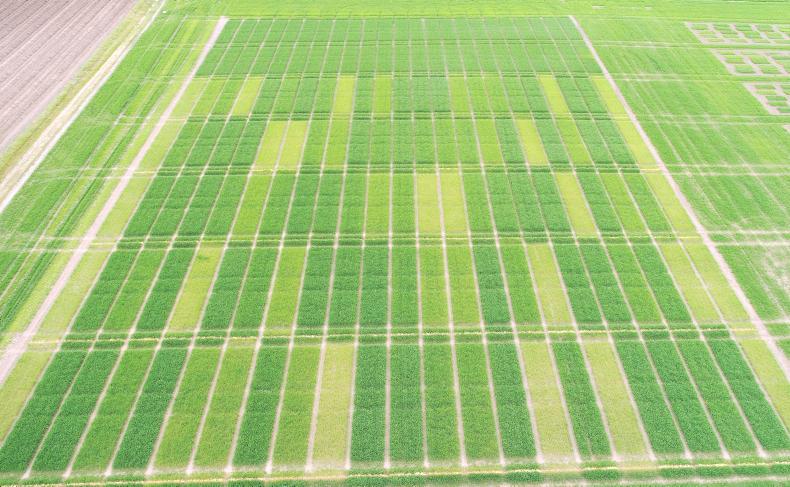
Current work at Oak Park is examining a range of these new fertiliser types (both protected urea products and liquid N) in terms of their agronomic efficiency and trials with barley will be on view on the day.
Other work that will be on view at the open day will include:
Investigations into whether different varieties or variety types (two-row, six-row or six-row hybrid barley) require different amounts of fertiliser N. An examination of the effects of the number of applications and late-season N applications on barley yield and quality.Investigations into the effects of seed rate on modern varieties of barley. Read more
Crops & Spreaders event offers something for everyone
Fertiliser nitrogen (N) is a key nutrient in ensuring high yields of cereals crops. The optimum amount of N to apply to cereal crops varies considerably between different fields within a season and within the same field in different seasons.
Indeed, it has been shown that the optimum amount of N varies between different locations within the same field in a given season. This makes optimising nitrogen inputs to cereal crops notoriously difficult.
Work is ongoing at Oak Park with a view to further fine-tuning N inputs.
The potential of some of the new fertiliser types available on the market is a focus of current work.
In the past, CAN was the main form of N used in cereal production, with some urea used, particularly early in the season. In recent years, a number of new fertiliser N products have arrived on the Irish market, with the potential to give agronomic, economic and/or environmental benefits over CAN.
These include protected urea products (+/- nitrification inhibitor) and liquid nitrogen.
Protected urea products substantially reduce the risk of N loss that can occur when “normal” urea is used.
They contain a chemical additive, a urease inhibitor that slows down the conversion of urea to ammonium, which can be lost to the atmosphere as ammonia gas, thereby reducing the potential for N loss via ammonia volatilisation. This gives protected urea products a double advantage over “normal” urea.
They give lower emissions of ammonia to the atmosphere which is subject to environmental limits and improve the agronomic efficiency of urea such that it is consistently comparable to CAN.
Current work is examining urea products that contain two different inhibitors, NBPT and NPT, applied to wheat and barley in terms of their efficacy relative to CAN.
UAN
Liquid nitrogen or urea ammonium nitrate (UAN) is a relatively new product to Ireland and its efficacy relative to CAN has not been extensively studied under Irish conditions. It is a solution where 50% of the N is present as ammonium nitrate and 50% as urea and is applied using a sprayer rather than a fertiliser spreader.
Because it is applied using a sprayer, it has the advantage of allowing even application over wide tramline widths even in conditions where it would be difficult to apply granular products (eg windy conditions). It also allows even application on the headland run. However, it will be very unforgiving of overlaps (which will receive a double dose of N) so it is essential that tramlines are at the correct spacing.
This can be an issue where crops are sown without GPS where, for example, tramlines that should be 24m are often less than 24m in width.
Additional cost
It has a number of potential disadvantages such as additional costs and the risk of scorch to the crop. The primary uptake route of liquid fertiliser is through the root and not through the leaf and therefore the objective is to get the fertiliser on to the soil rather than on to the leaf.
It should not be applied with normal nozzles so special liquid fertiliser nozzles or dribble bars will be required.
These produce coarse droplets that are more likely to make their way to the soil thereby reducing the risk of scorch.
Storage facilities may also be required if the supplier’s premises is not within driving distance of the farm, which will be an added cost.
It must also be remembered that like any nitrogenous fertiliser it will lead to corrosion if the spraying equipment is not thoroughly washed down after use.
Current work at Oak Park is examining a range of these new fertiliser types (both protected urea products and liquid N) in terms of their agronomic efficiency and trials with barley will be on view on the day.
Other work that will be on view at the open day will include:
Investigations into whether different varieties or variety types (two-row, six-row or six-row hybrid barley) require different amounts of fertiliser N. An examination of the effects of the number of applications and late-season N applications on barley yield and quality.Investigations into the effects of seed rate on modern varieties of barley. Read more
Crops & Spreaders event offers something for everyone








SHARING OPTIONS