


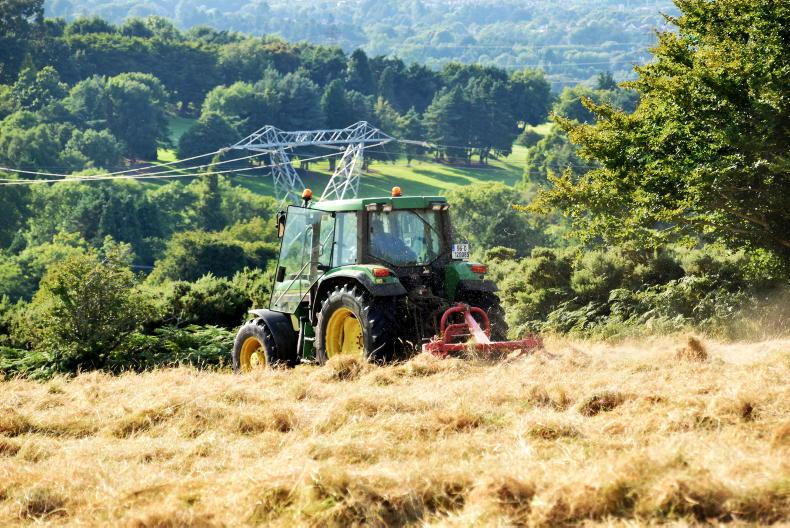
In previous years, due to GLAS restrictions with traditional hay meadows, we could never cut any fields until July.
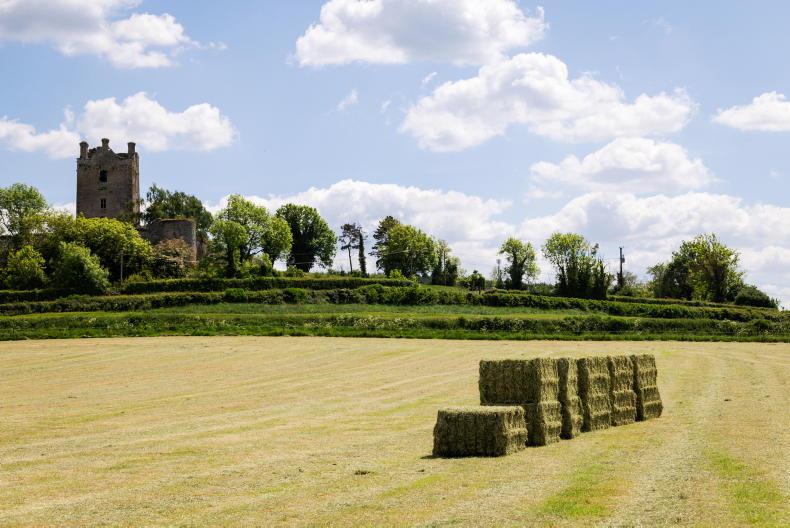
Due to this, we always felt like we were missing out on some better-quality bales as our grass would have long gone to seed by the time we could begin to make our fodder. This year, for the first time that my father can recall, we managed to cut some meadows for hay at the end of May.
These earlier meadows got little to no fertiliser and we were expecting a light crop so imagine our surprise when the final tally racked up to a final count of 45 bales on just over 7ac. It’s a good job we have our new shed up as otherwise we’d be scratching our heads and wondering where to put them.The last sunset of May sets on a field ready to be baled for hay tomorrow. This is the earliest Deddeh can remember it being made here, as he surveys two more cut fields from the top of our buttercup covered hill ????????? pic.twitter.com/YH7Nf0c2kY
ADVERTISEMENT— Karen McCabe (@LadyHaywire) May 31, 2023
It was great to see Dad back in fine form stacking bales two and three high in the shed, and not only that but in the days previous he both tedded out and rowed up for the baler, something we had deemed nearly impossible for him to do again until his operation last year.
There’s never usually a great need for more than one tractor in use around here but with topping of pasture to be done at the same time as mowing, it was decided to attempt to fit either of the machines on to one of the three working vintage tractors which are definitely in a lazy retirement on this farm. Unfortunately, after much effort on my behalf, neither would fit on to the Massey Ferguson 135 or the ‘Fergie’ Copperbelly, so they were returned to their sheds with their drawbars between their legs. Before we had the quad, these were useful for light work but these days they don’t always suit the larger machinery which abound in modern yards.Started #silage23 here yesterday. Though hoping these two fields will make hay ??
— Karen McCabe (@LadyHaywire) May 29, 2023
And a happy Nelson with Jigsaw in the shade ?? pic.twitter.com/RRVQfl7V2q
We finally kicked off our breeding season with a couple of cows inseminated to AI, though with our wet spring this year, we’re hesitant to cover too many in case we end up with the same issue of finding space in pens next year from March onwards.
With three already in-calf and two further cows remaining to calve this year, I already have a vague plan drawn up with pen allocation. It does seem a bit bizarre to be planning for winter while the sun is splitting the stones but I’ve found it easier to plan ahead, even if it’s only basic calculations on the back of a scrap of paper in order to see which replacements can be kept on.
This time of year I always find it prudent to check drinkers while I keep an eye on cows for heat detection a few times each day. Not only one but two groups had managed to create a slight flood around their drinkers in the middle of last week.Jenny & JD letting me know that Panda is in heat this morning. They're not entirely sure of the logistics behind putting her incalf but they're going to try their best ?? pic.twitter.com/MKys8DaJAw
— Karen McCabe (@LadyHaywire) June 1, 2023
With the first lot it was nothing more than roughhousing around the drinker which caused it to tip over, meaning the water was freely running in and draining out the back.
The second was slightly more obscure and I can only imagine one of the cattle must have stood into it to cool her toes as they managed to split the bottom open on one side.
Thankfully, with a replacement drinker for a short time and some sealant, it lives on to be broken again another day.
Cows decided I needed to fix a drinker this evening. Think one stood into it & busted it so had to empty it & get a new one in while I see if it can be repaired.
— Karen McCabe (@LadyHaywire) May 31, 2023
And a rope wild strawberry...IN MAY ?? pic.twitter.com/wg1XeZiFCg



SHARING OPTIONS