



As mentioned before, we keep a small number of pedigree Limousin cows along with the commercial sucklers. While we’ve never achieved any spectacular prices for them, I often wonder how the bulls progress after they are sold and move on to pastures new.
Thankfully, in recent years, we can use the ICBF website to check how they’re doing with regards to calving difficulty and progeny numbers. It’s heartening to see that one of our older bulls, the first I trained for a show, is still going strong at eight years of age, so he must be doing something right.
However, this doesn’t allow us to see how the bulls are doing or how their progeny look as we typically sell them around 14 months of age.
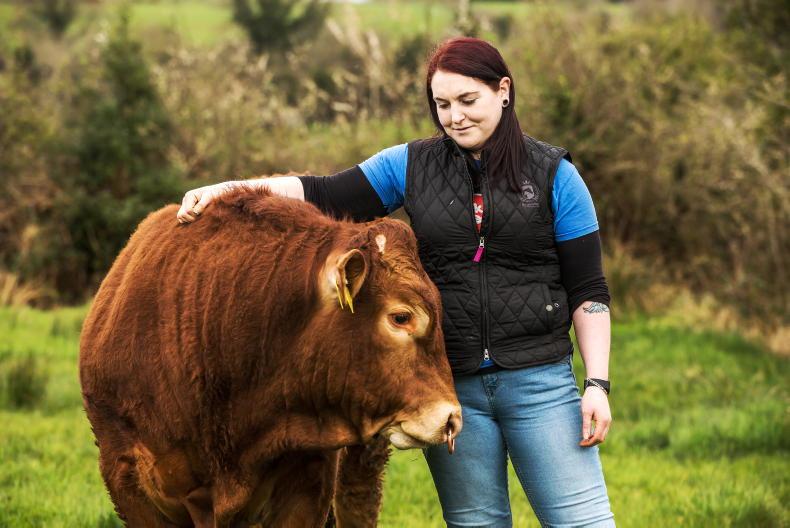
But, for the first time this year, we’ve been able to do just that, after we sold a bull back in 2021 to a neighbouring farmer. He was always extremely docile and gentle from a calf, and I’m glad to see he retained this temperament as he matured.
With a right of way through this farmer’s land to access our fields, it’s reassuring to know that he’s more likely to come looking for a scratch on the head than a headbutt. In saying that though, we always carry a stick when passing through this herd as a bull’s predictability can never be taken for granted. The farmer in question seems more than happy with him and the calves he’s producing, which is always good to hear as a happy customer is the best advertisement for livestock.
A sister of this bull was also taken home for calving from this land in recent days. Typically, we try to avoid calving at this time of year but she didn’t show heat until late, and as we try to calve them at 24 months, we decided it was better to have an autumn calf than to have her calving at three years of age.Guess who's back! Back again.
— Karen McCabe (@LadyHaywire) August 15, 2023
Rambo's back! My old friend ??
He has a good memory this lad, came walking over once he heard my voice. pic.twitter.com/h54G5dMMZ1
As it is, she’s older than most of our heifers typically are, and she’s grown into a powerful looking animal over the summer. Hopefully this will bode well for when the time comes for her to calve.
We also got word last week that we’ve been approved for 40t of lime which we’d applied for on the new liming programme. Not before time too, as in our last soil sampling some of our fields showed up to be quite acidic.Dodging showers at Mohill show today ?????? pic.twitter.com/pdHba3DjQ1
— Karen McCabe (@LadyHaywire) August 20, 2023
With the state of our fields at the moment, however, it won’t be spread until next year, unless there’s a large turnaround in the weather over the next month.
Grazing has turned into a game of cat and mouse here, trying to balance pasture clear outs against poaching. While most of the fields are holding up well on the hills, lower ground remains an issue, with access between fields turning into mires which make moving the creep feeder around an interesting experience.
Whoever invented four-wheel drive is certainly getting my thanks these days and I don’t know how we managed without it for so many years.


SHARING OPTIONS