



Recent research from Bord Bia and Mintel indicate that while many consumers want to do the right thing – support Irish farmers, buy local and sustainable products – our shopping habits of late have been more about what’s easy and affordable. Until now, we’ve failed to discuss the effects these habits can have on primary producers – especially those who practise direct selling.
The European H2020 project agroBRIDGES focuses on the relationship between consumers and primary producers. It aims to increase communications between the two groups to promote the use of shorter food supply chains, which are defined as having “as few links as possible between the food producer and the consumer/citizen who eats the food”.
agroBRIDGES was allocated a budget of nearly €3million to innovate in the areas of short food supply chains and provide an agroBRIDGES “toolbox” to help empower producers to create more sustainable business models, champion these supply chains and build better communications models.
Their toolbox contains communications materials, training programmes, event guides and digital tools to support primary producers on a direct selling journey. Happening across 11 European countries with 15 partners within the consortium, the project started in January of 2021 and was given a duration of 36 months.
Communication
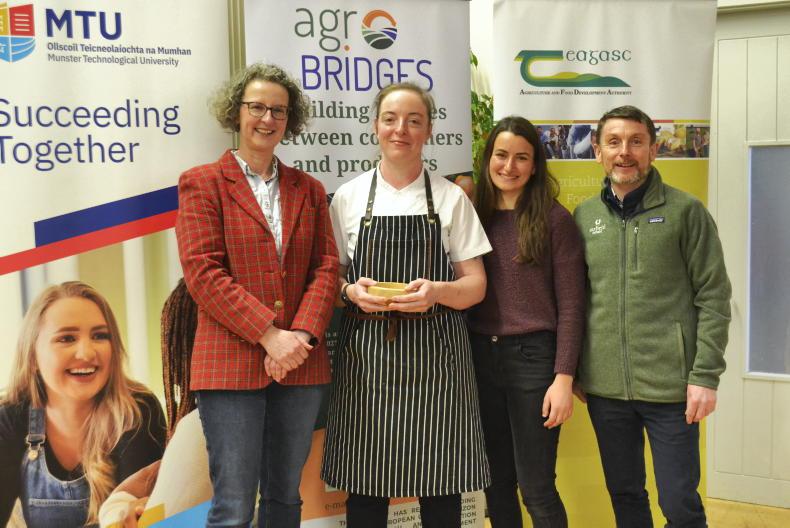
In Ireland, agroBRIDGES operates in partnership with Munster Technological University (MTU) and Teagasc. Dr Jennifer Attard and David Barry are the agroBRIDGES leads from MTU. Jennifer – and all of the stakeholders involved in the project – believe that without better communication between consumers and food producers, buying local will always be more aspirational than realistic.
“A lack of knowledge around food production processes leads to a lack of trust in food prices associated with local food,” she tells Irish Country Living. “If consumers were to have more direct contact with their food producers, they might learn to put more value into the food. Moving consumers away from convenient habits such as purchasing cheaper non-local food from supermarkets and restaurants may be more likely if the benefits were better understood, but this is hindered by the lack of a communication channel between farmers, chefs and consumers.”
Consumer Survey
As part of the project, agroBRIDGES completed a consumer survey to help gauge what percentage of food purchases (among the participating European countries) currently come from these short food supply chains. It found that more than half of the respondents bought between 1% and 25% of their food using these short supply chains on a monthly basis. Those who purchase more than 50% of their food through these chains accounted for just one in ten respondents.
The types of foods most often purchased through these shorter supply chains are fruits, vegetables and herbs followed by baked goods, eggs and dairy.
Culinary event
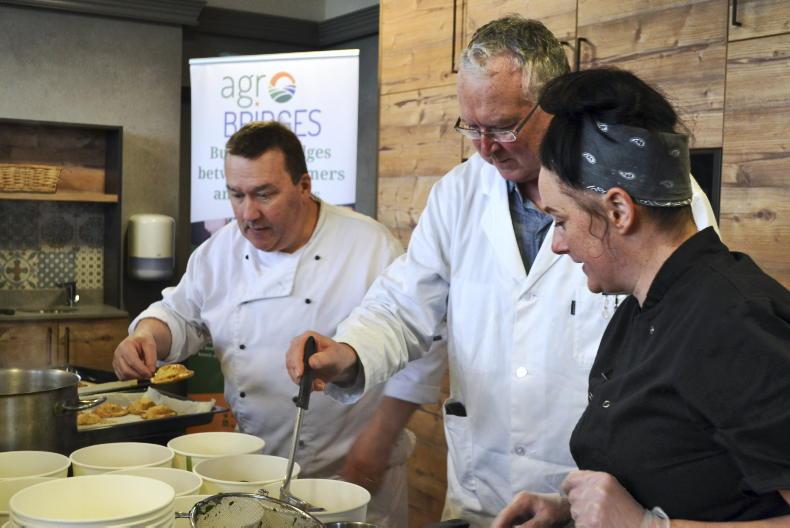
agroBRIDGES hosted an event on 4 March at Airfield Estate in Dublin called Feirmeoir, Bia agus Chef! This was to promote the project and connect consumers with farmers and chefs. The event featured a live cooking competition where three chefs (Isobel Farrelly; Overends Kitchen; Martin Bealin, Bia Dingle; Paddy Arnold, Revolution Farm & Kitchen) created unique dishes using produce from short supply chain farms, like Drumanilra in Co Roscommon, Manna Organic in Co Kerry, Revolution Farm in Co Dublin and Airfield Estate.
Consumers in attendance tasted the dishes, voted on their favourite and sat down to listen to the farmers tell their stories. The winner on the day was Isobel Farrelly, who prepared a lasagne with slow-cooked Airfield’s retired Jersey beef and celeriac “lasagne sheets”. All of the chefs involved created equally unique offerings using local lamb, grain, mushrooms and greens grown by the featured farms. A laid-back event; attendees felt comfortable approaching the chefs and farmers to discuss food and agriculture. Will this kind of engagement change their buying habits?
Changing behaviours
Professor Maeve Henchion is head of department in agrifood business and spatial analysis at Teagasc. Her work often brings her to these areas of consumer research and she has acted as Teagasc’s main point of contact for agroBRIDGES. She says we need to go a step further to encourage consumers to buy from shorter supply chains.
“People talk about wanting to do better [when it comes to supporting local],” she says. “There are lots of surveys out there asking consumers, ‘Would you be willing to pay more, and in what context?’ People always say yes, but when it comes to the day-to-day stuff, that’s not really what happens. Maybe the product isn’t available, or they have to go looking for it. It’s a cost - maybe not a financial cost - but it’s a cost to your time. Buying local has to be convenient, in that sense.
“If we look at the lovely salad we had [at the event], its quality was excellent,” she continues. “People would be happy to pay for that, because it’s a superior product. I think there’s a behavioural element [to making more sustainable consumer choices]. We just got solar panels ourselves, and they’ve been great. They’re reducing our electricity bill, but I’m also thinking, ‘We’ve generated just six kilowatts today, so we need to wait to put on the dishwasher tomorrow!’”
Producer
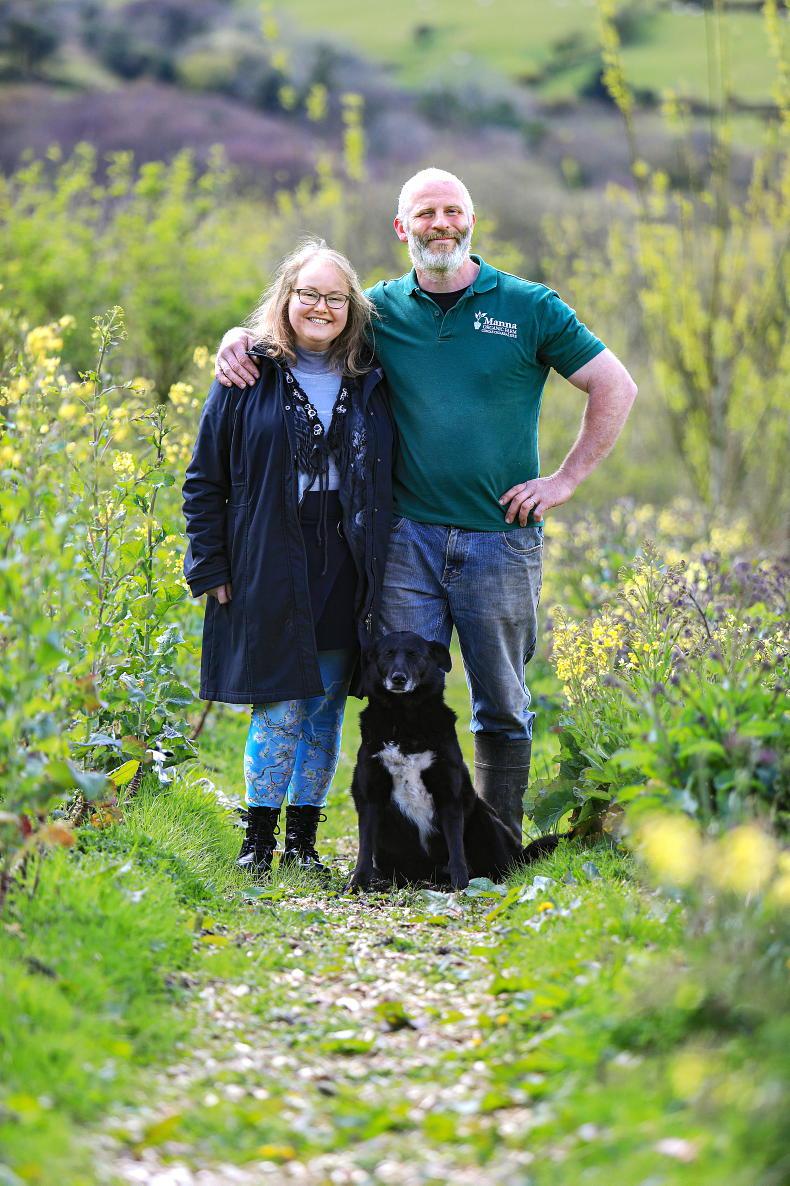
One of the farms participating in the agroBRIDGES project is Manna Organic Farm and Store in Tralee, Co Kerry. It is operated by Claire and Thomas O’Connor. Aside from their certified organic farm and food shop, the couple also actively engage with their local community, schools and the wider public about the benefits of farming with nature. Claire tells Irish Country Living that she feels the agroBRIDGES project really “gets” what the expectations around farming and direct selling are from a consumer perspective.
“When you’re a farmer and, instead of selling your stuff to a processor you want to supply your local community, you go from being a farmer to having to be an expert in deliveries, marketing, bookkeeping - you have to understand customer service - and each one of those jobs has a different skillset.
“In the toolbox, there’s a tool to discover your USP [unique selling point] and one on how to write your story and communicate. These things are really valuable to people who might not be on social media or might not know how to engage someone with their product.
“Then there are sections on packaging, finding your market and developing your price point - which is so important. There are loads of little things along those lines; it’s really accessible and user friendly and they’ve captured a lot of these necessary skills.”
To learn more visit agrobridges.eu


SHARING OPTIONS