The Teagasc National Farm Survey (NFS) is the annual study that collects detailed financial, technical, and sustainability data from a representative sample of around 88,000 farmers.
The 2024 report highlighted that the average farm income was €35,937, with 43% of farmers having off-farm income.
In the same year, the proportion of farm households where either the farmer or spouse had off-farm employment was 61%.
In recent years, there has been a steady increase in the number of farm families with an off-farm income, from both the farmer and their spouse.
Not only does this help supplement the family’s income, it also allows individuals to diversify their revenue sources. Agriculture today is changing fast with climate shifts, market fluctuations and technology reshaping the industry.
Many farmers are discovering that off-farm work not only reduces financial pressures, it also builds new skills that improve productivity.
Although farmers wear many hats, from business owners to masters of food production, sometimes it can be challenging to identify the transferable skills or experiences that could open up job opportunities and off-farm employment.
Their ability to manage operations, adapt to changing environments, and work autonomously makes farmers valuable in sectors like logistics, machinery, and business management.
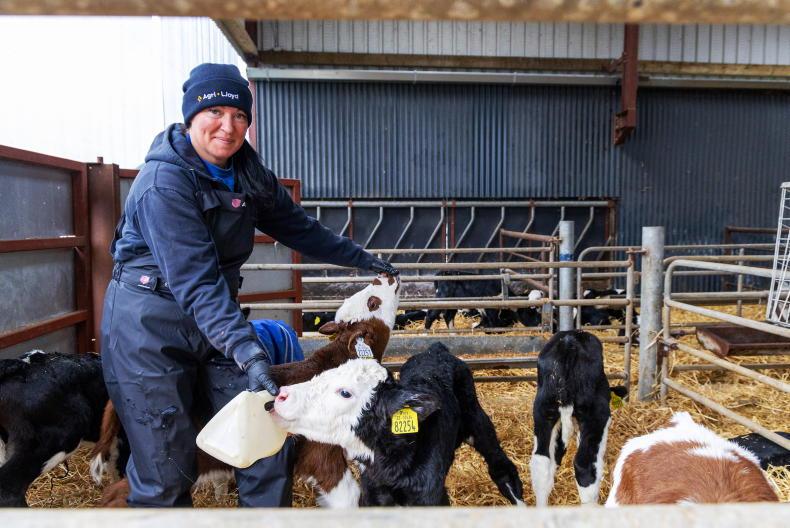
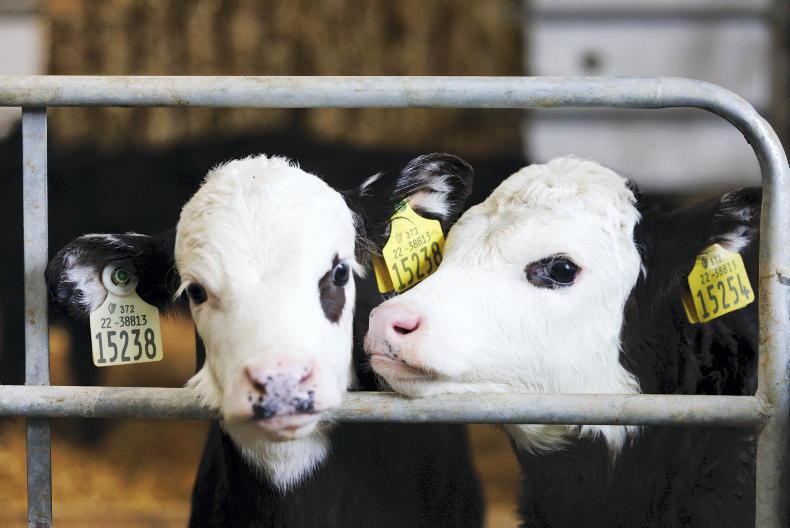
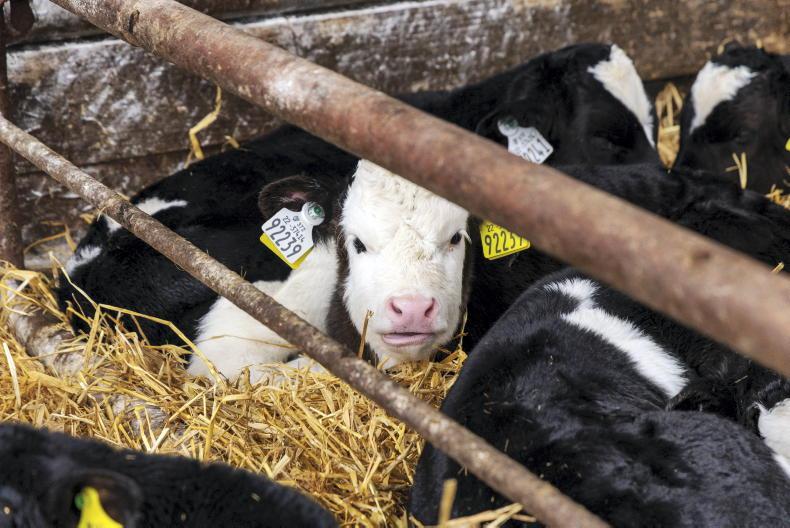
Louise Carter feeding calves on Thomas and Pat Fitzpatrick's farm in Kilcoke, Co.Laois
For anyone interested in off-farm employment or upskilling opportunities, the first step is to identify the skills you possess. Begin by writing down the main things you do on your farm. Think about managing money, fixing equipment, supervising workers, buying supplies, selling produce, and planning each season.
Once you have identified your skills, the next step is building them into your CV. It is essential to position your skills accordingly. Here are some examples of skills farmers use regularly that can be added to a CV:
Business management: running a farm means budgeting, forecasting, pricing, and managing profit margins, which is entrepreneurship.Project management: from planting schedules to harvest timelines or livestock cycles and grass management, depending on the farming sector, all farmers run deadline-driven operations. This means they have experience in project management and are highly organised.Risk assessment and mitigation: weather changes, market shifts, and disease outbreaks are all constant risks to farms, meaning when they occur, farmers have to make strategic decisions. It also demonstrates adaptability.Mechanical and technical skills: from repairing broken-down equipment to maintenance work and operating machinery, most farmers have great mechanical and technical skills that they use every day.People and time management: balancing deadlines and paperwork while supervising farm workers and coordinating the different seasons means farmers have experience managing people and time. Farmers don’t just farm, they run very successful family businesses. The important step is positioning those daily tasks as skills employers recognise.
According to research by the National Soft Skills Association, 85% of job success comes from soft skills, which are highly transferable. The remaining 15% comes from technical skills and knowledge (hard skills). This is great news for farmers as many possess multiple soft skills.
When it comes to finding employment, consider looking at industries connected to farming. Agricultural supply stores, food processing companies, equipment dealerships, transport businesses, rural banks and agri tech companies often value practical farming experience.
Employers appreciate people who understand how the agricultural system works in real life. Update your CV to focus on skills and achievements rather than duties and where possible show results, such as improved yields, reduced costs, or better efficiency.
Upskilling courses available
Farmers should also consider short courses or certifications to strengthen their profile.
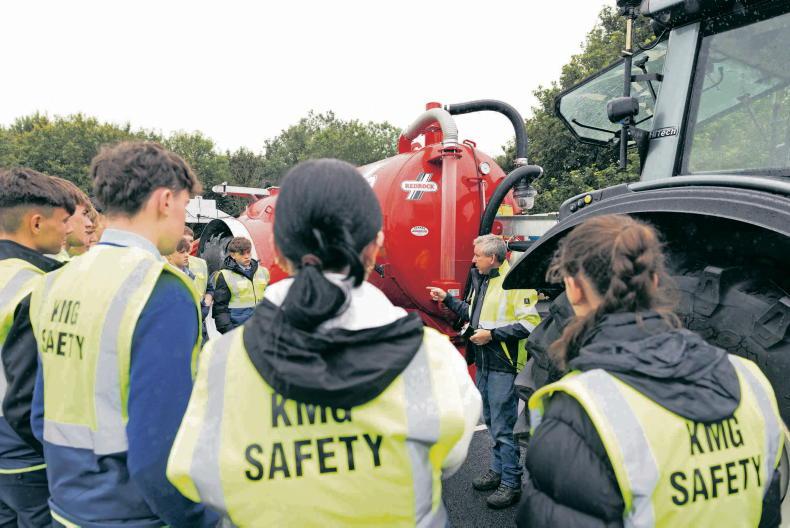
Training in agri business, safety standards, or machinery maintenance can boost your confidence and opportunities. Farmers might not realise there is an abundance of courses available to help with upskilling, some fully funded and in the locality. Over 100 adult literacy services are located around the country and run by education training boards (ETBs) and community education centres. Each service runs fully funded adult learning courses on reading, writing, spelling, maths, technology and computers. For information, contact the National Adult Literacy Agency at NALA.ie.Teagasc offers part-time courses for individuals aiming to gain formal agricultural qualifications without committing to full-time study. Full courses are available at Teagasc.ie. Macra Agricultural Skillnet supports farmers and agri business professionals by offering a wide range of part-funded training and development opportunities. For more, visit macraskillnet.ie The Sustainable Farming Academy, is a fully funded diploma for Tirlán co-op members focusing on sustainability. The Certificate in Continuing Professional Development in Sustainable Agricultural Practice comprises 10 credits and is a part-time level 7 award on the Irish National Framework of Qualifications. For more information, visit ucc.ie. There are also more specific training courses in hoof trimming and artificial insemination for farmers who are looking to start their own off-farm employment, building on their own experience and skills. The Laois and Offaly Education and Training Board has been working closely with farming families to generate supplementary income and develop courses in these areas.Utilising your experience and knowledge
Another way farmers can look into the opportunities outside their own farm gates is in the industry. There are a number of roles and positions where farming and agricultural knowledge is favoured.
Pivoting your own experience and knowledge and applying it to a role withing the sector could mean a steady salary and progression pathways.
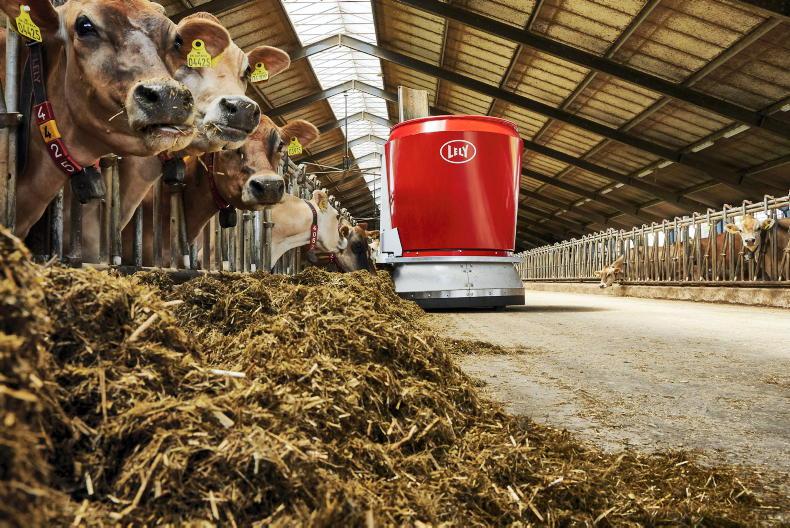
There is a critical shortage of workers across the machinery sector. Contractors are struggling to fill positions for operators of agricultural machinery, leading many to consider transitioning to autonomous technology.
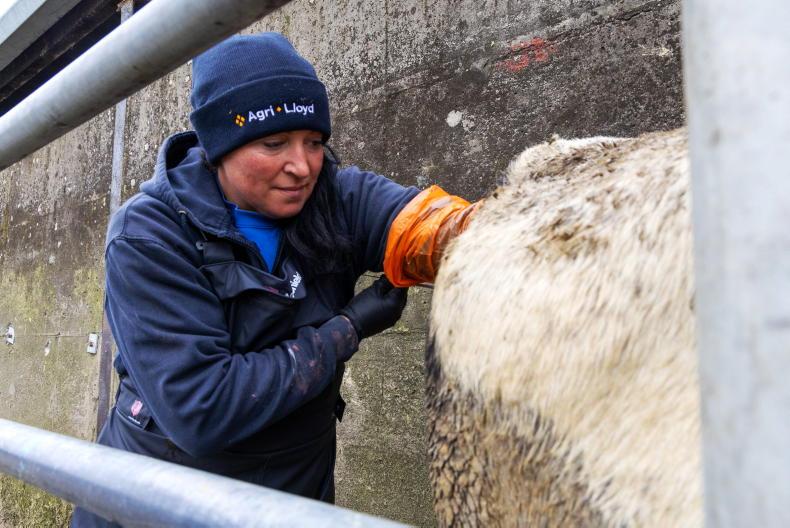
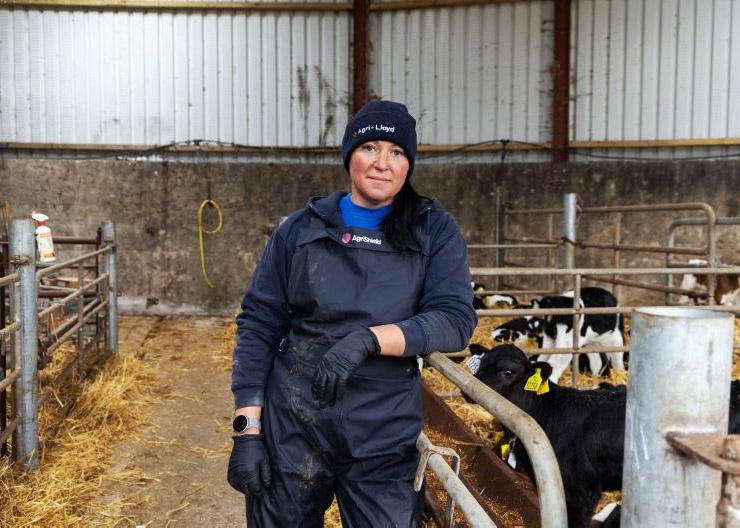
Louise has set up her own company providing farm labour, AI and scanning services.
There are a number of machinery manufacturers that have roles currently available as a result of the shortages.
The areas in demand are contractors, agricultural engineers and skilled welders along with sales reps.
One example is the well-known manufacturers McHale which has recently expanded its headquarters in Ballinrobe, Co Mayo.
The development of its facilities and its product range has resulted in an expansion of its team, leading to new roles and opportunities for those with a knowledge of machinery.
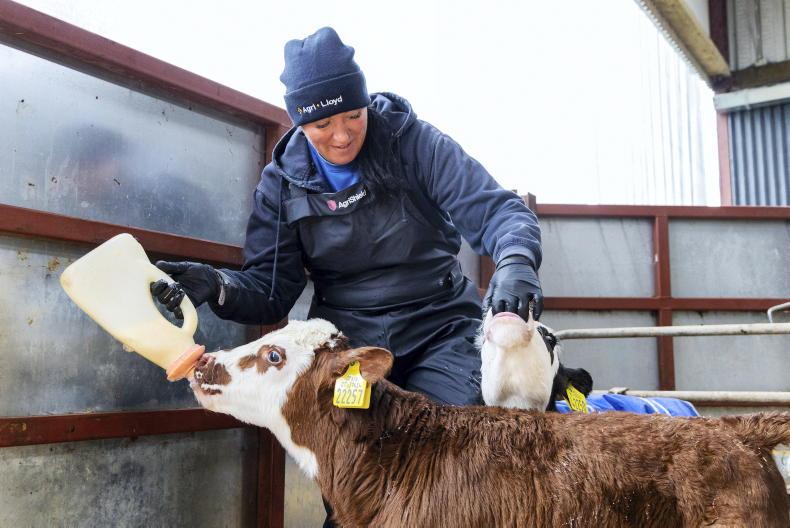
Louise Carter feeding calves on Thomas and Pat Fitzpatrick's farm in Kilcoke, Co.Laois
Speaking about the type of jobs available a spokesperson says: “We are currently seeking skilled welders, product builders and general operatives to join our growing production team. The research and development team are looking for design, mechanical, electronic and software engineers.
“We are also looking for agricultural field technicians and sales and product specialists.”
For more information, visit mchale.net.
Case study: relief milker to business owner
Louise Carter is one of many utilising the fully funded courses available. As a mother of three from Ballyroan, Co Laois, she recognised the potential of upskilling in artificial insemination (AI) and ultrasound scanning to enhance her career prospects and to generate supplementary income.
Living with her uncle and aunt on their suckler farm when she was young, Louise learned the basics of farming. She spent a lot of her adult years caring for her two sick children, who have rheumatoid arthritis.
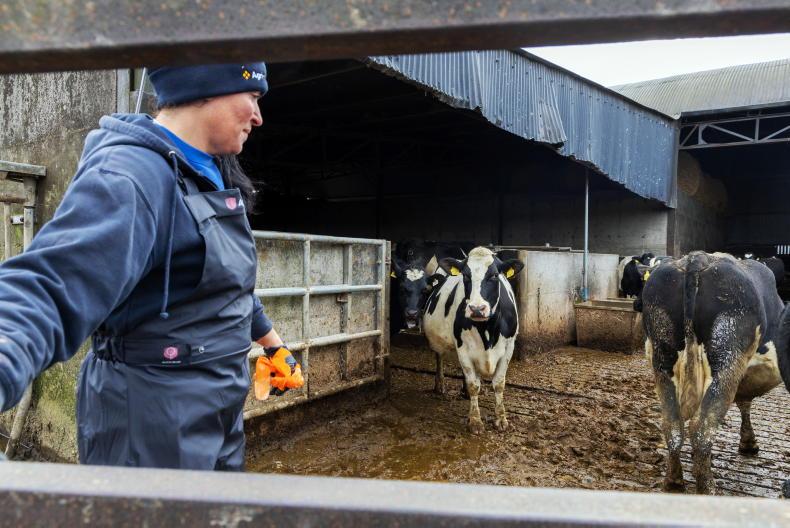
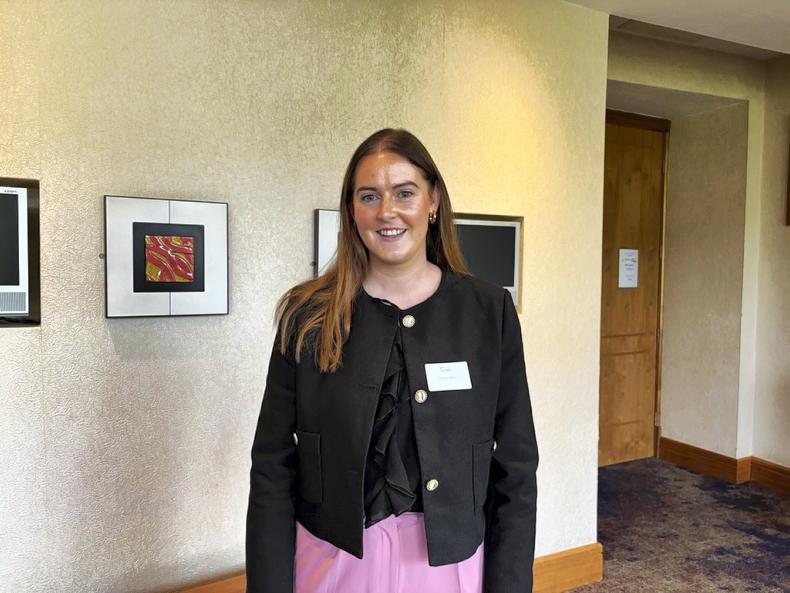
Louise Carter, Kilcoke, Co.Laois
When they started to get older and more independent, Louise started thinking about employment opportunities, but hadn’t been on a farm since she was 17.
“I was there, wondering what I was going to do next,” she explained.
“I loved farming, and I reached out to somebody I knew and asked them if they could teach me how to milk. I got really interested in cows – I just love everything about them.
“I decided to do an AI course and then went on to become a technician,” she explains.
In 2024, Louise embarked on her training journey with Laois Offaly Education Training Board (LOETB) and Dúnmasc Genetics, completing both AI and ultrasound scanning courses which were fully funded by LOETB.
“I was so nervous, I was so afraid. Out of everyone who was on the AI course, I was probably the only one who didn’t have my own farm, but nobody in my class ever looked at me any differently or made me feel different. It was amazing what I learned, and the amount I picked up was unbelievable,” Louise says. The course, being fully funded, removed the financial barrier for Louise, a single parent with three children.
“I couldn’t have afforded to do it otherwise,” she adds.
After the course, Louise secured employment with an AI company, marking a significant milestone in her professional journey.
During her first season in the role, she inseminated over 1,000 cows and had a 75% conception rate across all the herds she worked with in the Laois area. To generate additional income, seven months ago, Louise took a leap of faith and started her own business
With her AI business now thriving, Louise has set her sights on purchasing an ultrasound scanner to add pregnancy diagnosis to her services.
“Without the training and financial support from LOETB, I wouldn’t have had the opportunity to get started in this field,” she says.
Louise Carter, Kilcoke, Co.Laois
“Not only that but the work that I have gotten from doing those courses – without them I definitely wouldn’t be where I am today. The knowledge and confidence I’ve gained from Dúnmasc Genetics has truly set me up for a career in AI and scanning. Now, I’m looking forward to growing my business and expanding my services into the future. It’s the best decision I ever made.”
For anyone considering stepping into a training course or upskilling in a particular area, Louise says not to overthink it.
“I would say just go and do it, it is fully funded and you never know where it is going to lead you.”
For more information about the course, contact Gráinne McGrath, grmcgrath@loetb.ie or visit loetb.ie.
The Teagasc National Farm Survey (NFS) is the annual study that collects detailed financial, technical, and sustainability data from a representative sample of around 88,000 farmers.
The 2024 report highlighted that the average farm income was €35,937, with 43% of farmers having off-farm income.
In the same year, the proportion of farm households where either the farmer or spouse had off-farm employment was 61%.
In recent years, there has been a steady increase in the number of farm families with an off-farm income, from both the farmer and their spouse.
Not only does this help supplement the family’s income, it also allows individuals to diversify their revenue sources. Agriculture today is changing fast with climate shifts, market fluctuations and technology reshaping the industry.
Many farmers are discovering that off-farm work not only reduces financial pressures, it also builds new skills that improve productivity.
Although farmers wear many hats, from business owners to masters of food production, sometimes it can be challenging to identify the transferable skills or experiences that could open up job opportunities and off-farm employment.
Their ability to manage operations, adapt to changing environments, and work autonomously makes farmers valuable in sectors like logistics, machinery, and business management.

Louise Carter feeding calves on Thomas and Pat Fitzpatrick's farm in Kilcoke, Co.Laois
For anyone interested in off-farm employment or upskilling opportunities, the first step is to identify the skills you possess. Begin by writing down the main things you do on your farm. Think about managing money, fixing equipment, supervising workers, buying supplies, selling produce, and planning each season.
Once you have identified your skills, the next step is building them into your CV. It is essential to position your skills accordingly. Here are some examples of skills farmers use regularly that can be added to a CV:
Business management: running a farm means budgeting, forecasting, pricing, and managing profit margins, which is entrepreneurship.Project management: from planting schedules to harvest timelines or livestock cycles and grass management, depending on the farming sector, all farmers run deadline-driven operations. This means they have experience in project management and are highly organised.Risk assessment and mitigation: weather changes, market shifts, and disease outbreaks are all constant risks to farms, meaning when they occur, farmers have to make strategic decisions. It also demonstrates adaptability.Mechanical and technical skills: from repairing broken-down equipment to maintenance work and operating machinery, most farmers have great mechanical and technical skills that they use every day.People and time management: balancing deadlines and paperwork while supervising farm workers and coordinating the different seasons means farmers have experience managing people and time. Farmers don’t just farm, they run very successful family businesses. The important step is positioning those daily tasks as skills employers recognise.
According to research by the National Soft Skills Association, 85% of job success comes from soft skills, which are highly transferable. The remaining 15% comes from technical skills and knowledge (hard skills). This is great news for farmers as many possess multiple soft skills.
When it comes to finding employment, consider looking at industries connected to farming. Agricultural supply stores, food processing companies, equipment dealerships, transport businesses, rural banks and agri tech companies often value practical farming experience.
Employers appreciate people who understand how the agricultural system works in real life. Update your CV to focus on skills and achievements rather than duties and where possible show results, such as improved yields, reduced costs, or better efficiency.
Upskilling courses available
Farmers should also consider short courses or certifications to strengthen their profile.
Training in agri business, safety standards, or machinery maintenance can boost your confidence and opportunities. Farmers might not realise there is an abundance of courses available to help with upskilling, some fully funded and in the locality. Over 100 adult literacy services are located around the country and run by education training boards (ETBs) and community education centres. Each service runs fully funded adult learning courses on reading, writing, spelling, maths, technology and computers. For information, contact the National Adult Literacy Agency at NALA.ie.Teagasc offers part-time courses for individuals aiming to gain formal agricultural qualifications without committing to full-time study. Full courses are available at Teagasc.ie. Macra Agricultural Skillnet supports farmers and agri business professionals by offering a wide range of part-funded training and development opportunities. For more, visit macraskillnet.ie The Sustainable Farming Academy, is a fully funded diploma for Tirlán co-op members focusing on sustainability. The Certificate in Continuing Professional Development in Sustainable Agricultural Practice comprises 10 credits and is a part-time level 7 award on the Irish National Framework of Qualifications. For more information, visit ucc.ie. There are also more specific training courses in hoof trimming and artificial insemination for farmers who are looking to start their own off-farm employment, building on their own experience and skills. The Laois and Offaly Education and Training Board has been working closely with farming families to generate supplementary income and develop courses in these areas.Utilising your experience and knowledge
Another way farmers can look into the opportunities outside their own farm gates is in the industry. There are a number of roles and positions where farming and agricultural knowledge is favoured.
Pivoting your own experience and knowledge and applying it to a role withing the sector could mean a steady salary and progression pathways.
There is a critical shortage of workers across the machinery sector. Contractors are struggling to fill positions for operators of agricultural machinery, leading many to consider transitioning to autonomous technology.

Louise has set up her own company providing farm labour, AI and scanning services.
There are a number of machinery manufacturers that have roles currently available as a result of the shortages.
The areas in demand are contractors, agricultural engineers and skilled welders along with sales reps.
One example is the well-known manufacturers McHale which has recently expanded its headquarters in Ballinrobe, Co Mayo.
The development of its facilities and its product range has resulted in an expansion of its team, leading to new roles and opportunities for those with a knowledge of machinery.

Louise Carter feeding calves on Thomas and Pat Fitzpatrick's farm in Kilcoke, Co.Laois
Speaking about the type of jobs available a spokesperson says: “We are currently seeking skilled welders, product builders and general operatives to join our growing production team. The research and development team are looking for design, mechanical, electronic and software engineers.
“We are also looking for agricultural field technicians and sales and product specialists.”
For more information, visit mchale.net.
Case study: relief milker to business owner
Louise Carter is one of many utilising the fully funded courses available. As a mother of three from Ballyroan, Co Laois, she recognised the potential of upskilling in artificial insemination (AI) and ultrasound scanning to enhance her career prospects and to generate supplementary income.
Living with her uncle and aunt on their suckler farm when she was young, Louise learned the basics of farming. She spent a lot of her adult years caring for her two sick children, who have rheumatoid arthritis.

Louise Carter, Kilcoke, Co.Laois
When they started to get older and more independent, Louise started thinking about employment opportunities, but hadn’t been on a farm since she was 17.
“I was there, wondering what I was going to do next,” she explained.
“I loved farming, and I reached out to somebody I knew and asked them if they could teach me how to milk. I got really interested in cows – I just love everything about them.
“I decided to do an AI course and then went on to become a technician,” she explains.
In 2024, Louise embarked on her training journey with Laois Offaly Education Training Board (LOETB) and Dúnmasc Genetics, completing both AI and ultrasound scanning courses which were fully funded by LOETB.
“I was so nervous, I was so afraid. Out of everyone who was on the AI course, I was probably the only one who didn’t have my own farm, but nobody in my class ever looked at me any differently or made me feel different. It was amazing what I learned, and the amount I picked up was unbelievable,” Louise says. The course, being fully funded, removed the financial barrier for Louise, a single parent with three children.
“I couldn’t have afforded to do it otherwise,” she adds.
After the course, Louise secured employment with an AI company, marking a significant milestone in her professional journey.
During her first season in the role, she inseminated over 1,000 cows and had a 75% conception rate across all the herds she worked with in the Laois area. To generate additional income, seven months ago, Louise took a leap of faith and started her own business
With her AI business now thriving, Louise has set her sights on purchasing an ultrasound scanner to add pregnancy diagnosis to her services.
“Without the training and financial support from LOETB, I wouldn’t have had the opportunity to get started in this field,” she says.

Louise Carter, Kilcoke, Co.Laois
“Not only that but the work that I have gotten from doing those courses – without them I definitely wouldn’t be where I am today. The knowledge and confidence I’ve gained from Dúnmasc Genetics has truly set me up for a career in AI and scanning. Now, I’m looking forward to growing my business and expanding my services into the future. It’s the best decision I ever made.”
For anyone considering stepping into a training course or upskilling in a particular area, Louise says not to overthink it.
“I would say just go and do it, it is fully funded and you never know where it is going to lead you.”
For more information about the course, contact Gráinne McGrath, grmcgrath@loetb.ie or visit loetb.ie.
SHARING OPTIONS