Health and safety go hand in hand around lambing time. It is not just the health of the newly born lamb and the ewe that we need to look after, but of the farmer also. One area that cannot be overlooked around lambing time is zoonotic diseases.
These are diseases which can be passed from animals to humans and can cause serious health issues for the people who contract them.
Lambing and afterbirth
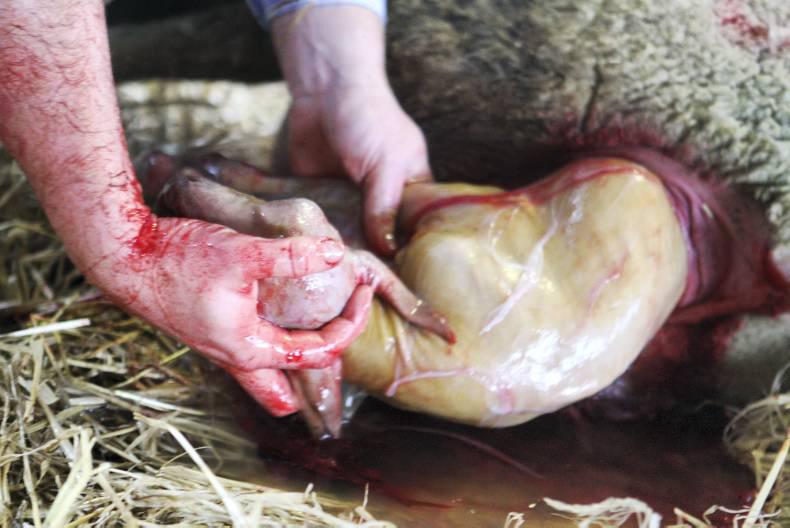
Pregnant women are the highest-risk group when it comes to zoonotic diseases. They can be transmitted from sheep to women during pregnancy and at birth. The same organism that causes abortion in ewes can cause the same in pregnant women. The most common causes of abortion in sheep are enzootic abortion and toxoplasmosis. The disease can also be spread in the faeces of infected cats for about eight days after infection. Because of this, farmers should ensure that cats are kept away from animal feed, hay, etc.
One of the highest-risk periods for women to contract the disease is at lambing when large loads of the pathogen are shed in placentas and afterbirth.
Advice for pregnant women
Women who are or think they may be pregnant are advised to minimise contact with sheep and cats.Do not pull lambs or help in the lambing process.Avoid any contact with placental tissue or afterbirth.Do not milk ewes.Avoid newborn or aborted lambs.Avoid contact with the bedding in lambing pens.Ensure that any person in contact with lambing ewes is washed thoroughly before there is any contact.Avoid contact with any clothes worn by people lambing ewes.Anybody who is lambing ewes should be aware of the risks they may pose to people in their surroundings also. Because of this, you should always wear protective clothing such as a disposable apron and gloves at lambing to ensure that you minimise the contact between yourself and your clothing with fluid from the ewe or the placenta or placental fluid. You should ensure that you wash your hands thoroughly after handling a ewe.
Healthy and safe movement of ewes and lambs
It is often the case that ewes and lambs need to be moved to and from lambing pens. It is not only the health and safety of the ewe and lambs that has to be taken into account, but also the farmer. A pregnant ewe can weigh between 60kg and 90kg. Because of this, lifting and/or moving ewes can be a difficult job. The main thing should be to avoid injury at all costs, both to you and to the ewes. With the average age of farmers now at 57, many older flock holders are finding lambing time more and more difficult – even simple jobs like moving ewes is becoming more of an issue. While an extra pair of hands at lambing time is needed on most farms, unfortunately it is often the case that paying labour, even just for a few weeks, may not be feasible. One piece of advice for older farmers at lambing time is to use help from sons or daughters in the mornings or evenings to do the more difficult jobs like moving ewes in and out of pens or seek help from students.
Yard lighting and obstacles
Health and safety does not stop in the lambing shed. Lambing sees intense work pressure on most farms. Mid-season flocks usually have a tight lambing spread and at this time of year much of the work is done in the dark. It is essential that yards and sheds are adequately lit. The yard should be free of obstacles that could trip a farmer during the night.
Also, ensure that where you are walking around machinery or implements at night time that all machinery is safe. For example, if implements such as bale spikes or splitters are on the back of a tractor, they should be backed up to a wall to ensure that they are not a safety risk. Likewise, a grab or a shear grab should kept closed to avoid any injury and front loaders should always be left on the ground when the tractor is parked.
Health and safety go hand in hand around lambing time. It is not just the health of the newly born lamb and the ewe that we need to look after, but of the farmer also. One area that cannot be overlooked around lambing time is zoonotic diseases.
These are diseases which can be passed from animals to humans and can cause serious health issues for the people who contract them.
Lambing and afterbirth
Pregnant women are the highest-risk group when it comes to zoonotic diseases. They can be transmitted from sheep to women during pregnancy and at birth. The same organism that causes abortion in ewes can cause the same in pregnant women. The most common causes of abortion in sheep are enzootic abortion and toxoplasmosis. The disease can also be spread in the faeces of infected cats for about eight days after infection. Because of this, farmers should ensure that cats are kept away from animal feed, hay, etc.
One of the highest-risk periods for women to contract the disease is at lambing when large loads of the pathogen are shed in placentas and afterbirth.
Advice for pregnant women
Women who are or think they may be pregnant are advised to minimise contact with sheep and cats.Do not pull lambs or help in the lambing process.Avoid any contact with placental tissue or afterbirth.Do not milk ewes.Avoid newborn or aborted lambs.Avoid contact with the bedding in lambing pens.Ensure that any person in contact with lambing ewes is washed thoroughly before there is any contact.Avoid contact with any clothes worn by people lambing ewes.Anybody who is lambing ewes should be aware of the risks they may pose to people in their surroundings also. Because of this, you should always wear protective clothing such as a disposable apron and gloves at lambing to ensure that you minimise the contact between yourself and your clothing with fluid from the ewe or the placenta or placental fluid. You should ensure that you wash your hands thoroughly after handling a ewe.
Healthy and safe movement of ewes and lambs
It is often the case that ewes and lambs need to be moved to and from lambing pens. It is not only the health and safety of the ewe and lambs that has to be taken into account, but also the farmer. A pregnant ewe can weigh between 60kg and 90kg. Because of this, lifting and/or moving ewes can be a difficult job. The main thing should be to avoid injury at all costs, both to you and to the ewes. With the average age of farmers now at 57, many older flock holders are finding lambing time more and more difficult – even simple jobs like moving ewes is becoming more of an issue. While an extra pair of hands at lambing time is needed on most farms, unfortunately it is often the case that paying labour, even just for a few weeks, may not be feasible. One piece of advice for older farmers at lambing time is to use help from sons or daughters in the mornings or evenings to do the more difficult jobs like moving ewes in and out of pens or seek help from students.
Yard lighting and obstacles
Health and safety does not stop in the lambing shed. Lambing sees intense work pressure on most farms. Mid-season flocks usually have a tight lambing spread and at this time of year much of the work is done in the dark. It is essential that yards and sheds are adequately lit. The yard should be free of obstacles that could trip a farmer during the night.
Also, ensure that where you are walking around machinery or implements at night time that all machinery is safe. For example, if implements such as bale spikes or splitters are on the back of a tractor, they should be backed up to a wall to ensure that they are not a safety risk. Likewise, a grab or a shear grab should kept closed to avoid any injury and front loaders should always be left on the ground when the tractor is parked.






SHARING OPTIONS