



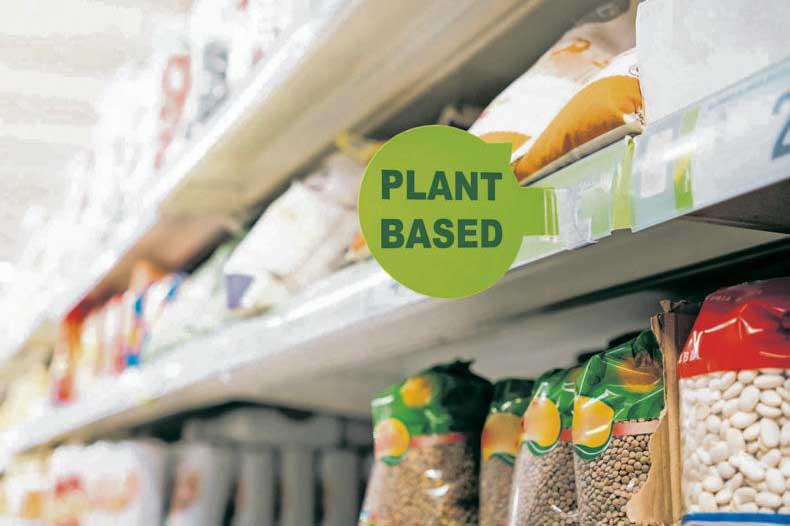
The topic of ‘plant-based alternatives’ can sometimes be a difficult one for farmers, but there is no doubt that, if developed, a plant-based protein sector could benefit Irish tillage farmers. The world needs to provide more nutrient-dense plant-based options for human consumption, and Ireland could be well-placed to grow specialised protein crops.
According to Future Market Insights Inc, the plant-based protein category is expected to reach $22bn USD in value this year, and by the year 2036, that projection increases to $49.9bn USD. Leading businesses in this segment include Glanbia PLC and Kerry Group – so there are already Irish players on the field. The key growth countries for these products are the United States, Spain, France, Germany and the United Kingdom.
Where plant-based alternatives were once considered ‘novelty buys’, consumers have now found favourite brands and products.
At Bord Bia, consumer insights expert Grace Binchy says it’s not that people are cutting things out of their diet; they are looking for ways to add more nutrition in.
“People are less likely to follow free-from diets, including meat-free, dairy-free, and gluten-free,” she says. “Instead, they are more likely to say they are following an unrestricted diet or one that is balanced and generally healthy.”
Currently, the Irish tillage sector produces high quality animal feed and bedding for livestock in addition to crops for human consumption – mainly barley, oats and wheat. According to the Department of Agriculture, Food and the Marine (DAFM), the sector’s contribution to the Irish economy is currently estimated at €1.9bn per annum. It is also estimated to support over 11,000 full-time equivalent jobs. Higher protein crops, like lupin and faba bean, are grown, but not widely. Historically, crops like peas were commonplace, but in decades past they have gone out of fashion for numerous practical and financial reasons.
People are less likely to follow free-from diets, including meat-free, dairy-free, and gluten-free. Instead, they are more likely to say they are following an unrestricted diet or one that is balanced and generally healthy

Government support
The DAFM’s Protein Aid Scheme encourages the production of protein crops for both human consumption and animal feed. A Department representative says this has resulted in an increase in the area of protein crops being grown in Ireland.
“Significant funding has been provided for research focusing on enhancing the sustainability of protein production and on new added value opportunities to support the expansion of plant protein production,” they say. “Two projects which demonstrate this are the Teagasc led U-Protein, which has received €2.9m in funding, and University College Dublin [UCD] led Protein-I, which has received €2.2m in funding.”
The U-Protein project aims to develop Ireland’s processing capabilities for plant-based proteins. So far, it has demonstrated that we can produce up to 85% of high protein isolates from crops like faba beans.
“In parallel, the Protein-I project addresses the broader system and value chain challenges,” the representative says.
Irish Country Living covered both projects in 2022. They are now approaching their five-year completion, but have applied for additional funding to continue their research. For U-Protein, a conference has been organised for 20 May at the Teagasc Food Research Centre in Moorepark, where advances in processing and value addition for protein crops will be showcased.

Protein-I
Protein-I, meanwhile, aims to strengthen rural economies, improve human nutrition, diversify plant production and increase consumer acceptance of plant-based proteins. It has been a mammoth project featuring several Irish universities (including UCD, Ulster University, University of Galway and Queen’s University) and Teagasc, and has covered everything from nutrition to crop science and consumer behaviour.
Project lead, Professor Lorraine Brennan of UCD, says the results have shown a path forward for the development of the sector.
“The project has demonstrated that plant protein crops can be successfully grown in Ireland, achieving suitable yields and protein levels for human food use,” she says.
“Our consumer work has shown positive attitudes towards locally-grown products. Importantly, Protein-I has taken a full food-systems approach, generating insights to help build a strong evidence base for sustainable protein transitions. It has also developed a digital ‘farm-to-fork’ track-and-trace solution; enabling secure and transparent supply chains and improving trust and provenance across the agri food system.”
In terms of crops, Ireland could produce quality yields in cereals, legumes, lupins (particularly the white lupin variety) and protein-rich oilseed crops. Crucially, though, buy-in from farmers, contractors, processors, Government and all other stakeholders will be crucial to any potential development of the sector.
Lorraine and project colleagues confirm the additional need for Irish mills, end users in bakeries, nutritionists and food scientists, and – most importantly – consumers willing to pay for these foods.
“By enhancing infrastructure, supporting stakeholder collaboration, building human capacity and incentivising sustainable practices, Ireland could reduce its reliance on imports, increase food security and contribute to national climate and biodiversity goals,” Lorraine says.
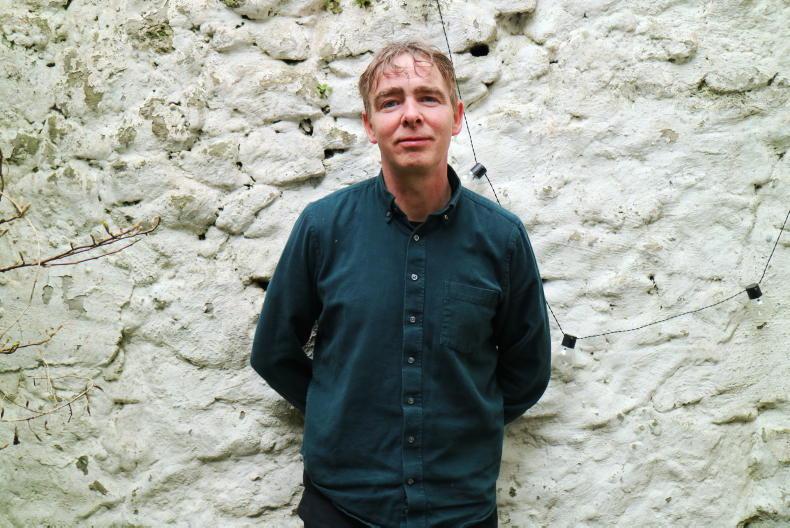
De Burca’s Tempeh
James De Burca grew up next to his uncle’s farm in Co Kilkenny and spent much of his youth helping out with day-to-day jobs. As he grew up, he was naturally drawn to a plant-based diet. Fast forward to today, and James has built a career working in some of Ireland’s most well-known plant-based eateries, including Cornucopia in Dublin.
After years of experimenting with making his own soy-based plant-based proteins, James and his partner, Amanda, launched De Burca’s Tempeh in Kilkenny, in 2022.
Tempeh is one of the ‘holy trinity’ of plant-based proteins, alongside seitan (made from wheat gluten) and tofu (made from soy milk). Like tofu, tempeh is made from soy, but from fermented soy beans as opposed to soy milk. It provides high protein and fibre value and is nutrient dense, but equally important to James is its versatility.
“I think even meat-eaters enjoy a well-prepared tempeh dish,” he says.
“With tempeh, it’s about providing an option for those interested in a flexitarian diet. I first came across tempeh when I was living in America and I just became fascinated by it.”
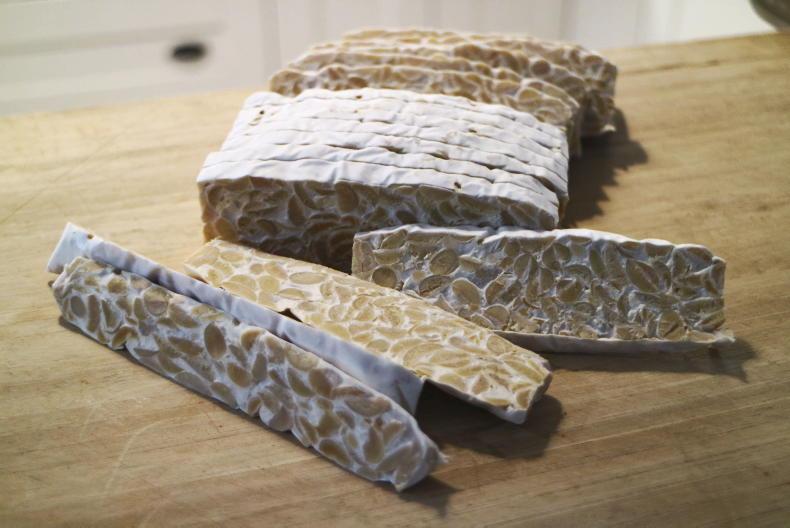
James supplies restaurants all over Ireland’s southeast region and produces his tempeh in small batches. He says there has been a shift in how Irish chefs develop plant-based menu items, but many continue to be carb-heavy and could benefit from higher protein content.
“I love each of the three traditional plant-based proteins [tofu, seitan and tempeh],” he says. “But you need to be able to cook them in a way which will grab and satiate people. When meat-eaters eat vegetarian food, they don’t necessarily feel satisfied because the dishes are lacking protein.
“Chefs put loads of thought into their vegetarian options, they have gotten much more creative, but the addition of something like tempeh could provide the protein which is often missing.”
The project has demonstrated that plant protein crops can be successfully grown in Ireland, achieving suitable yields and protein levels for human food use
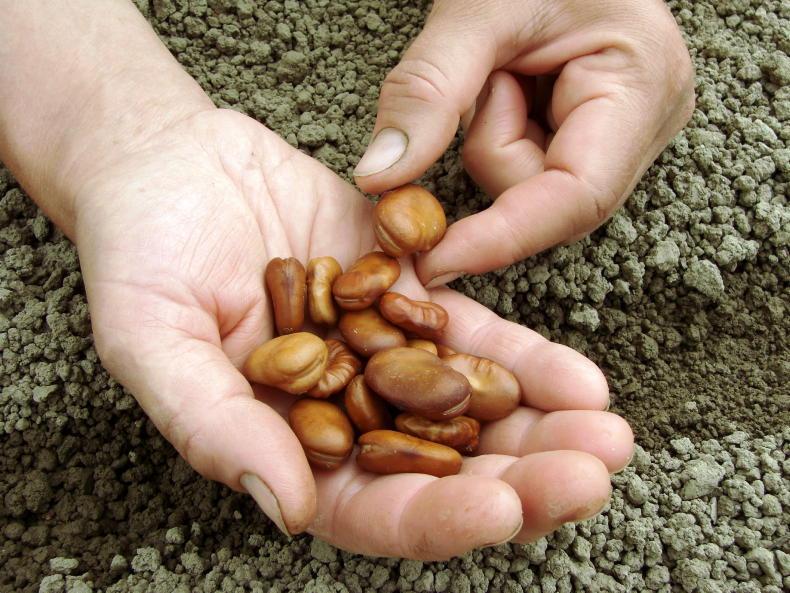
Tempeh is best eaten fresh, within five days, or it can be frozen for up to two months. It can be shredded like pulled pork, marinated to taste like bacon or crumbled and added to a Bolognese sauce.
Currently, James uses French and German-grown soy beans to make his tempeh (sourced from a French company called Soy Touch). He would like to incorporate more Irish-grown proteins into his products and is a member of the Irish Grain Network, which brings together farmers, chefs, bakers and millers throughout the country to find ways to expand the Irish tillage sector.
He says while Ireland will never be a soy-producing country, there are other options available.
“Ireland will never grow soy, and I am biased toward soy – it is the most nutritious of the alternatives out there,” he says. “But faba beans grow here, and we also have hemp seed. In my opinion, the real Irish-grown saviour might be sweet lupin beans, though we would need the right processing capabilities. Right now, the soy beans I get from France are 100% chemical-free and free of contaminants like stones. They are easy for me to process.”
Tillage farmers might welcome the development of a plant-based protein sector in Ireland, but many also feel that research findings remain far removed from work being done on the ground. Lupin is a crop which could work as an Irish-grown answer to soy, but there is a reason we no longer grow as many legumes as we have in the past – they are difficult to harvest and without the right processors in place, a centralised market is lacking. Hopefully, projects like Protein-I and U-Protein, in collaboration with farmers and food producers like James, will create the right environment for profitable crop diversification.
Find De Burca’s Tempeh on Instagram @deburcas_tempeh and see protein-i.ie


SHARING OPTIONS